
Back side of a mule deer (Odocoileus hemionus).
A badge of nerdiness...
arrived in the mail, a holiday card from the Jet Propulsion Laboratory featuring simple abstract depictions of Mars, the Perseverance rover and Ingenuity helicopter. Cool.
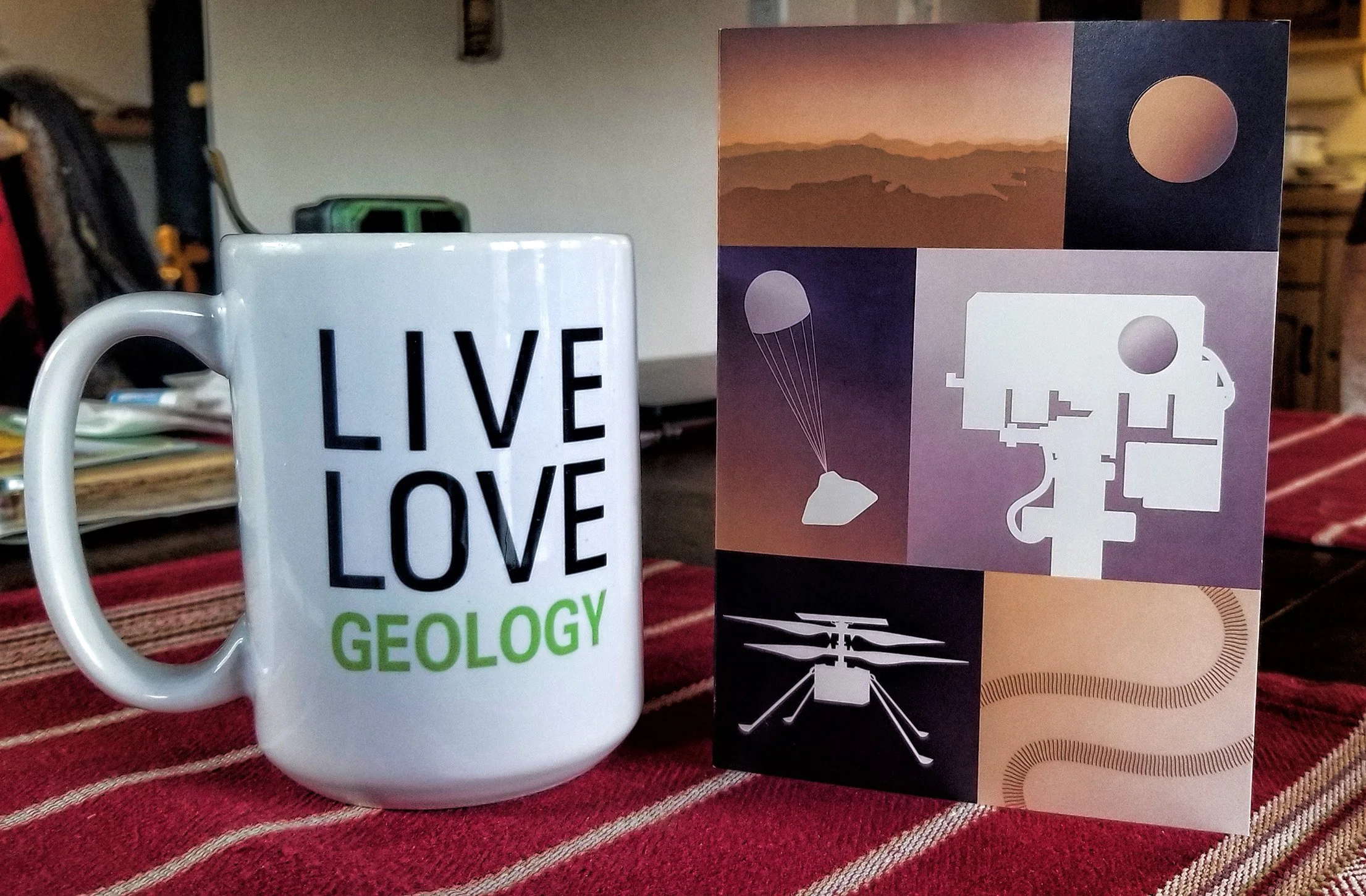
Get up-to-date regarding the on-going 2020 Mars Perseverance Rover mission.
Here’s an excellent article discussing the watery and sedimentary history of Jezero Crater.
Waxing gibbous Moon...
captured early this evening, 69% full, annotated with the general location of the Apollo landing sites on the illuminated portion.

Apollo 11 — Mare Tranquillitatis — July 20, 1969
Apollo 15 — Hadley/Apennines — July 30, 1971
Apollo 16 — Descartes — April 20, 1972
Apollo 17 — Taurus-Littrow — December 11, 1972
The International Dark Sky Association...
recognizes places that adopt quality outdoor lighting ordinances in order to protect dark skies, and the Town of Castle Valley is preparing an application to be designated an International Dark Sky Community. I’ve been asked to contribute some astroimages to support the application and I’m more than happy to help.

Star trails above the historic Pace homestead in Castle Valley, Utah (shot June, 2020).
Here’s more about International Dark Sky Places.
The first winter storm...
dropped more than 20 inches of snow in the high country, and 1.1 inches (2.8 cm) of rain in my gauge in Castle Valley. More, please.
Round Mountain (foreground) and the La Sal Mountains lit by alpenglow. (Click image to embiggen.)
Mesas in the mist...
this morning, following a rainy night that deposited fresh snow in the high country.
Click on image to enlarge.

Castleton Tower.
A new lens for astrophotography...
has been added to the quiver, the tack-sharp Rokinon 135 mm manual prime focus f/2.0. I’m eager to shoot the Orion nebula on a cold, clear night. Stay tuned.

Long shadows in the mid-day...
signal the approaching winter solstice in the northern hemisphere.

View towards the northwest from near Castleton, Utah. Yep, another stunning day in Castle Valley.
A trail cam has been deployed...
in a local canyon on a well-worn game trail with frequent deer traffic. We’ll see what comes along.


Trail on the left and the camera on the right.
The mooching rodent...
has returned to the feeding station, vacuuming up bird seed in its cheek pouch on a daily basis.

Rock squirrel (Otospermophilus variegatus).
Voracious goldfinches...
working the seed heads in the rabbitbrush.

American Goldfinch (Spinus tristis).

Same old, same old...
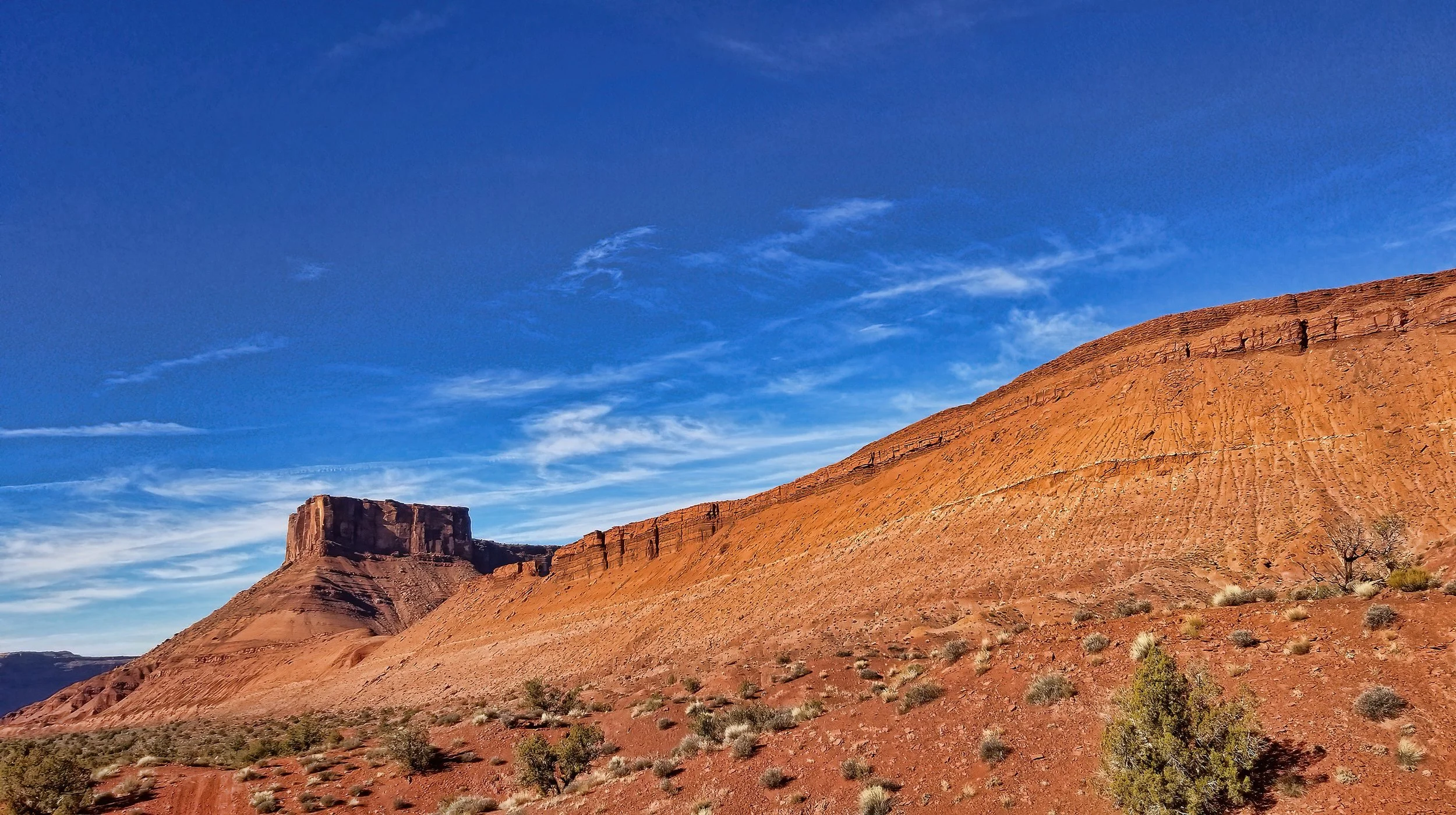
Parriott Mesa on another lousy autumn day in Utah. The winter solstice is still three weeks away.
Three thousand miles...
on the radical RadRover 5 ebike! Still loads of fun.


Depths of the Earth...
by W.R. Halliday is the book that changed my life in junior high school, stimulating me to pursue a life of adventure, exploration and geology.

A regular breakfast visitor...
at the bird feeding stations that’s increasingly habituated to my presence, hence I’m able to get some nice close up images. Cool.

Sharp-shinned Hawk (Accipiter striatus).
It bears repeating...
that today is yet another obscenely gorgeous day in Utah.
Click on image to enlarge.
An old tricone drill bit...
was discovered on my walkabout today and has been added to my rock garden as a rusty relic from the mining era.

Return of the predator...
at the bird feeding station to see what’s on the buffet for Thanksgiving dinner.

Sharp-shinned Hawk (Accipiter striatus).

Pumpkin pie chart...
for Thanksgiving. Yum!

Liberating a prisoner...
from 300 million years of being entombed within the Permian-age Cutler Formation. Now that’s cause for a holiday celebration!

This quartz pebble was buried in the bed of a braided stream during deep geologic time, only to feel the warmth of the Sun’s rays for the last decade or so as erosion slowly lowered the surface, waiting with infinite patience for this day to arrive when I plucked it from its long slumber from the rocky outcrop, setting it free to roam upon the surface of the Earth once again!

Oh, the joy. Be free! Enjoy your travel through the watershed and into the Colorado River. Eventually this grain will abrade and break into smaller particles, only to be buried again centuries from now and incorporated into the rock record once again.
The geologic clock grinds on, whether we are here or not.