munching on some grain by my trailcam early last night.
Kit foxes (Vulpes macrotis).
munching on some grain by my trailcam early last night.

Kit foxes (Vulpes macrotis).
over Castle Valley, Utah this mid-afternoon. Chemtrails?!
(Click image to enlarge.)

Western Scrub-Jay (Aphelocoma californica).
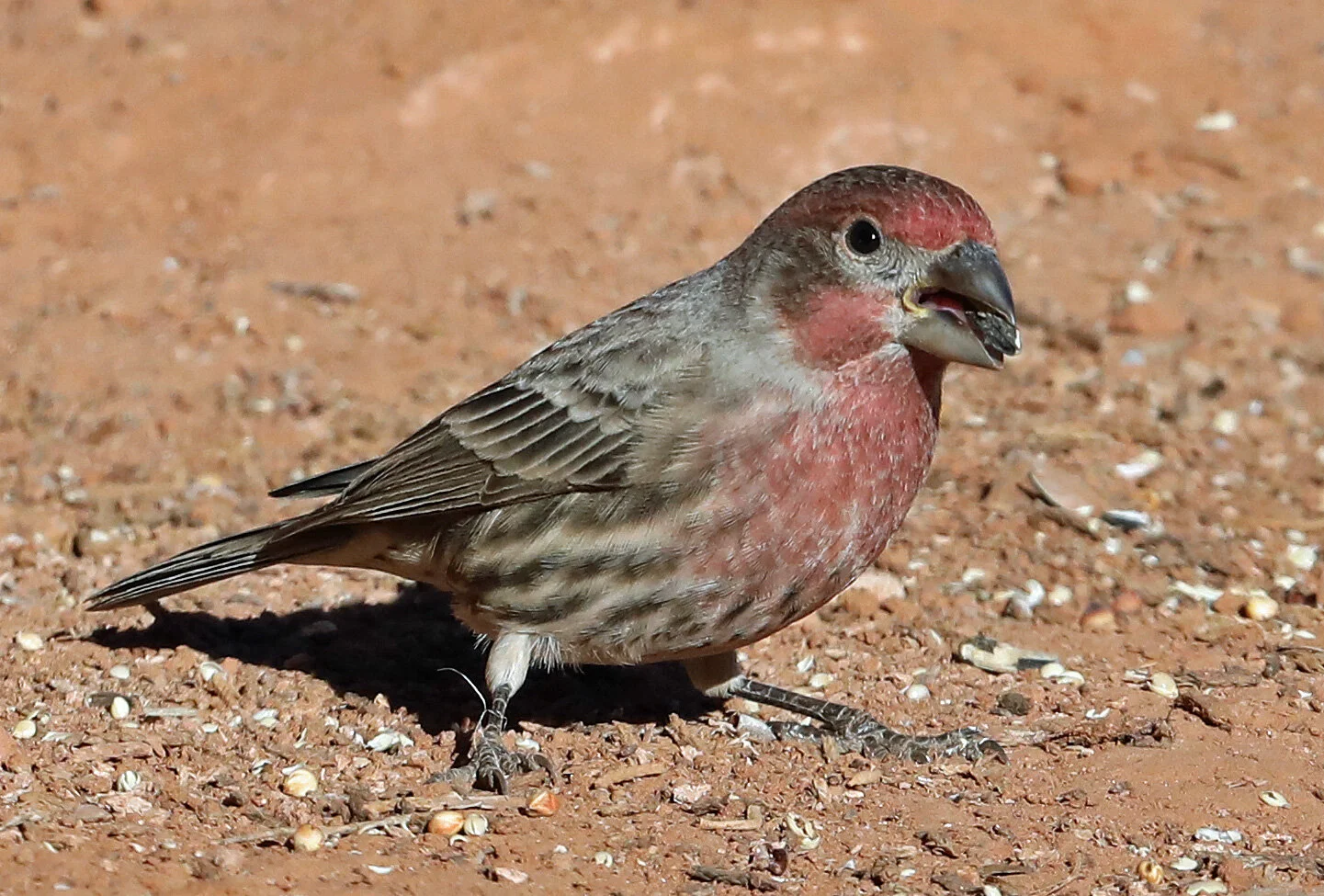
House Finch (Haemorhous mexicanus).
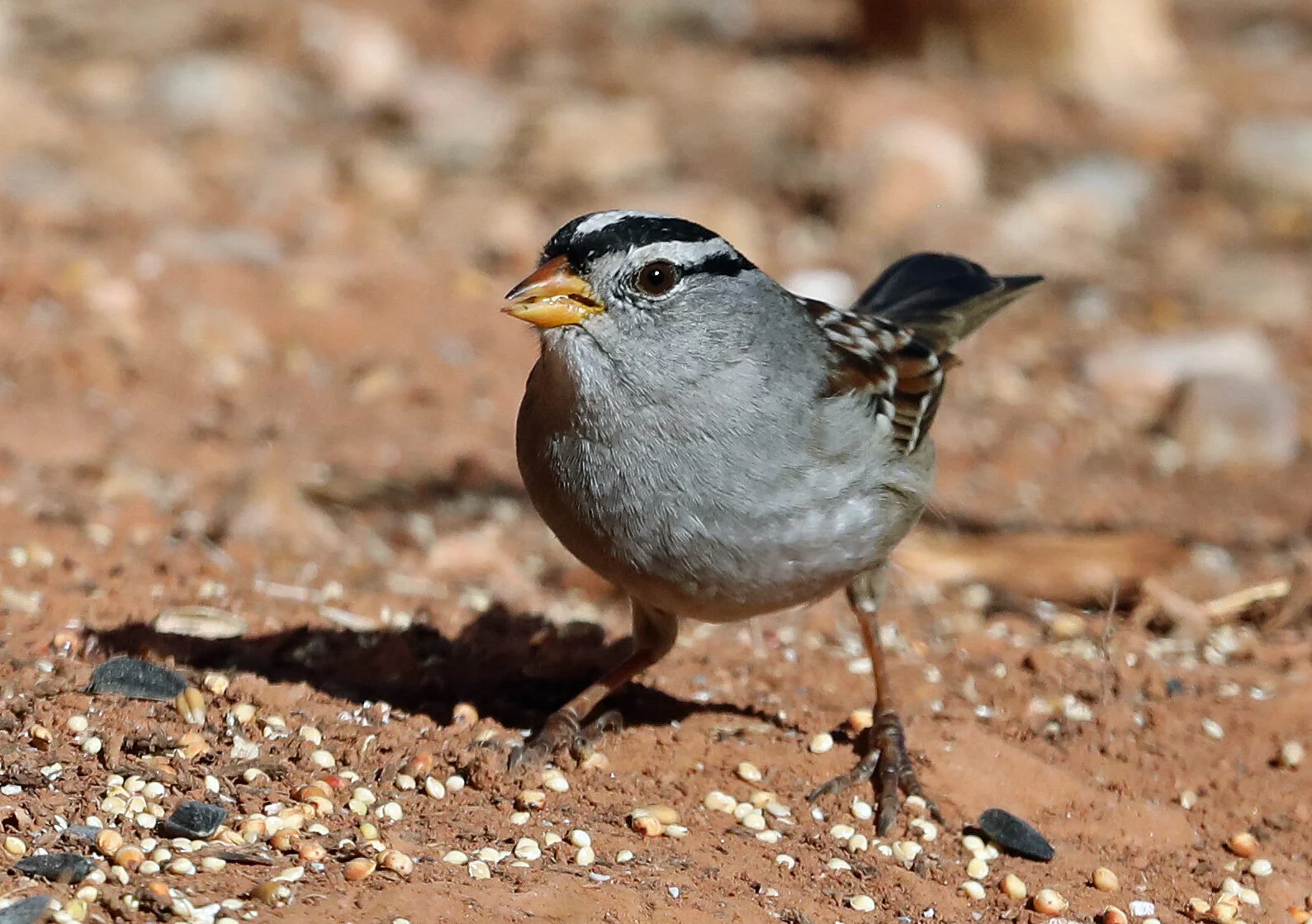
White-Crowned Sparrow (Zonotrichia leucophrys).

Dark-Eyed Junco (Junco hyemalis).
from my ride early this afternoon around Castle Valley, Utah. It’s like having a mountain bike park in your backyard!

The gate at the southern city limits, with the Round Mountain plagioclase-rich trachyte porphyry stock in the background. It’s the cathode to Devils Tower’s anode.
Panorama showing Adobe Mesa (left) to Castleton Tower (right). Here the track is within the strike valley consisting of Moenkopi Formation (Triassic) sandstone and mudstone red beds. (Click image to enlarge.)

Old jeep track with a commanding view of Castleton Tower, which consists of the Wingate Sandstone (Triassic-Jurassic) sitting atop the Chinle Formation (Triassic).
Panorama showing Castleton Tower and the Rectory (left) to Adobe Mesa (right). My shadow in this image absolutely proves that I was there! (Click image to enlarge.)

I always appreciate a charming ranch gate.

For the nerds: Here’s the GPS track recorded by my Garmin Fenix 6X Pro watch, superimposed on Google Earth, covering 17 miles and 1,600 feet elevation gain.
that is a regular visitor in the yard.

Desert cottontail (Sylvilagus audubonii).
you’ve seen in a couple of recent posts: RadRover 5 by Rad Power Bikes.
The brochure shot. (Click image to enlarge.)
Built like a tank, drives like a sports car. Word of advice: Do not ride an electric bicycle of any kind unless you are ready to buy it.
DECEMBER UPDATE: While I very much like the bike, the customer service at Rad Power Bikes leaves a lot to be desired. Buyer beware.
was huge fun, especially because of the interesting geology exposed along the way. Read more here:
Although the sky looks threatening, it was a pleasant and warm day for riding the 10 mile-long road with 1,600 feet of elevation gain. This panoramic image caught where Onion Creek is incising through sandstone beds of the Cutler Formation. (Click image to enlarge.)

Stinking Spring emerging from the gypsum caprock of the Paradox Formation (Pennsylvanian) that constitutes the body of the salt diapir. Note the white bacteria in the spring water.

Filamentous sulfur-reducing bacteria living in the discharge of appropriately-named Stinking Spring.
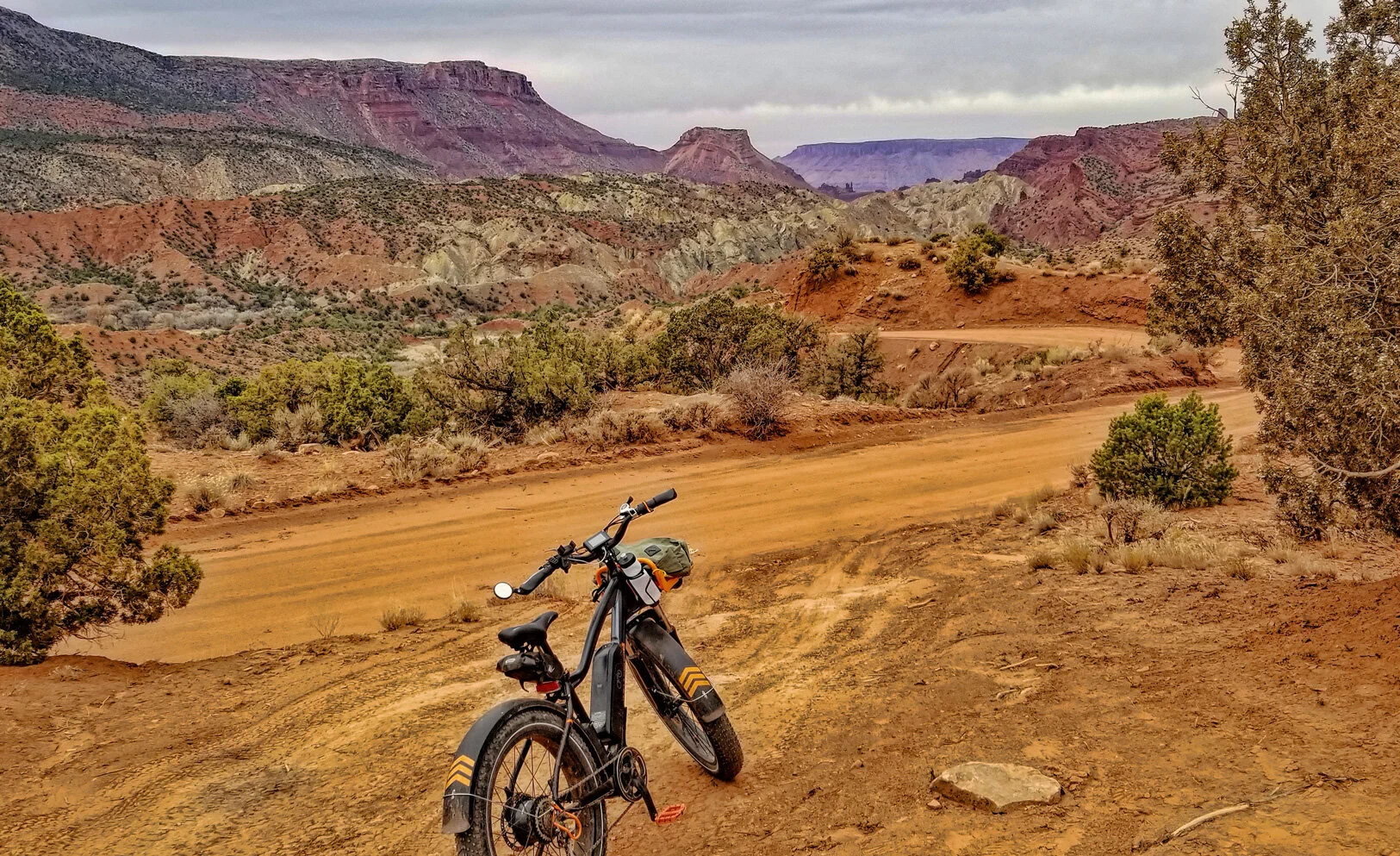
At the head of Onion Creek looking north across the olive-colored gypsum caprock of the Paradox Formation diapir. Red beds in near-right foreground are part of the Cutler Formation (Permian).
from my full hip replacement surgery just seven weeks ago continues strong! I’ve been out on my bike each of the last four days on various terrains and the pedaling is very therapeutic, but the several falls not so much (the doc doesn’t need to know about that).

Track map from my Garmin Fenix 6x Pro watch for Friday’s ride.


One of my groundwater monitoring wells in Castle Valley, and my bad ass RadRover 5 eMTB.

back in southeastern Utah.


Winter storm blankets Castle Valley the day after my arrival!
Early morning at the Snake River Overlook. This view was made famous by Ansel Adams in 1941, but today, there are too damn many trees for a similar photograph. (Click image to enlarge.)

Ranch site at Mormon Row with the Grand Teton and Mount Owen looming in the distance.
early last week, during my travels south to Utah.

Geothermal steam during a chilly early morning at Norris Geyser Basin, the hottest part of the caldera.
Norris Geyser Basin painted with various colorful heat-tolerant bacteria.

Gibbon Falls (84 feet (26 m) tall).

So-called Black Pool at West Thumb.

Fishing Cone on the shore of Yellowstone Lake at West Thumb. Jim Bridger tells a tall tale here: “When he needed a quick meal, Bridger would catch a trout and reel it in slowly, allowing time for it to cook on the line as it passed through the hot water.”
Grand Prismatic Spring at Midway Geyser Basin. (Click image to enlarge.)

Elk calf slowly nodding off on the warm ground near a geothermal vent.


Grand Geyser, in the Upper Geyser Basin, fountaining as high as 200 ft (60 m).

Last but not least, Old Faithful.
due to a fractured femoral neck and total hip replacement surgery! I was getting a little too rascally on my new electric mountain bike in early September! Paramedics had to come to my aid and scrape me up off the rocks. Doh.

BEFORE: Finger is pointing to fractured femoral neck on my right hip. Ouch.

AFTER: Installed titanium prosthetic. Recovery is proceeding exceptionally well!
UPDATE: My recovery is strong now 28 days post-surgery. I’m more than a bit frustrated by the doc’s limitations but I am taking it slowly and cautiously and doing my own physical therapy. I’ll be back!
on a hot summer morning, especially by these Western Bluebirds.


shot this morning at 5:45 am PDT.

from images shot today on the lake.


NOTE: Images were processed with Topaz Lab’s “Glow” plugin for Adobe Photoshop/Lightroom.
caught at 2:30 am PDT this morning.

Handheld Canon 5Div with 500 mm prime lens, ISO 100, 1/100th sec at f/4.5.
allow for easier photography and a less turbid water column.

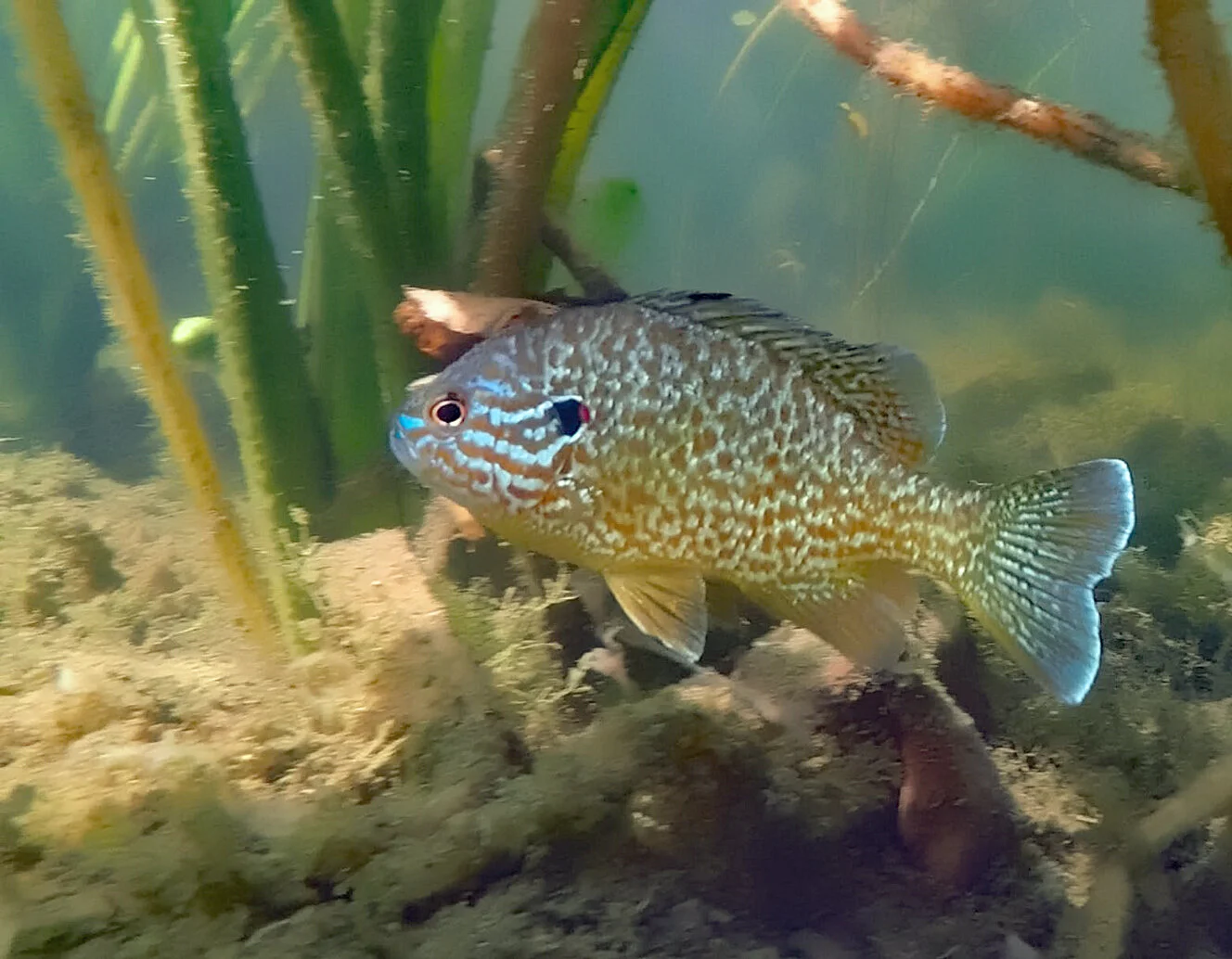
Pumpkinseed sunfish (Lepomis gibbosus).

GPS track of my paddling route, sticking close to the lily pads around the perimeter of the water body.
just one mile west of my residence in the Scabland pines, near Cheney, Washington. Local police knocked on my door around 1:30 pm PDT and ordered my evacuation, so I grabbed my camera gear and chased the story.

Tinder dry conditions in the rangelands and ponderosa pine forests in rural eastern Washington are easily ignited mid-summer, but the cause of this fire remains unknown at this time.

The Air Tractor AT-802 in the Fire Boss configuration with pontoons, capable of carrying 820 US gallons of water.

Water drop underway with nearly 7,000 pounds of weight loss on the airframe.


Mopping up hot spots after the air drops.

where there’s a fascinating universe just below the water surface.


atop an Atlas V-541 rocket from Cape Canaveral, carrying the next-generation scientific rover, named Perseverance, this Thursday, 30 July 2020 at 7:50 am EDT. Link to more information about this extraordinary machine: Mars 2020 Perseverance Rover. Landing on the red planet will occur in late February 2021.
What fascinates me, though, is that this robotic geologist will land on/near an ancient deltaic system that enters the crater from the west. I have lectured about this landform and depositional system in various courses from physical geology, fluvial geomorphology, sedimentology and stratigraphy, and more.

Image of fluvial-deltaic system on west side of Jezero Crater. False color image from NASA.

Photo-geologic map of Jezero crater quads showing exposed bedrock and surficial units. Blue circle indicates the landing ellipse. From Williams et al., 2020 (pdf). Related on-line article: Here’s How Scientists Mapped the Perseverance Rover’s Landing Site.