is populating the valley in great numbers this winter, with a large “conspiracy” visiting the feeding stations on a daily basis.
Common Raven (Corvus corax).
is populating the valley in great numbers this winter, with a large “conspiracy” visiting the feeding stations on a daily basis.
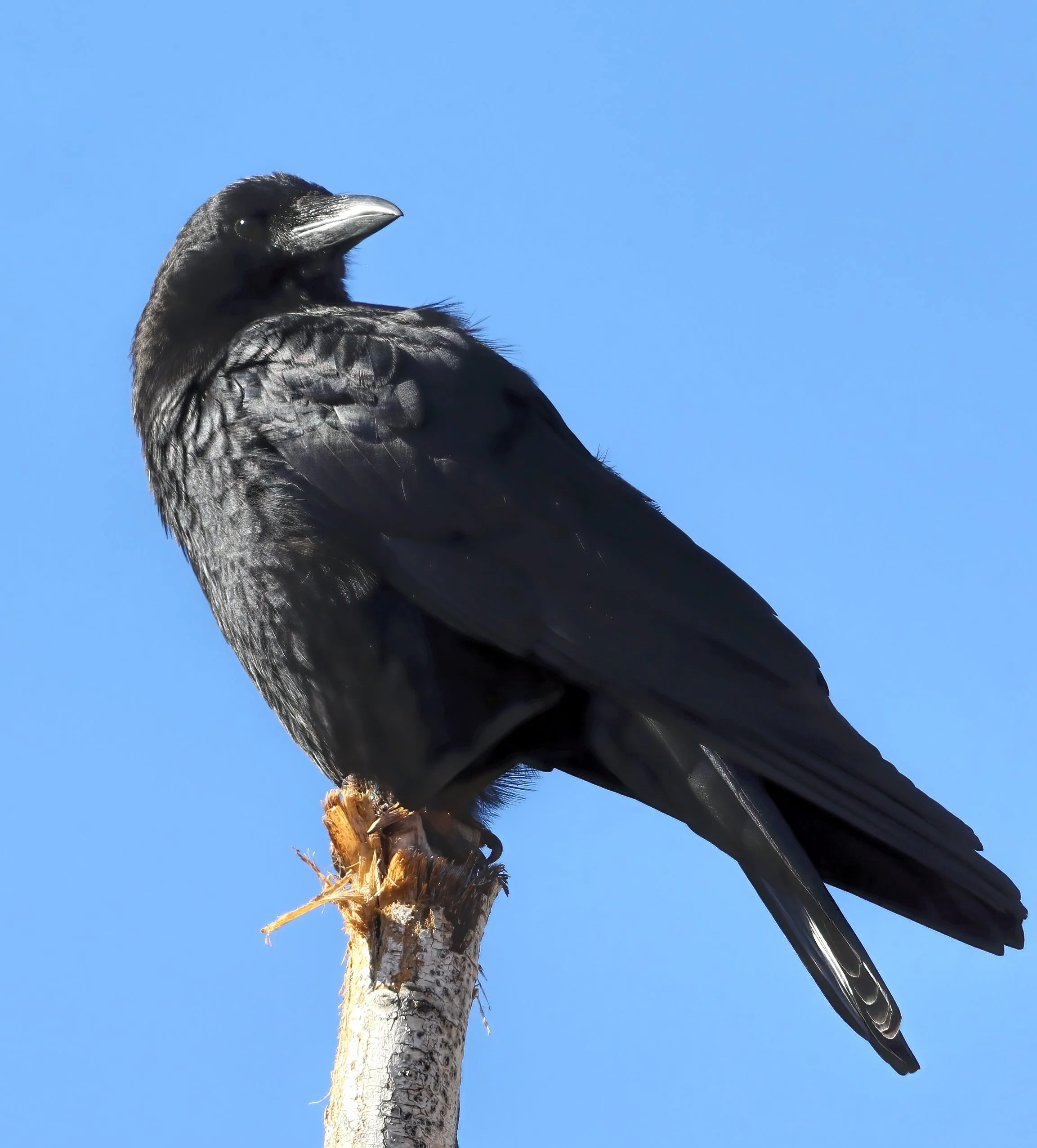
Common Raven (Corvus corax).
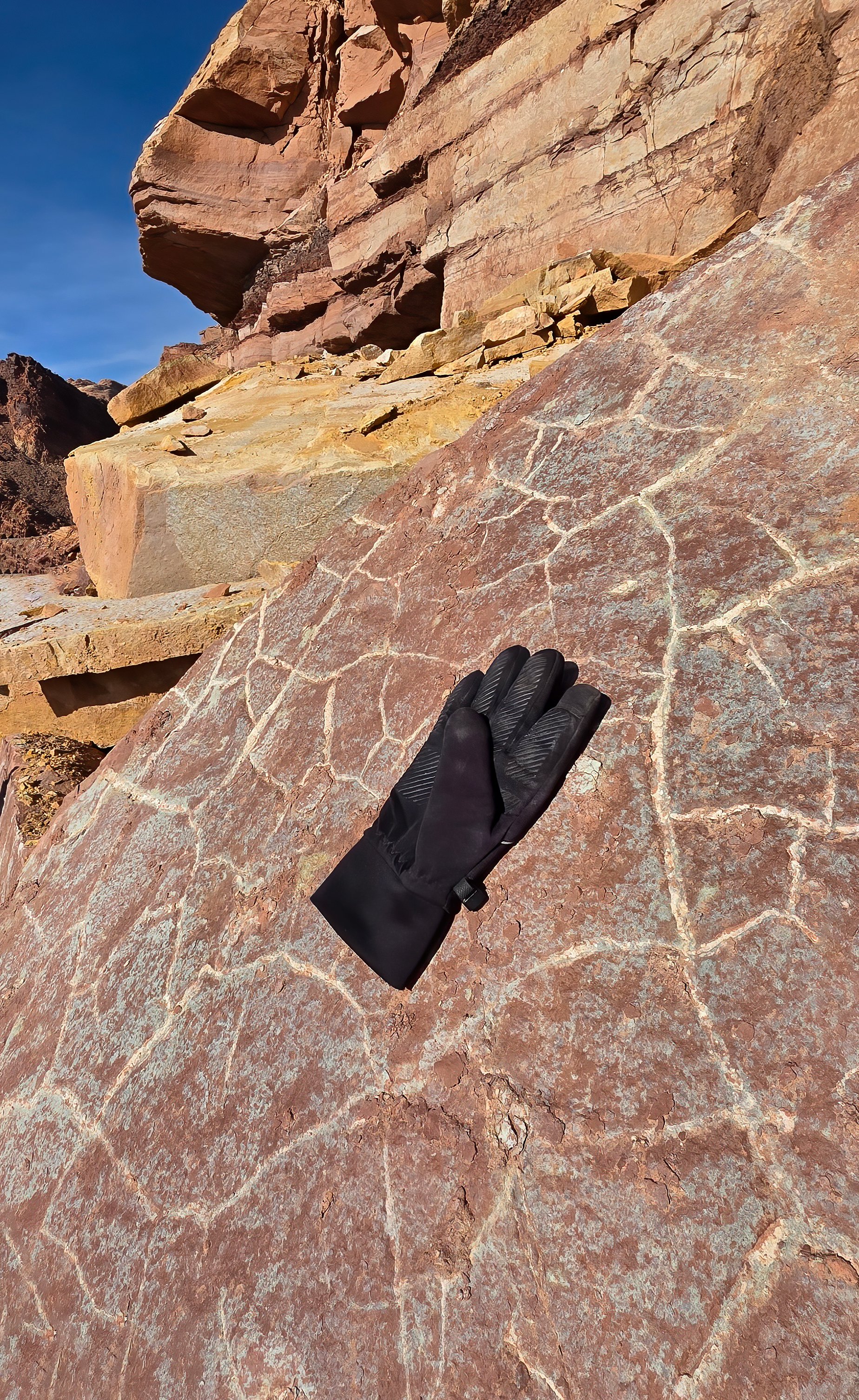
displayed on a bedding plane on a fallen slab from the Chinle Formation (Upper Triassic (237-201.3Ma)) near Courthouse Wash. This sedimentary structure formed as muddy sediment dried and contracted due to reduction in water content, then buried and preserved with sandy sediments from a subsequent flood event.
as seen from a lofty perch above Castleton on a clear and cold early winter day.
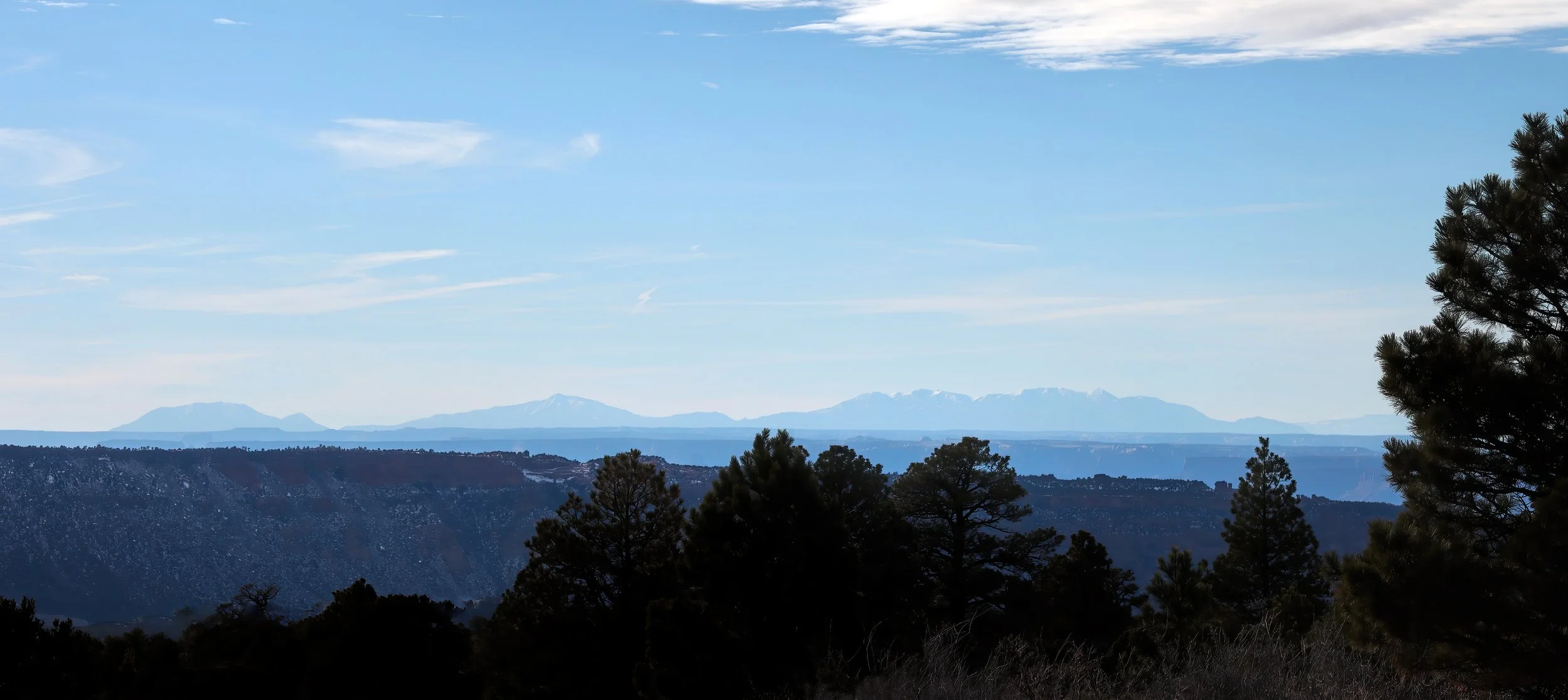
The Henry Mountains, 90 miles (145 km) distant. From left to right (south to north): Mount Hillers (10,741 ft (3,274 m)), Mount Pennell (11,413 ft (3,479 m)) and Mount Ellen (11,527 ft (3,513 m)).
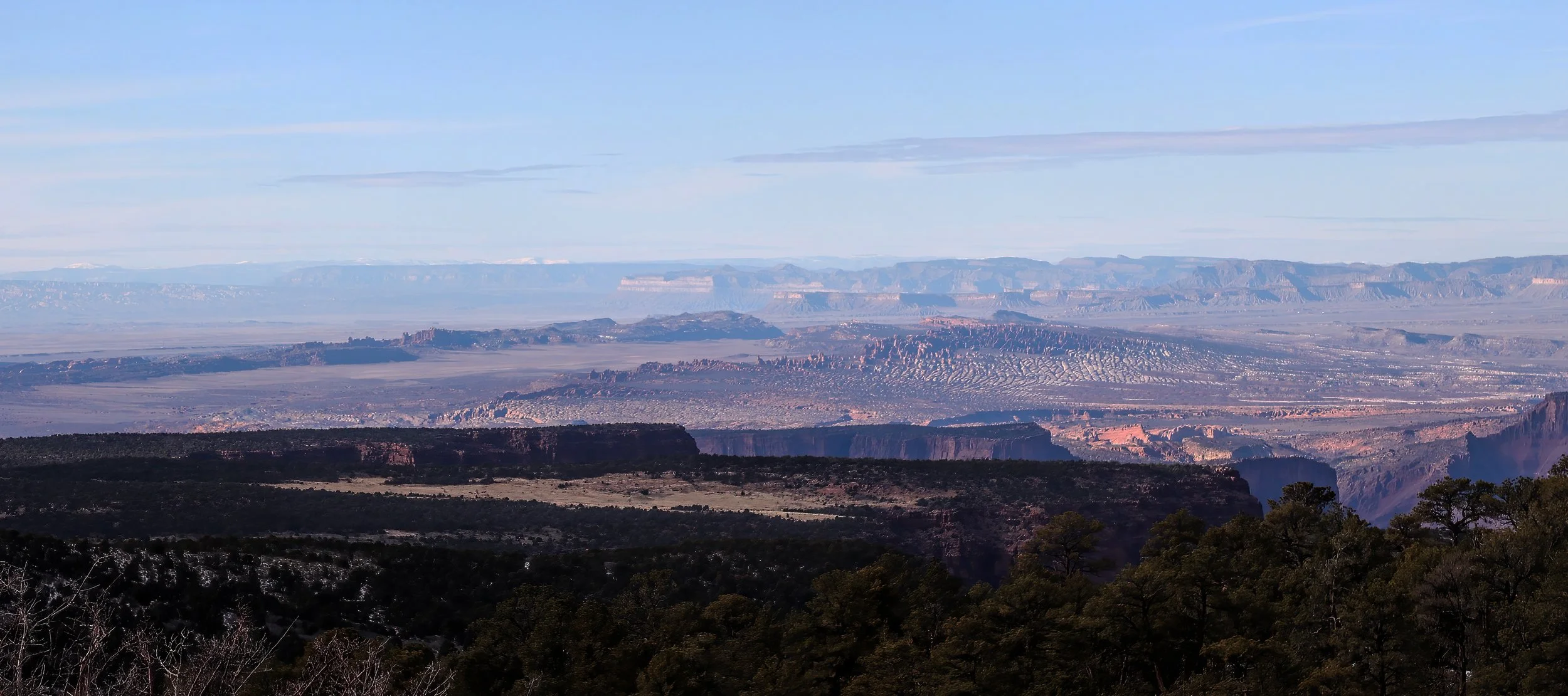
The collapsed salt-cored anticline in the heart of Arches National Park, 25 miles (40 km) distant. The Book Cliffs are 39 miles (63 km) distant.
spies a potential target this morning.
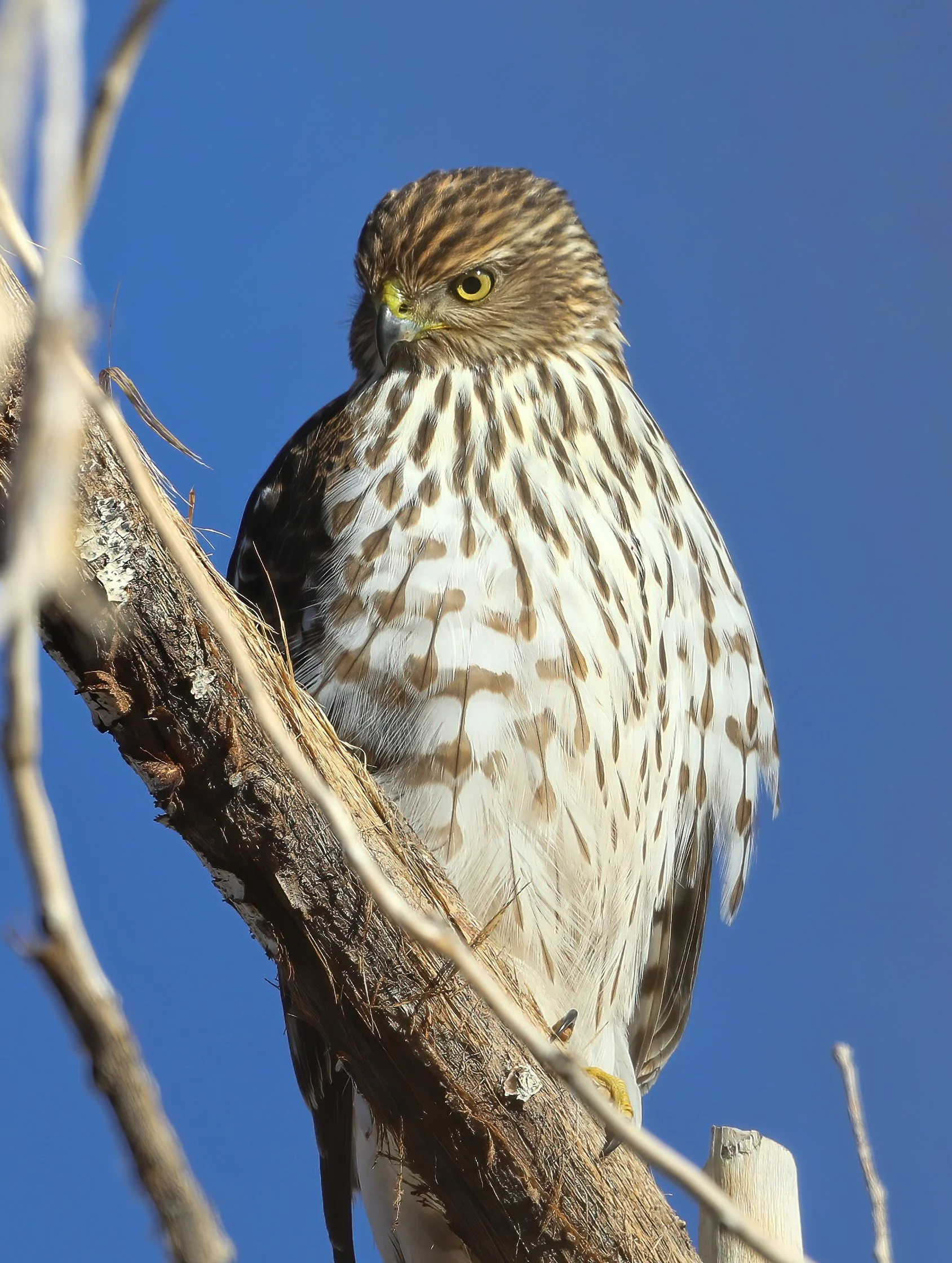
Cooper's Hawk (Astur cooperii).
illuminates the conical landform like a mural painting.
Click on image to supersize.
has assaulted the feeding stations, numbering nearly 100 voracious individuals. Here are just a couple.
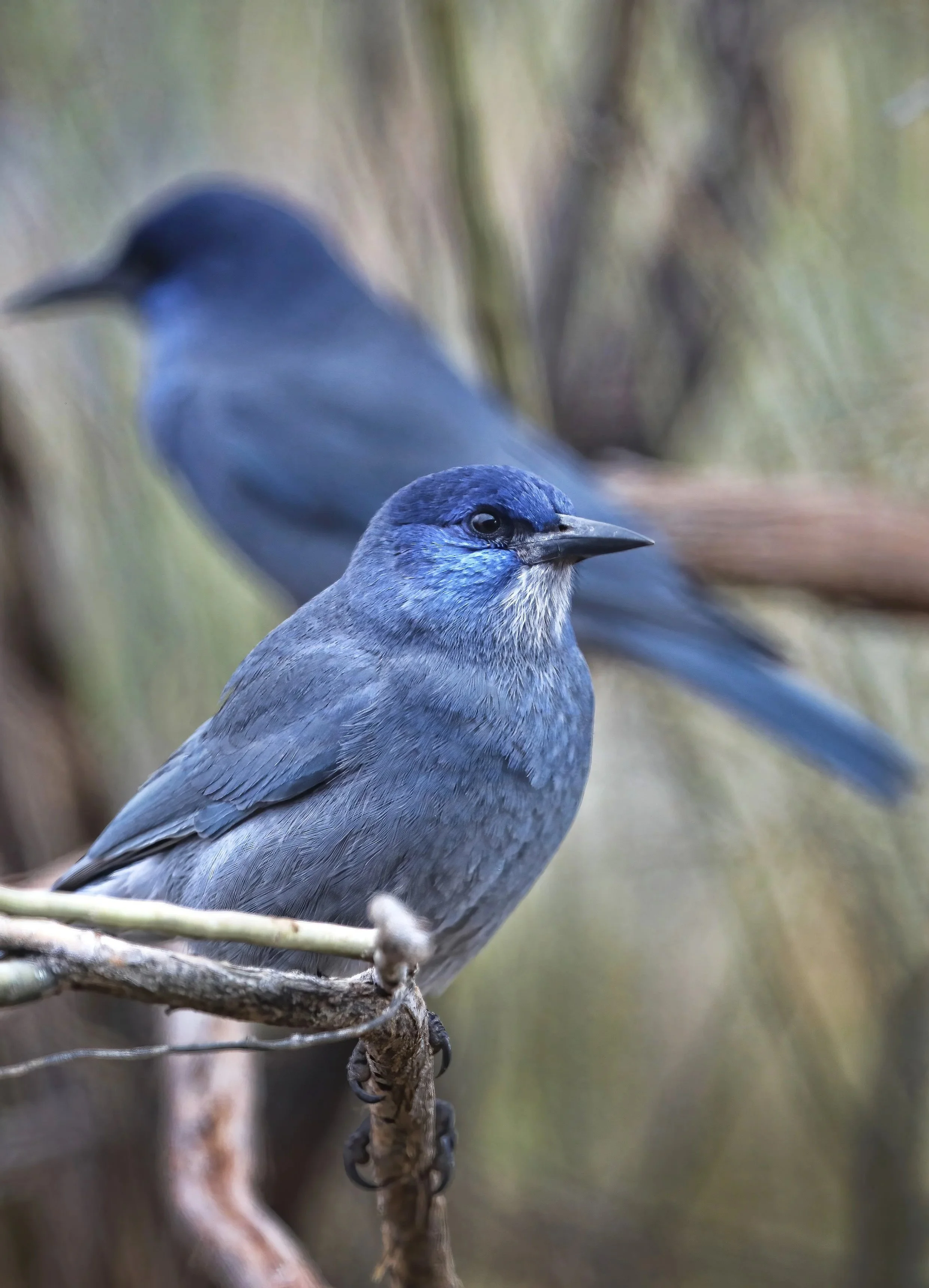
Pinyon Jay (Gymnorhinus cyanocephalus).
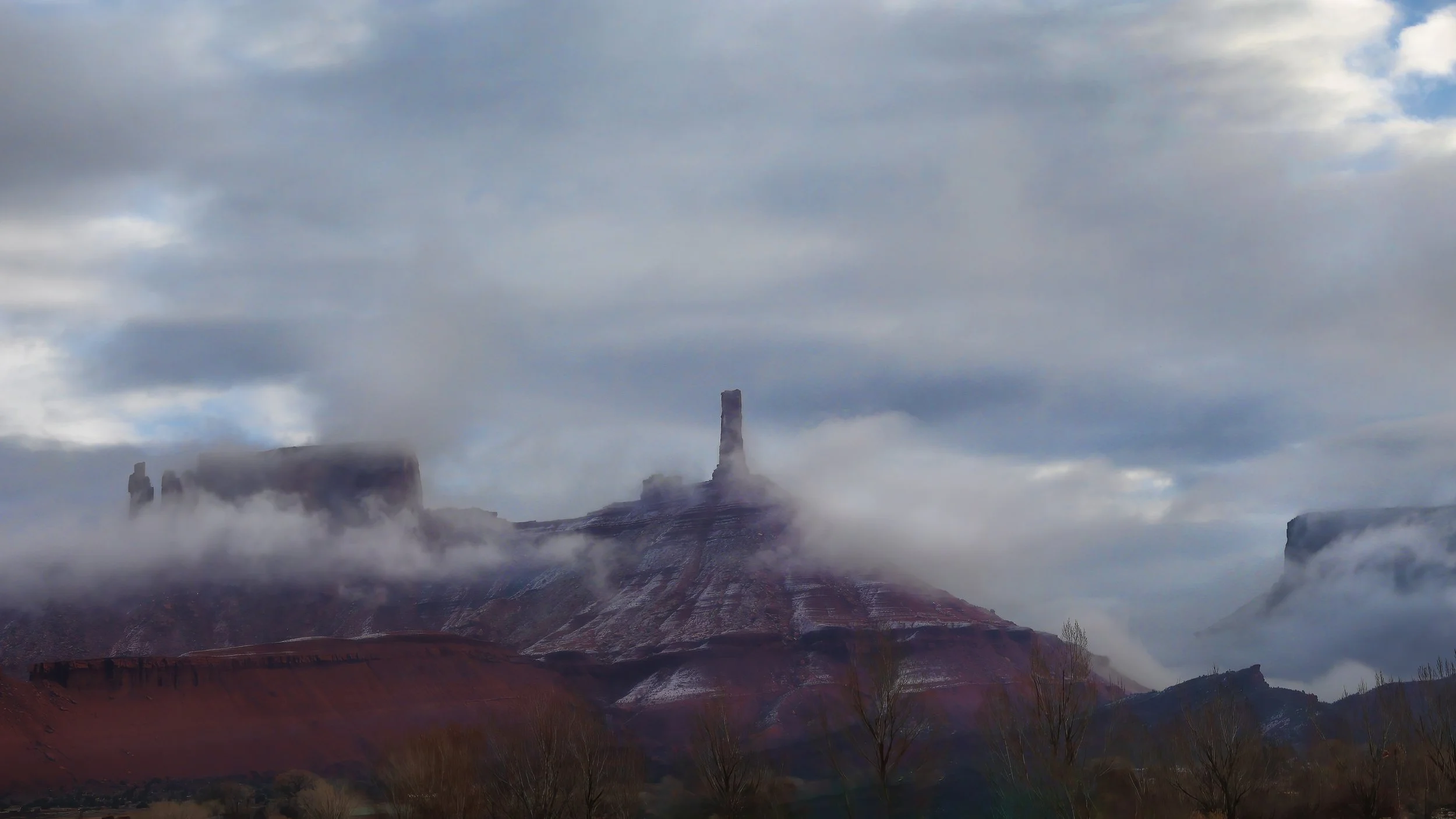
and then becomes obscured by low clouds as the latest early winter storm slowly passes, the first of which that dropped snow flurries on the valley this season. Meanwhile, the high country is off to a good start, sitting at 100% median snow water equivalent for this point in the water year.
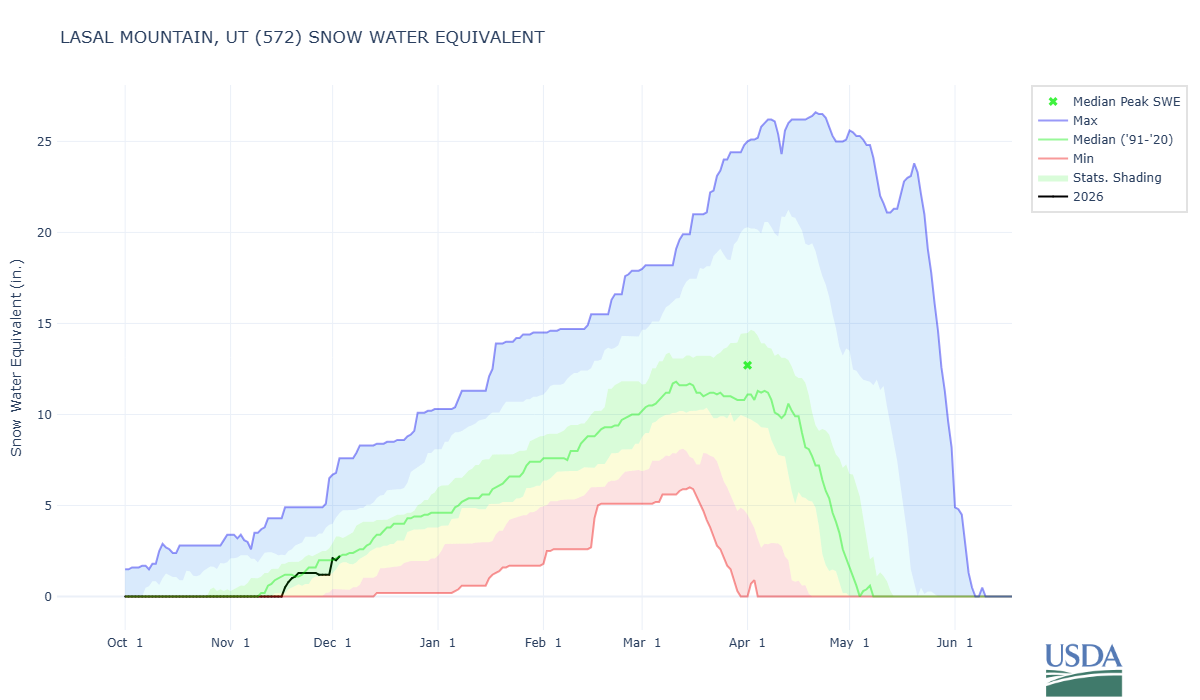
Time series plot of snow water equivalent for the Lasal Mountain SNOTEL site.
with its winter coat on in response to the first hard freeze overnight as it stakes out the feeding stations the following morning.
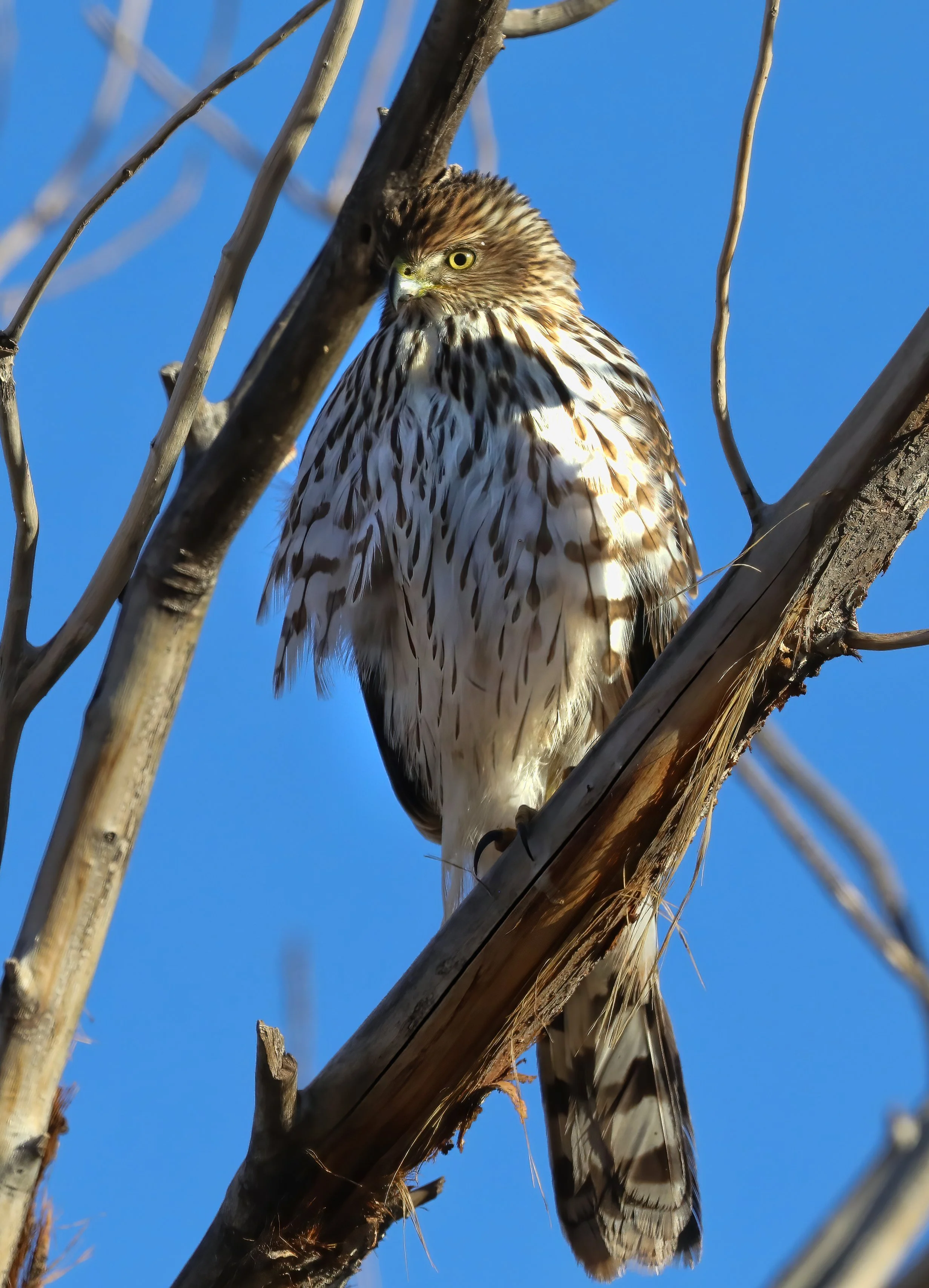
Juvenile Cooper’s Hawk (Astur cooperii).
is found in Onion Creek where the peculiar geology of the salt-dominated formation is on full display. The light-colored gypsum caprock is highly structurally distorted, demonstrating the plastic nature of the buoyant salt body as it rises and displaces other clastic rocks in the geologic section.
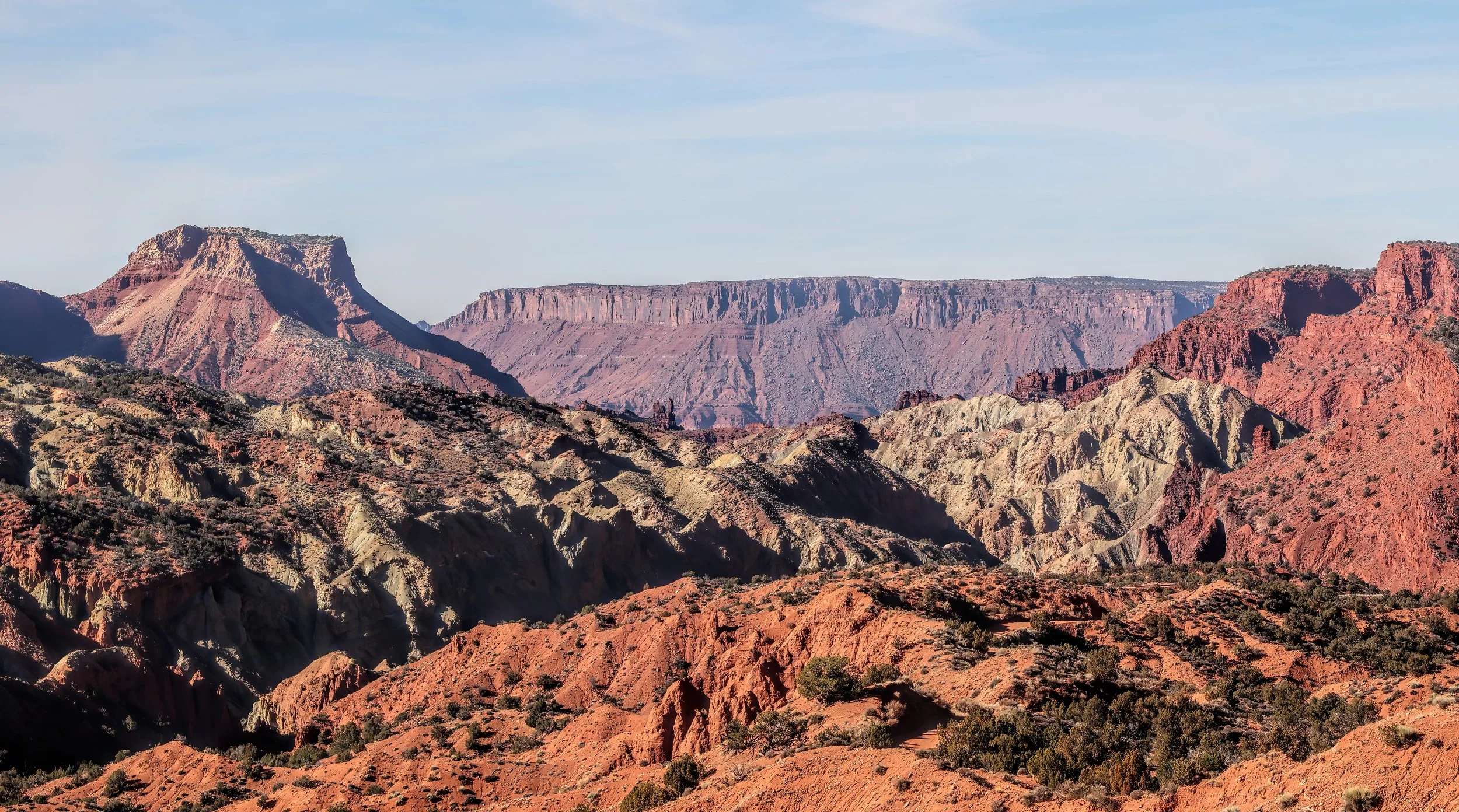
View eastward, across the Onion Creek diapir. The Paradox Formation (Middle Pennsylvanian (315.2Ma - 307Ma)) is the light-colored unit in contact with the red beds of the Cutler Formation (Lower Permian (298.9Ma - 273.01Ma)).
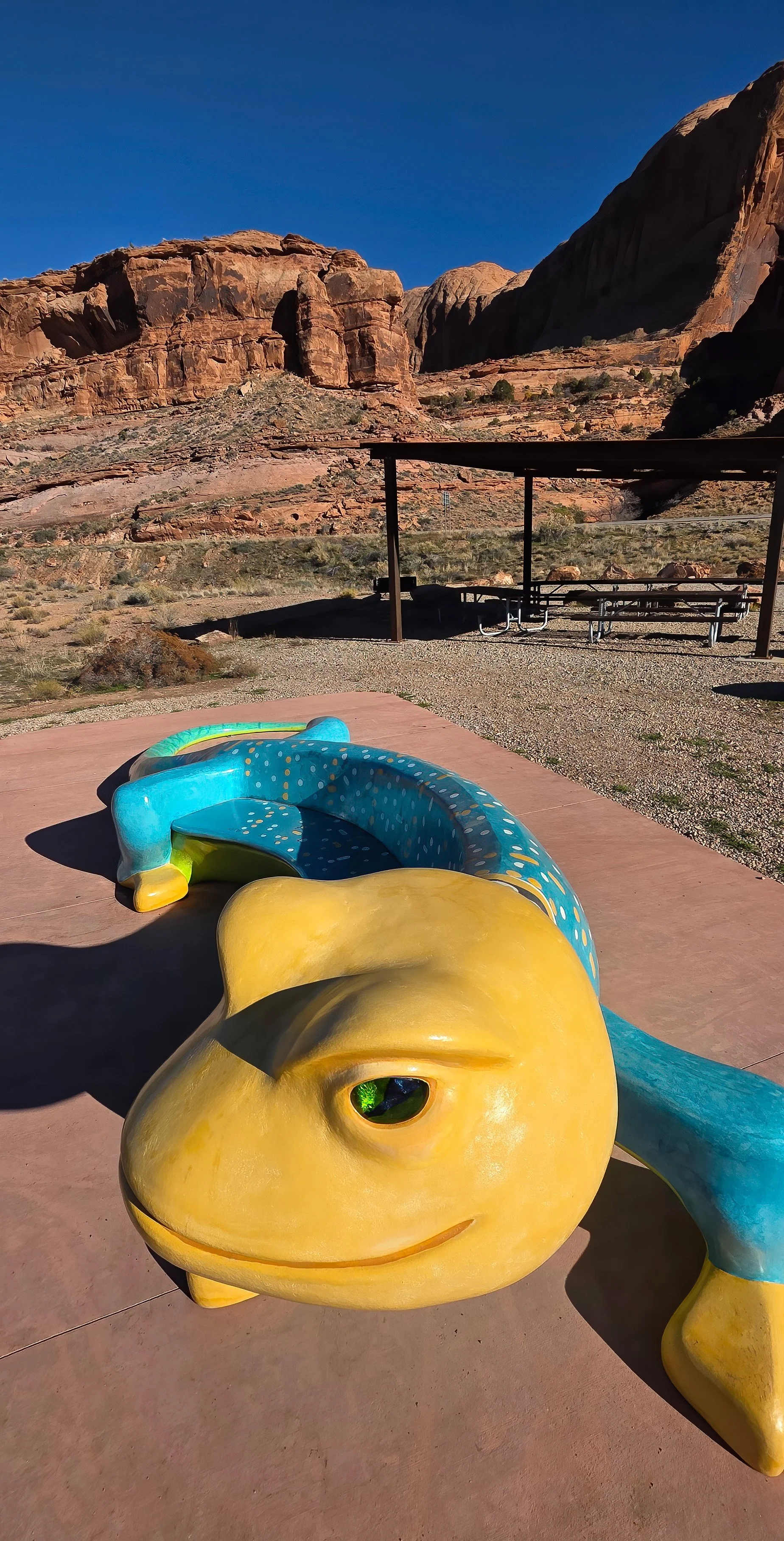
of enormous proportions has appeared at the Colorado Riverway Information pullout near Goose Island Campground. Fun!
in the bright sun, presenting perfectly posed profiles to the camera this afternoon. It’s also quickly becoming tolerant of my close by presence.

Juvenile Cooper's Hawk (Astur cooperii).
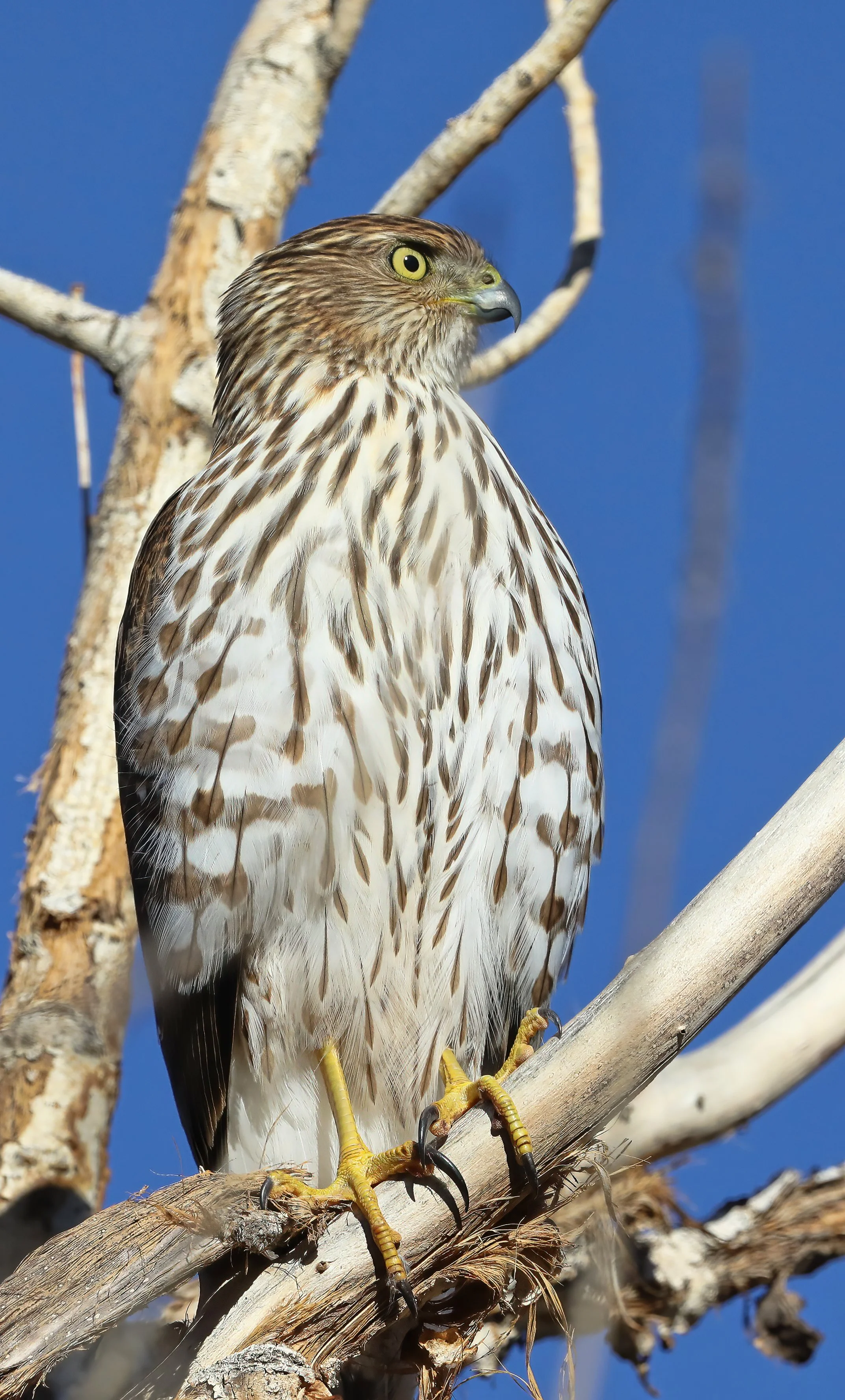
this patiently perched raptor isn’t leaving without breakfast. This handsome bird is now a near daily sighting around the feeding stations.
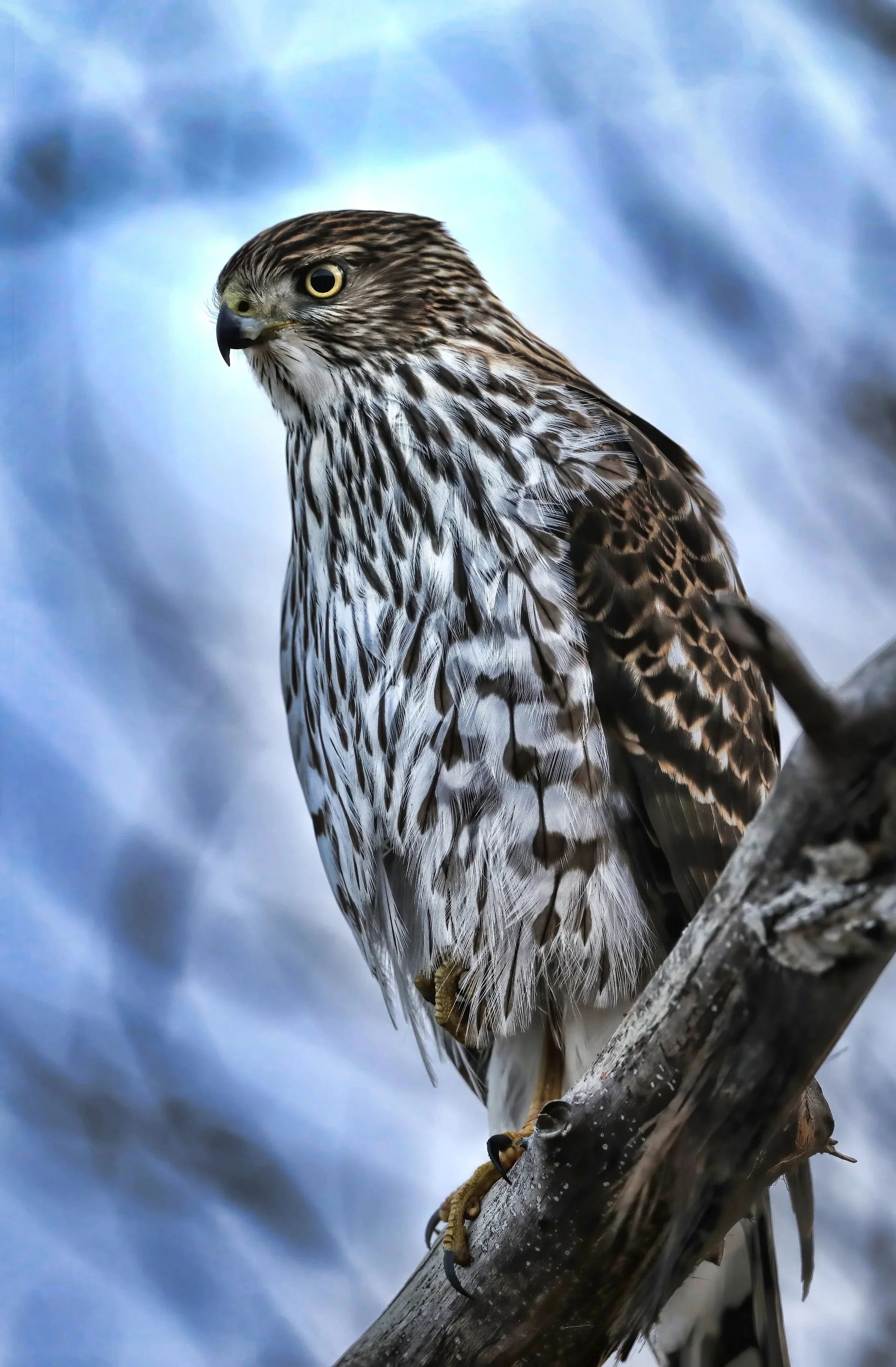
Juvenile Cooper's Hawk (Astur cooperii).
in the La Sal Mountains following several days of unsettled weather. About a half-inch (13 mm) of rain fell mid-valley at lower elevation.

Late afternoon atmospherics at Round Mountain.
still allows for zooming the trails lower in the valley the day after the storm. Winter approaches.

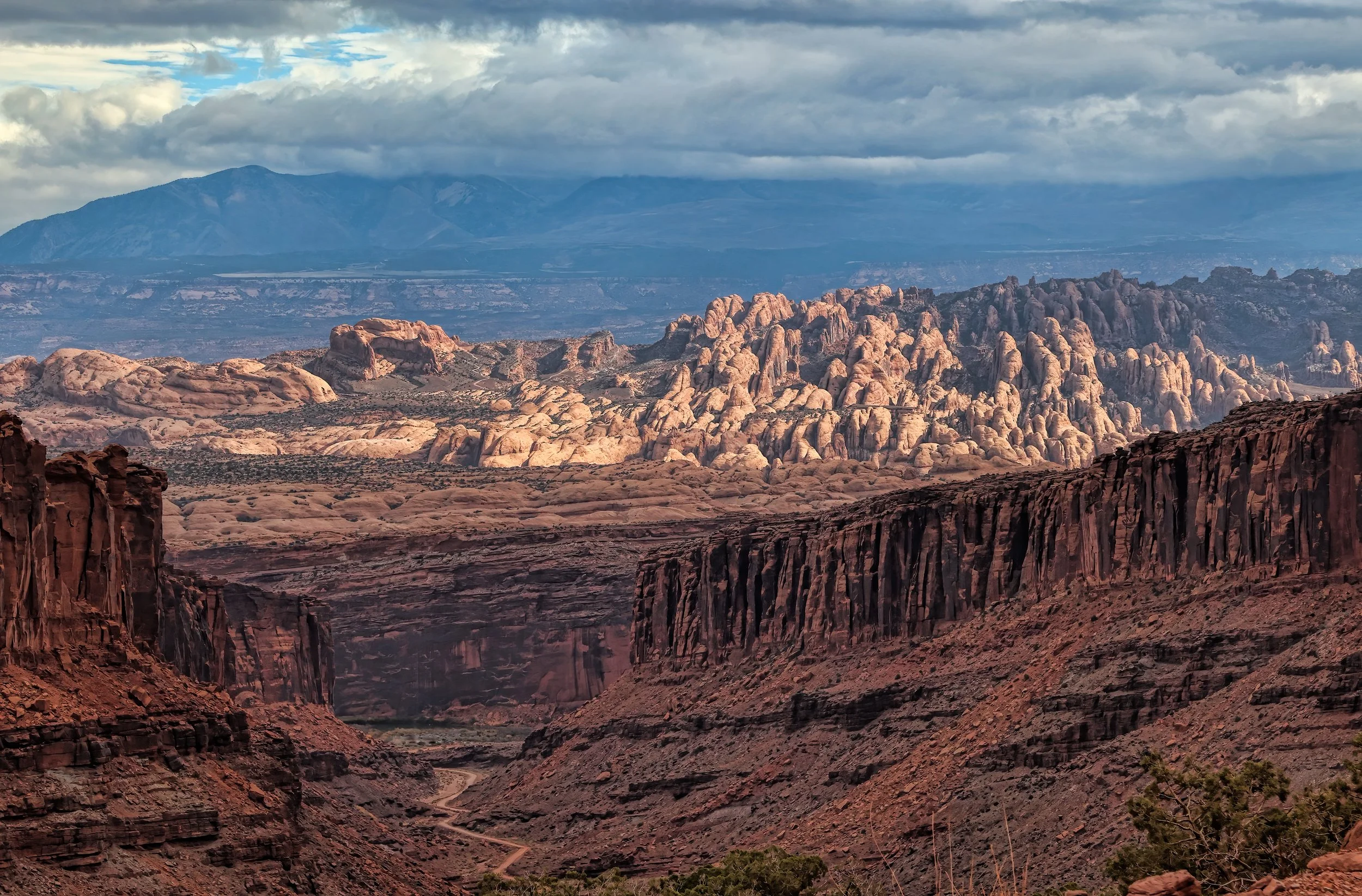
in the distance this morning, the sandstone fins in the strongly-jointed terrain catching some filtered rays of sunshine under unsettled weather. The image below was captured during the ascent of Long Canyon early in the day.
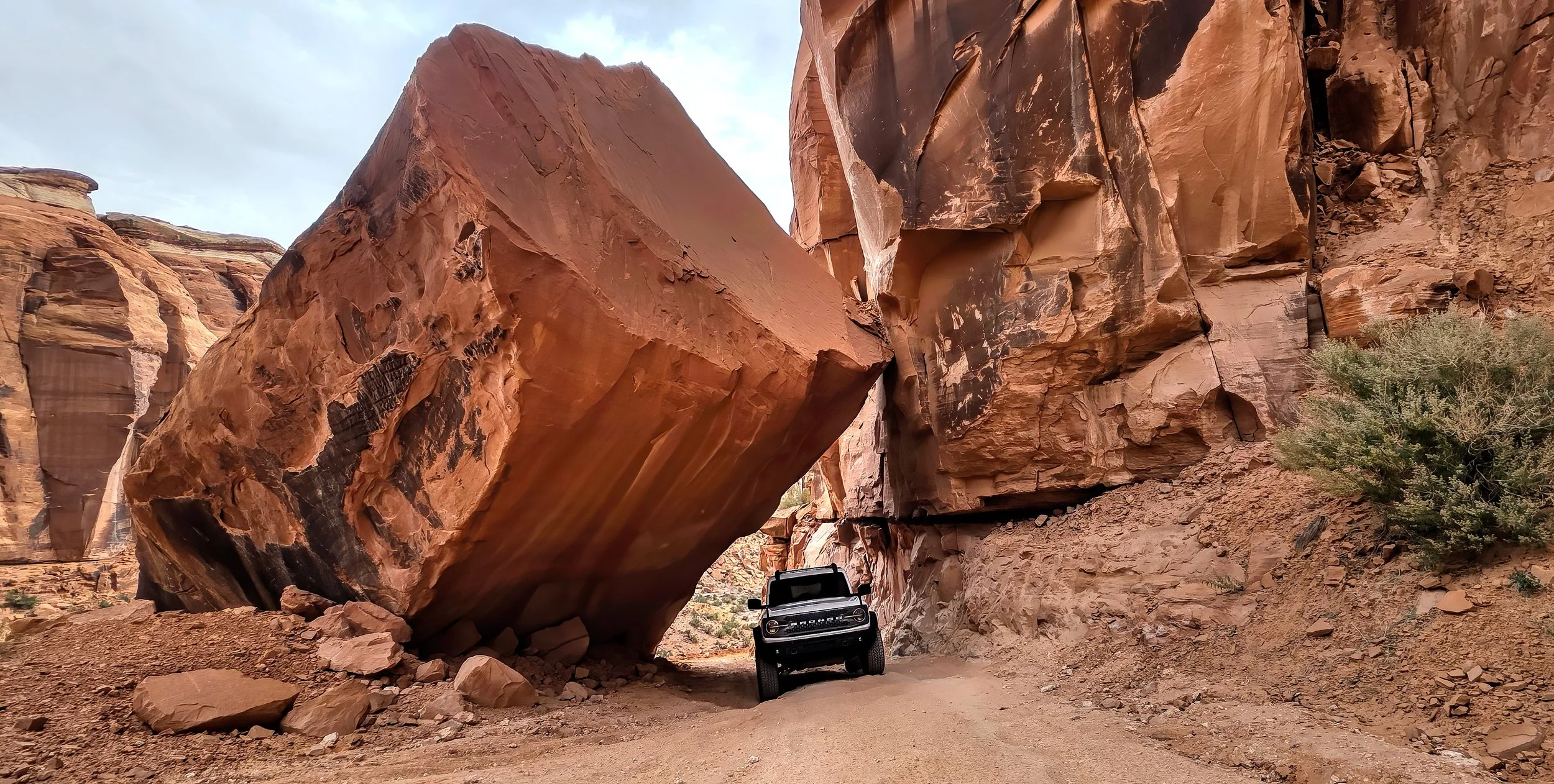
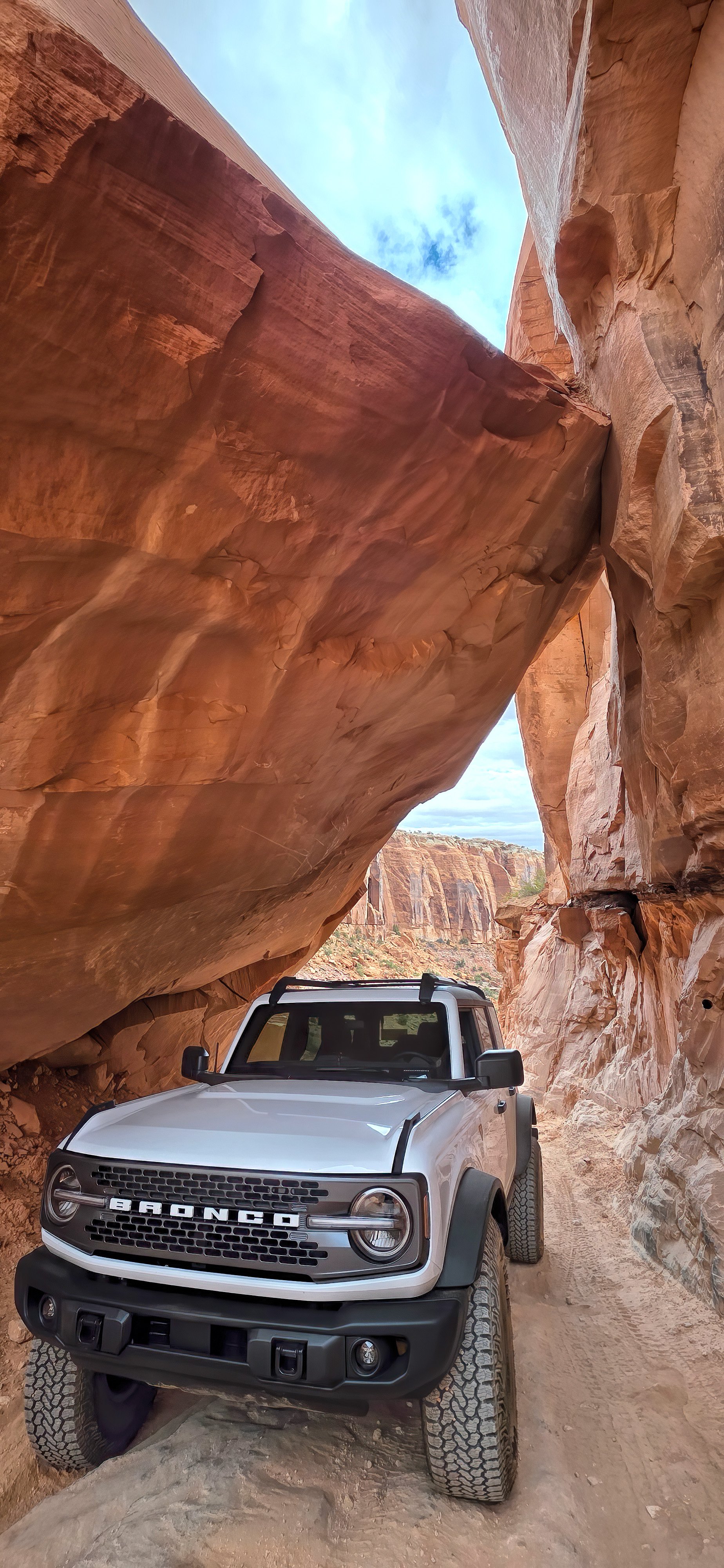
Having fun with the new Bronco in Long Canyon at Pucker Pass.
signals an incoming change in the weather with some moisture arriving late in the weekend.
Click on image to enlarginate.
is being enjoyed in the bird bath. Unfortunately this opportunity won’t last much longer as the irrigation system is being winterized tomorrow.

Western Meadowlark (Sturnella neglecta).
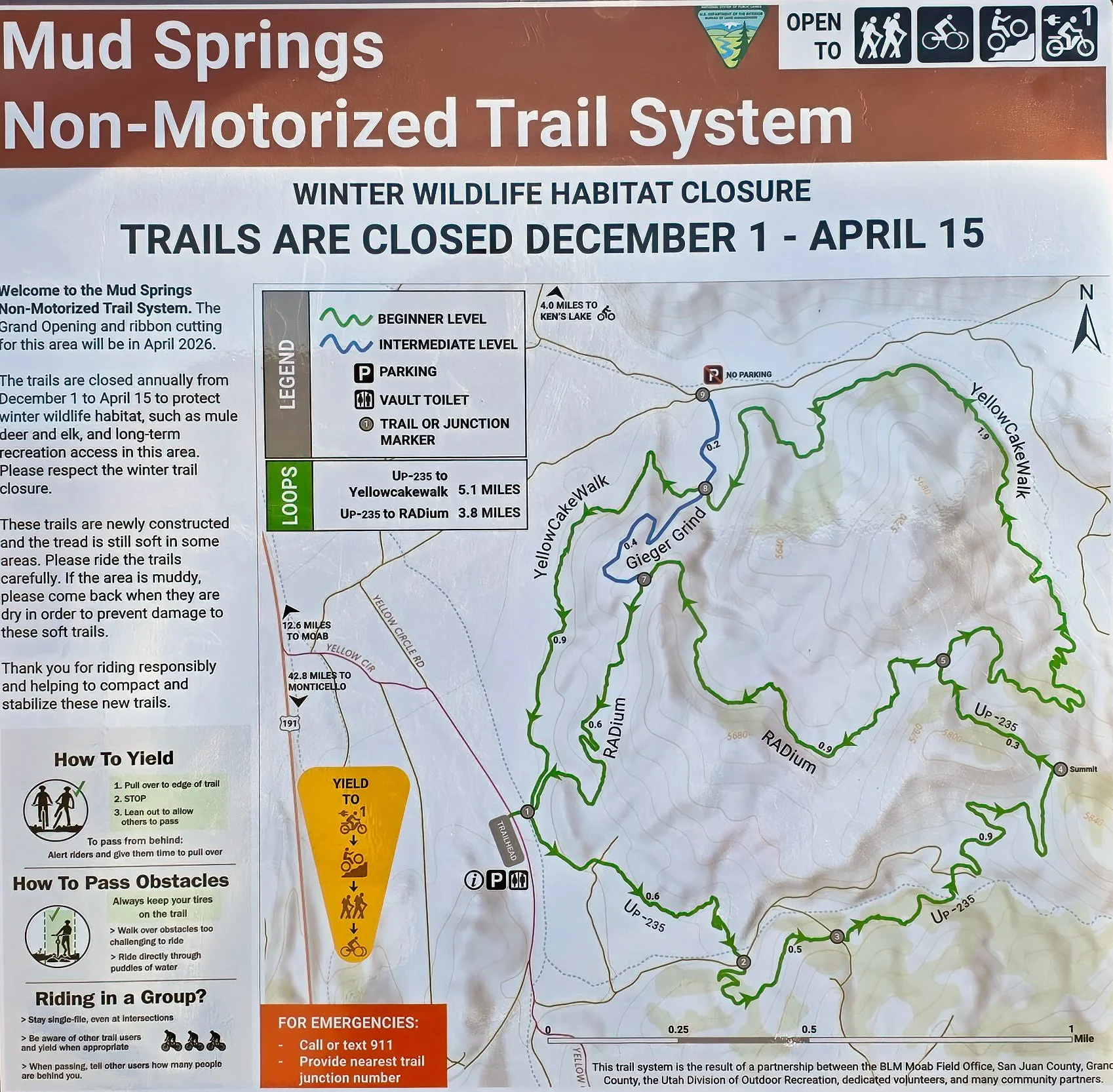
that lacks curb appeal, the Mud Springs Non-Motorized Trail System is the newest mountain biking area south of Moab and it is HUGE fun. I explored about nine miles (~14 km) today during its “soft opening” prior to a winter closure that commences 1 December 2025. It’s brilliantly designed and expertly constructed with lots of downhill flowy sections with banked/bermed corners where experienced riders can carry speed through the turns. Once again, it’s enormous fun!
Scenic view from the top of the trail system. (Click on image to embiggen.)
near the feeding stations this morning, waiting patiently to grab brunch.

Juvenile Cooper's Hawk (Astur cooperii).

UPDATE: The following morning, with the Sun at its back, hunting for breakfast.
over Castle Valley this quiet early morning, landing multiple times on Castleton Road over several hours time, shattering the Sunday morning silence in the valley with tremendous noise and reverberations off canyon walls. No search and rescue is underway, so why all the disruptive commotion?!
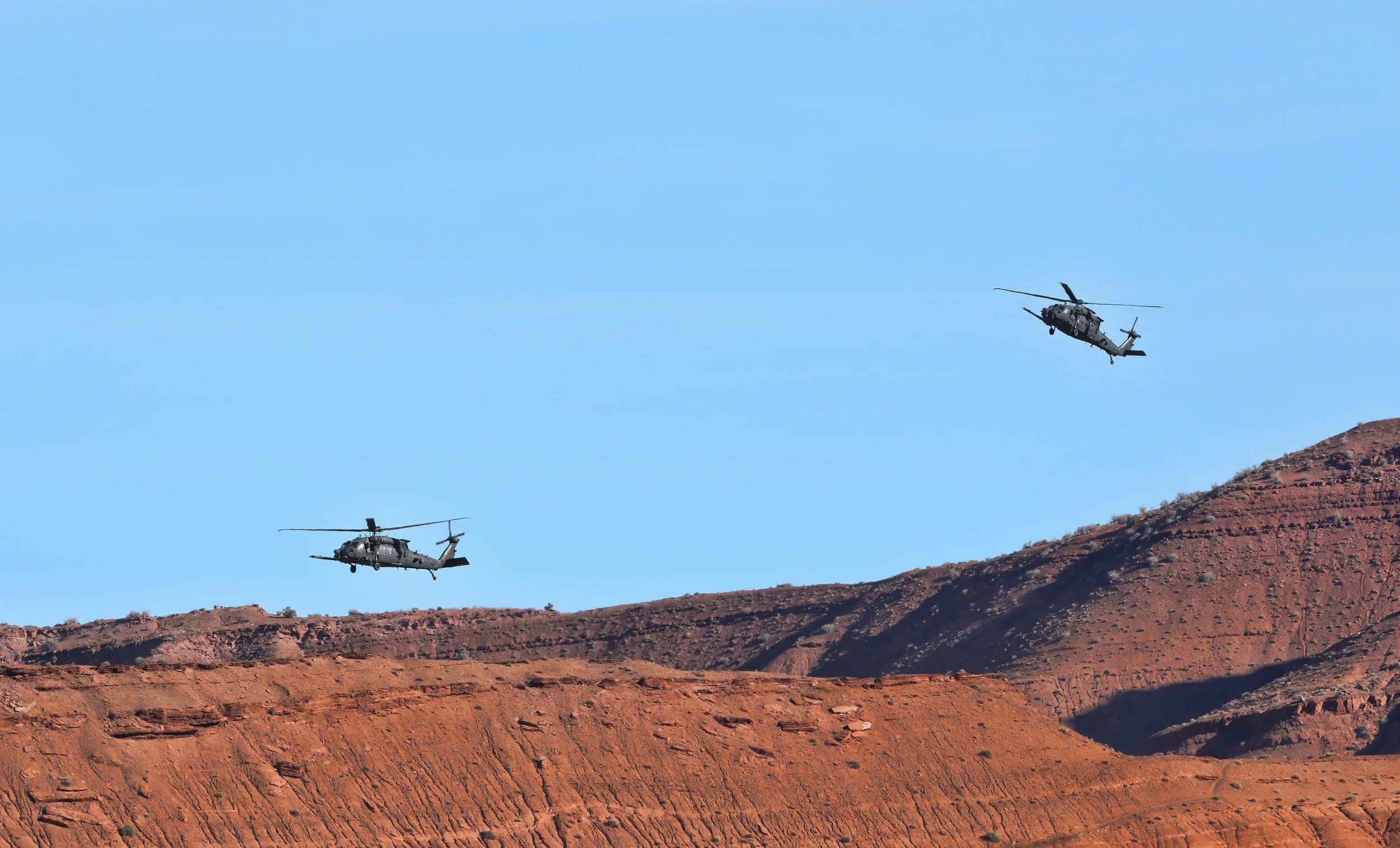

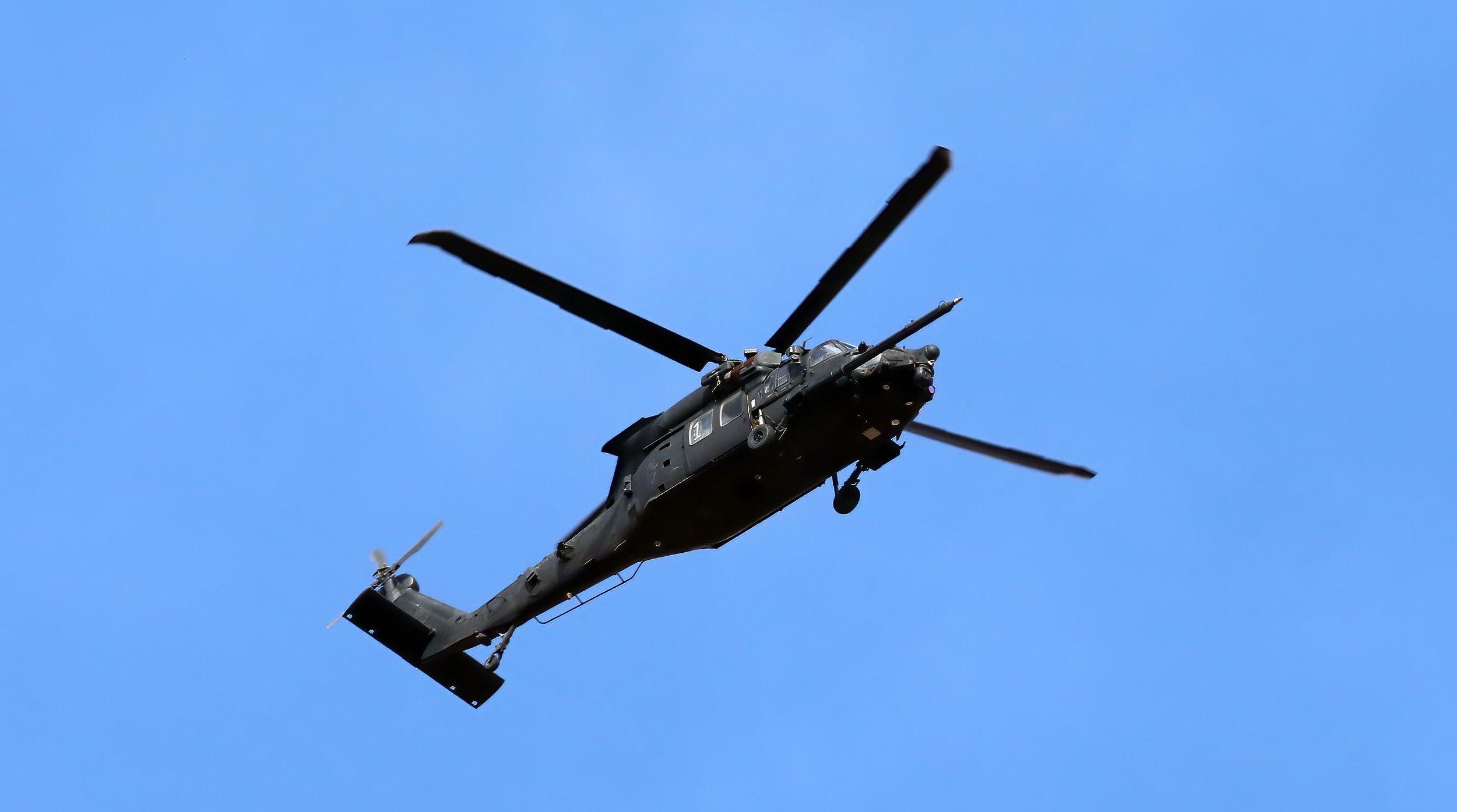
UPDATE: Aerial operations have continued each of the last several days. Low and slow, it’s quite annoying.