at my feeding stations, these gorgeous bright blue birds shirk all efforts at camouflage. I’m delighted that they’re hanging around.
Lazuli Bunting (Passerina amoena).
at my feeding stations, these gorgeous bright blue birds shirk all efforts at camouflage. I’m delighted that they’re hanging around.

Lazuli Bunting (Passerina amoena).

under relatively calm conditions this morning, I launched and recovered three model rockets with the Warp Core rocketry club in Grand Junction, Colorado at their launch site on the state line. Members lofted about 20 rockets until increasing winds shut down operations around noon.

First off the pads today, Zephyr Jr. zooms to a 554 foot apogee on a “D” engine, landing only about 50 feet away under calm conditions.
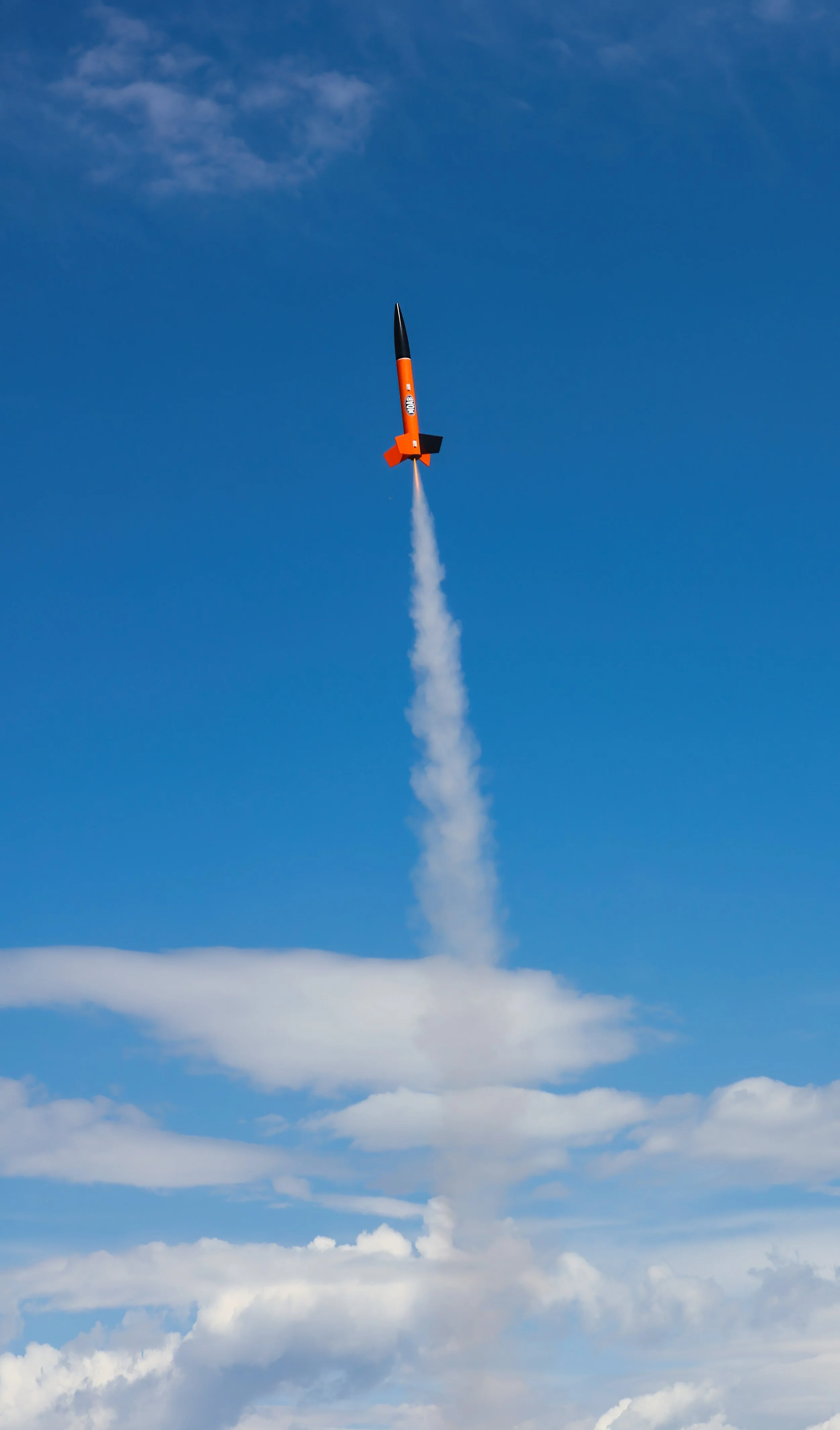
Finally painted and decaled, the MOAB roars to 575 feet on a “F” engine.

Aiming higher, my Frangible Arcas soars to 1,335 feet and lands a considerable distance down range under increasing winds.
hang from the cloud base above Castleton Tower and Adobe Mesa as a squall line moves through Castle Valley this late afternoon.

and you’ll immediately understand where it gets its name. And it’s the biggest sunflower on the Colorado Plateau.

Rough mules ears (Wyethia scabra).
for the season in an effort to stop the destructive digging of these otherwise amusing critters before it gets out of control. This is number two.

Rock squirrel (Otospermophilus variegatus).
and able to fly backwards, hummingbirds are amazing avian aviators.

Black-chinned Hummingbird (Archilochus alexandri).
extend above the cheatgrass as Bugs Buddy nibbles away on leafy greens.

Desert cottontail (Sylvilagus audubonii).
in an enormous geomagnetic storm this evening, the largest in nearly 20 years. Here are several wide views captured shortly after midnight of the rare (at this latitude) and dynamic light show. Behold the Aurora Borealis in its fullest expression.

The phenomenon began with quite a bit of color variation directly to the north. Parriott Mesa in silhouette on the right.

A gradual color shift towards orange and red occurred very slowly.

The brighter curtains of light moved gradually towards the northeast over a period of about an hour. Castleton Tower at far right.
UPDATE: Here’s a nice summary of the event by our local scribe: Aurora borealis brightens Castle Valley with a colorful display.
is still not a fast enough shutter speed to sharply freeze the wingbeat of a hummingbird. Here’s one tanking up while on the wing at the sugar dispenser.

Black-chinned Hummingbird (Archilochus alexandri).
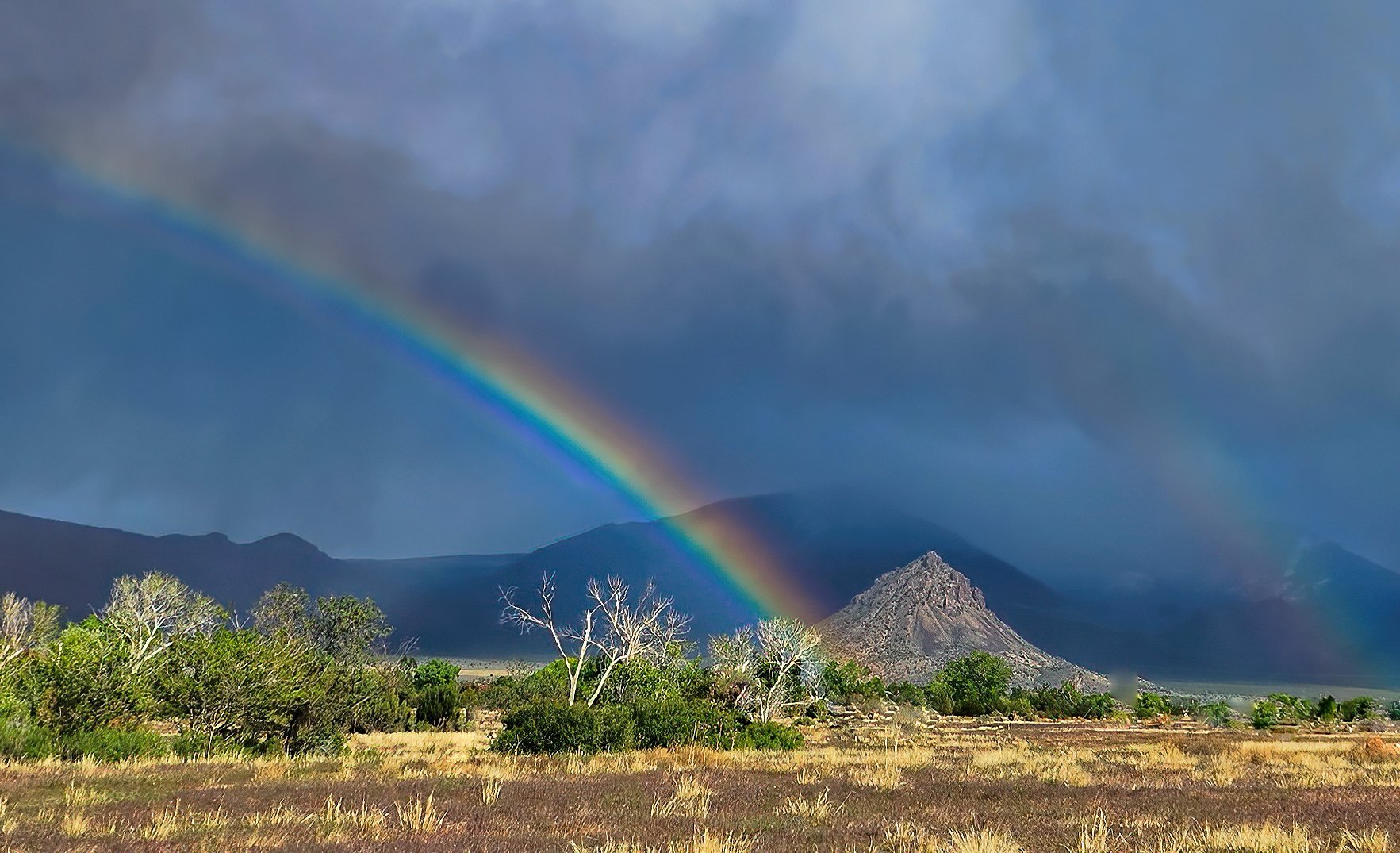
if this evening’s rainbow is a guide.

at the Round Mountain Missile Test Range, taking advantage of a weather window with calm winds. Flying model rockets is fun beyond description, but maybe it’s a guy thing.

The painted MOAB model rocket leaping off the pad to a 622 foot high apogee.

Zephyr under chute and softly landing below Round Mountain.
in greater numbers as they migrate through the area. Here are a couple of more snapshots of this very attractive springtime visitor. They’re both voracious and defensive little bullies while feeding.

Lazuli Bunting (Passerina amoena).

More about the Lazuli Bunting.
in the eponymously named bird, with now more than a dozen individuals pecking around the feeding stations. Gorgeous but tiny birds in the Cardinal family.

Lazuli Bunting (Passerina amoena).

Link to the mineral lapis lazuli.
Note to self: These images would be better if I cleaned the windows.
UPDATE 2 May 2024: Here’s an image, caught in direct sunlight, through clean windows.

is in full vivid fuchsia mode and doing its thing attracting pollinators.

Whipple’s fishhook cactus (Sclerocactus whipplei).
has arrived for spring, ranks high on my favorite’s list, and is named after a lovely and intensely blue mineral. It’s a furtive fellow and consequently somewhat difficult to photograph.

Lazuli Bunting (Passerina amoena), a male, in breeding plumage.
on the high and pointy prow of Adobe Mesa was established by yours truly 10 years ago this month, and it was logged for only the third time just two days ago by an intrepid adventurer. It takes determined effort and the better part of a day to make it out to the end of the mesa from the Castleton-Gateway Road. The logged comment was terse: “Stunning view.” Yep.

The prominent prow of Adobe Mesa stands 1,800 feet above the viewer in this image.
Fun activity: GEOCACHING.
bring out rainbows.

with minimal paleontological interpretation, future visitors to Utahraptor State Park are likely to be somewhat disappointed. The local chapter of the Utah Friends of Paleontology hosted a presentation delivered by park manager Joshua Hansen this evening where he provided some details on the new park being developed north of Moab.

I’ve requested that this diagram be posted on-line so that the public can understand the development plan. One will still be allowed to travel Willow Springs Road and Dalton Wells Road without paying an entrance fee.
are now igniting the high desert with hot spots of brilliant color.

Utah penstemon (Penstemon utahensis).

Claret cup cactus (Echinocereus triglochidiatus).