is home to ~ 140,000 nesting Adelie Penguins!
Absolutely disgustingly filthy little beasts when in large number during breeding cycle. But cute!
Adelie parent feeding its chick.
Adelie mugging for the camera.
is home to ~ 140,000 nesting Adelie Penguins!


Absolutely disgustingly filthy little beasts when in large number during breeding cycle. But cute!
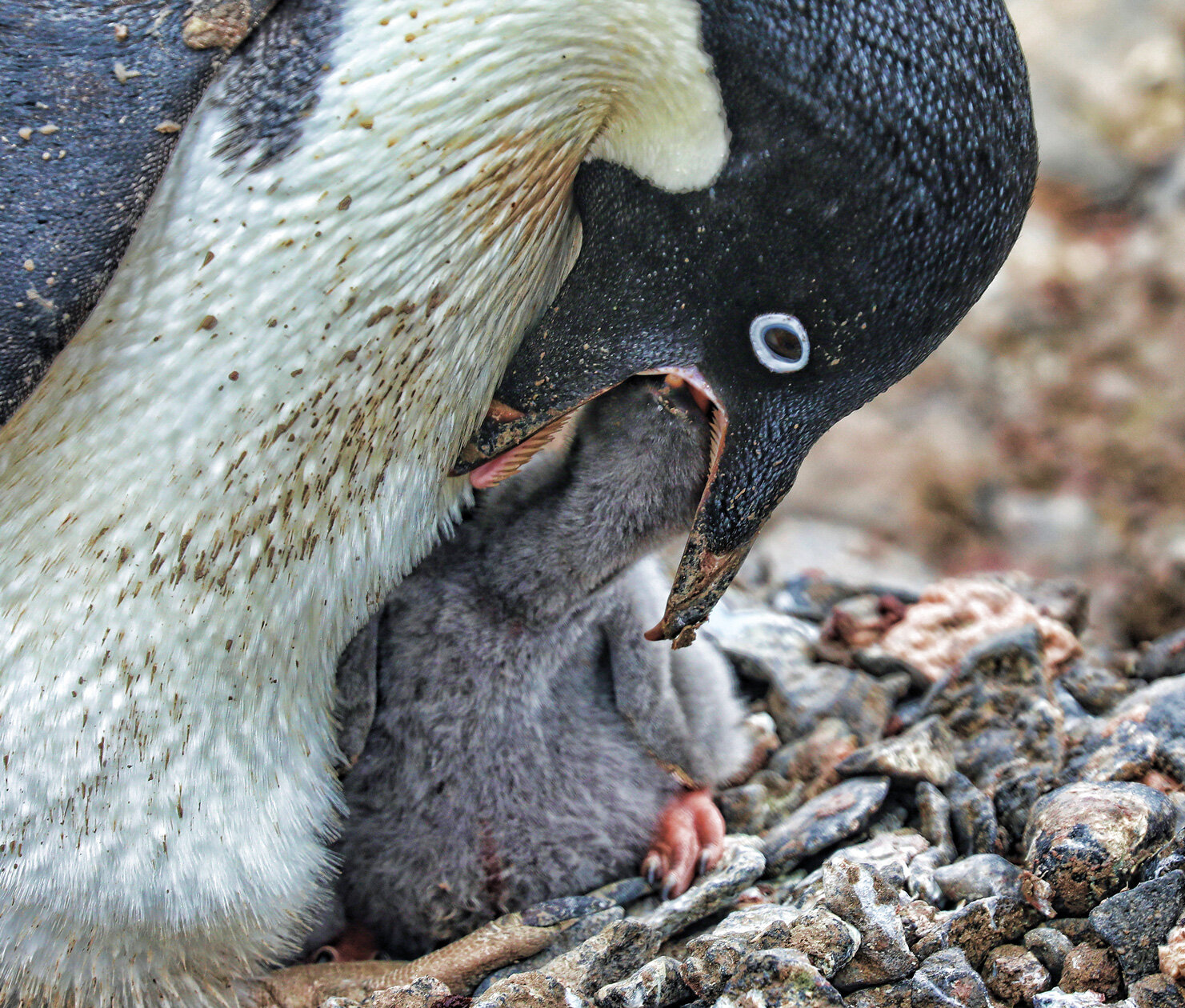
Adelie parent feeding its chick.

Adelie mugging for the camera.
after passing through the Antarctic Sound last evening, targeting the enormous iceberg A-68 that broke from the Larson Ice Shelf in July 2017.

Guests on the foredeck, awestruck by the immense size of the tabular iceberg A-68.

Annotated satellite image showing iceberg A-68 which is blocking ice from the Weddell Sea gyre from entering the Antarctic Sound. We will attempt a landing at Paulet Island (red circle) later in the day.

Reflection of the ship’s officers in the radar image of the ice front (green) and ship’s position (center of orange circle).

Preparing for allowing guests to venture out on a stable piece of sea ice, while the captain repositions the ship. Nearing the end of my first year of “retirement,” I could not be happier and am very grateful for these opportunities to travel and to continue to lecture about geology!
is an Argentine station established in 1904, and provides the longest meteorological record in Antarctica.


on the Hanseatic Inspiration as the boats are craned down from the top deck by the bosun and his very capable team, with drivers aboard, from about 80 feet above the water.

Note the port side crane near rear of ship.

The bosun operating the crane, smiling for his picture. You can see the starboard side crane here.

My view as the Zodiac is swung over the port side! Very exciting, especially in windy conditions. Like I said, sporting.
was observed in the historic church at the whaling station, standing beyond the industrial grunge of a thankfully bygone era.

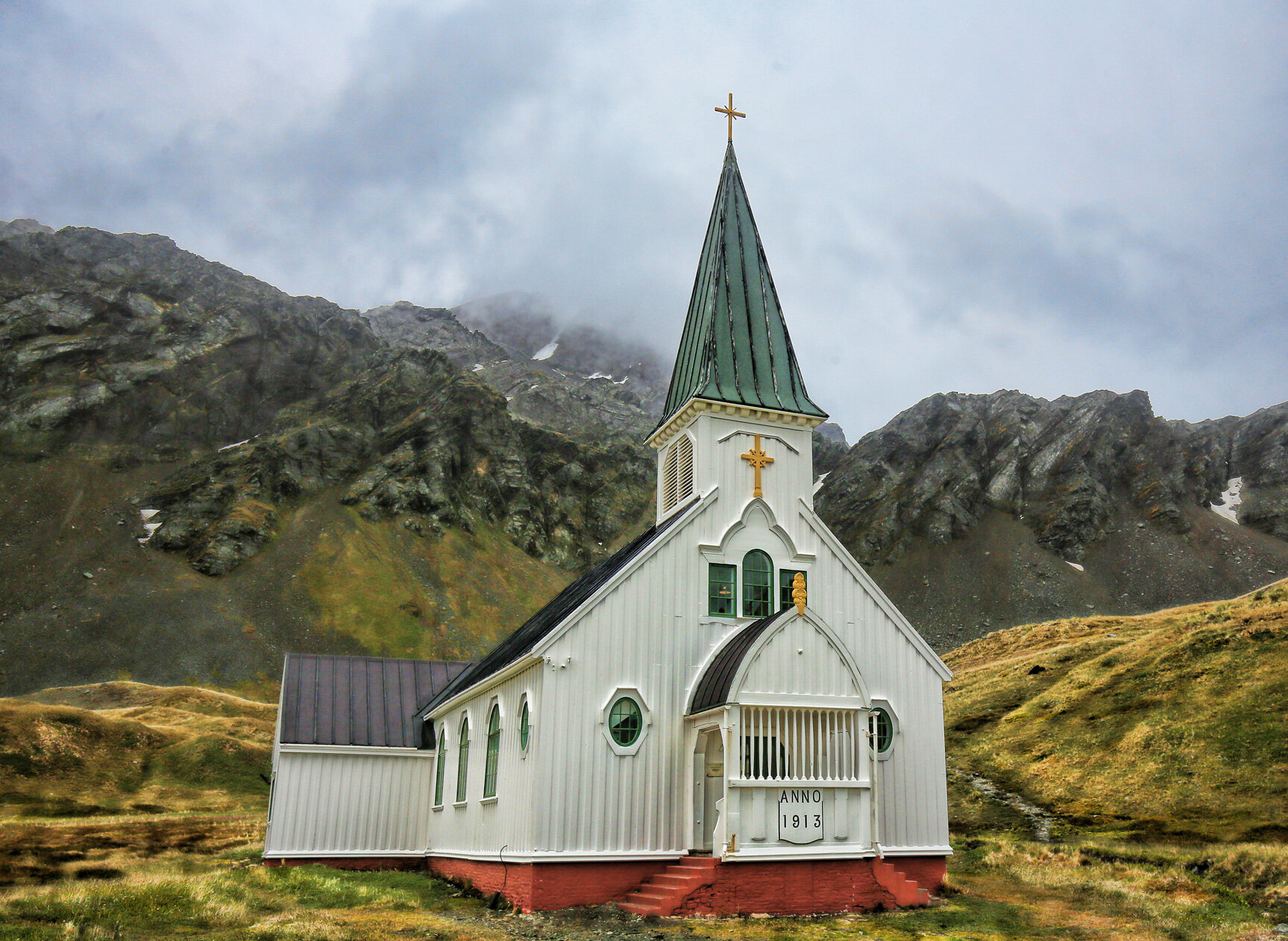

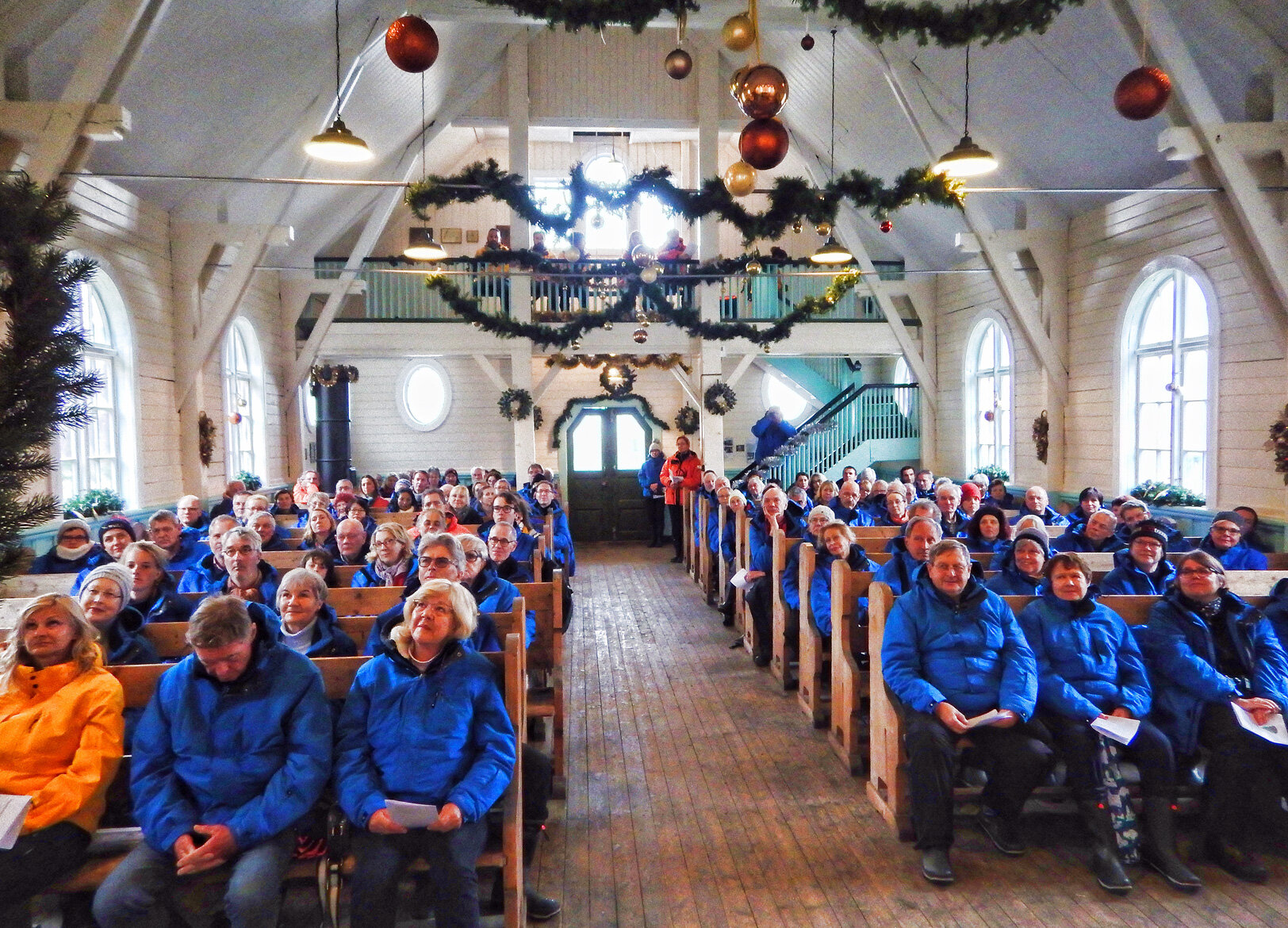
There were several seasonally appropriate songs, and I presented a short reading from the 1902-03 journals of Scott and Shackleton during their Christmas experience in Antarctica as they attempted to reach the South Pole. At the conclusion, the church bells were rung, reverberating throughout the rocky fjord. All in all, a lovely day in a richly historic location.

The ship’s photographer contributed this image of me addressing the flock from the pulpit.
from Fortuna Bay to Stromness, the last four miles of his historic trek across South Georgia.

Landing site in Fortuna Bay on Worsley Beach, with Antarctic Fur Seals.

Gaining higher elevation, with commanding view of Fortuna Bay.

Small alpine lake at high point of crossing.

View down valley toward Stromness whaling station, at right edge of bay.

The Shackleton Waterfall.

Stromness whaling station to which Shackleton returned, unrecognizable after years at sea. From here he organized a return to Elephant Island to rescue the rest of his stranded crew. Epic!

Topographic map of route from IATTO Field Operations Manual.
This was an absolutely fabulous hike on a terrific day, on Christmas Eve!
at Jason Harbour, South Georgia, as captured by the ship’s photographer. For some reason, the expedition leader tasked me with keeping an eye on this particularly excited fellow.

Antarctic Fur Seals can be very aggressive, particularly male beachmasters, defending their territory for their harems of females during mating season.
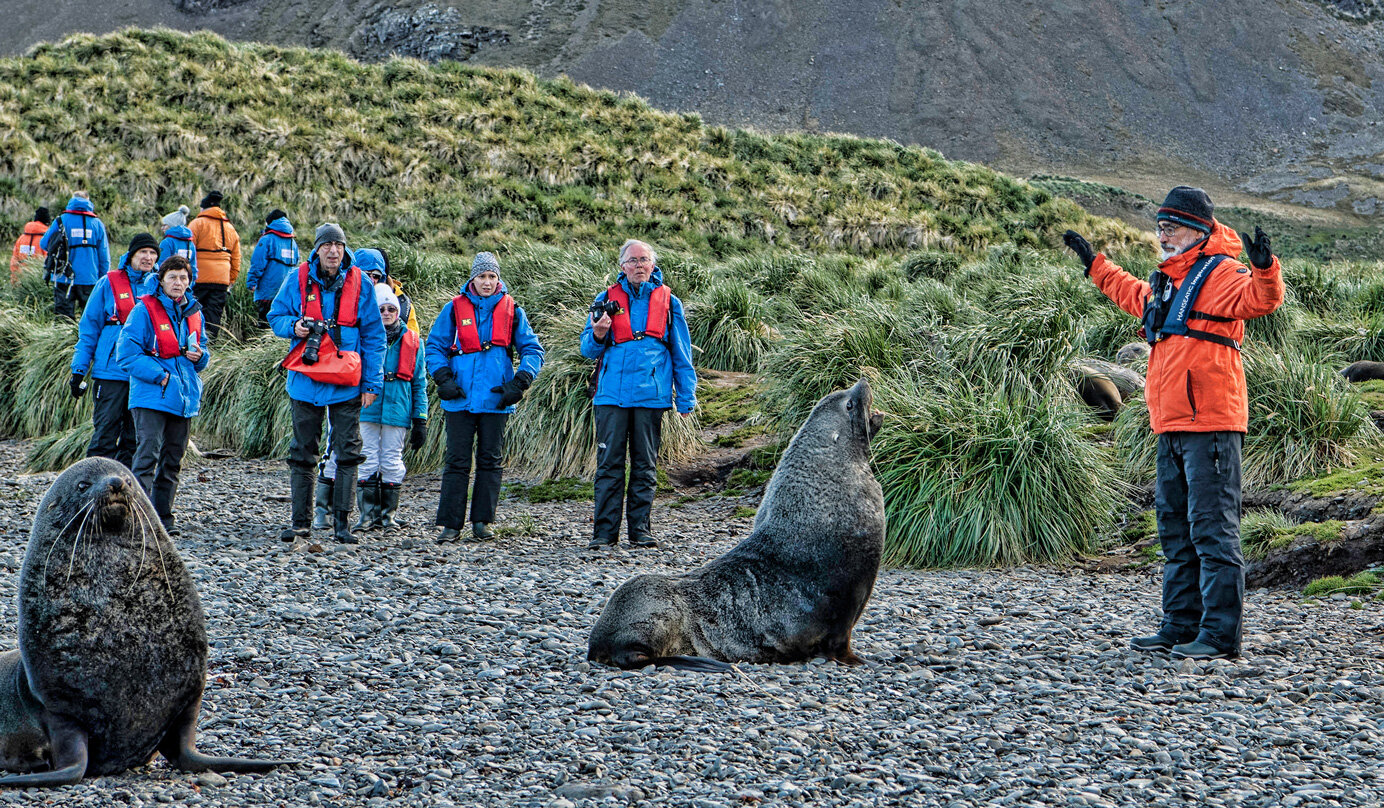
You must stand tall against their charges, here so that guests may pass to return to the landing site.
in Hercules Cove, South Georgia.

God created the Salisbury Plain on South Georgia, with an estimated 250,000 King Penguins!

Neither words, nor pictures, can describe the magnificence of this remote place.

I derive great joy knowing that this goes on every single day, throughout the year. When I am feeling stressed at home, I visualize this scene.
to those in the northern hemisphere, while we enjoy the longest day of the year in the southern hemisphere!

King Penguins at Fortuna Bay, South Georgia.
in order to bring inspection officers of the South Georgia government aboard the ship.

The restored whaling station at Grytviken.

Captain Roman Obrist on the bridge, maneuvering the ship for this quick stop.

British Antarctic Survey station at King Edward Point, staffed year round.
on South Georgia was first discovered by James Cook in 1775, and shortly thereafter the sealers arrived.

The Brutus, a coal carrier, now a rusty relict.

The old sealing station, slowly decaying into the landscape.

Antarctic Fur Seal.

Since the cessation of sealing, the population has rebounded.
on our first approach to South Georgia.

The Allardyce Range, draped in glacial ice and snow, rises to nearly 10,000 ft above sea level.

Folded turbidite sequences in the Cumberland Bay Formation, with Lyell Glacier in foreground.
following the ship this afternoon between the Falklands and South Georgia.
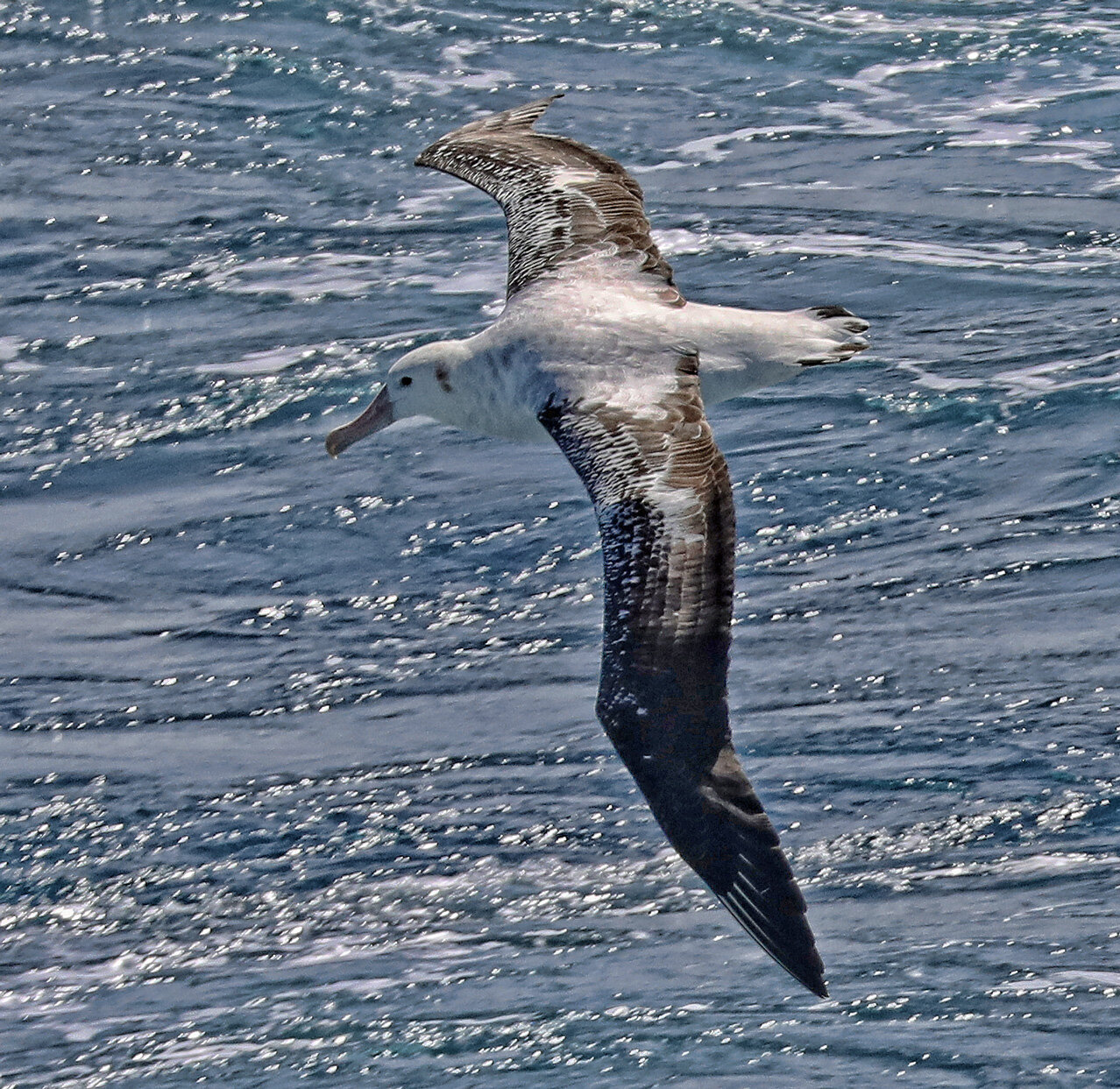
Wandering Albatross, wingspan nearly eleven (11) feet!
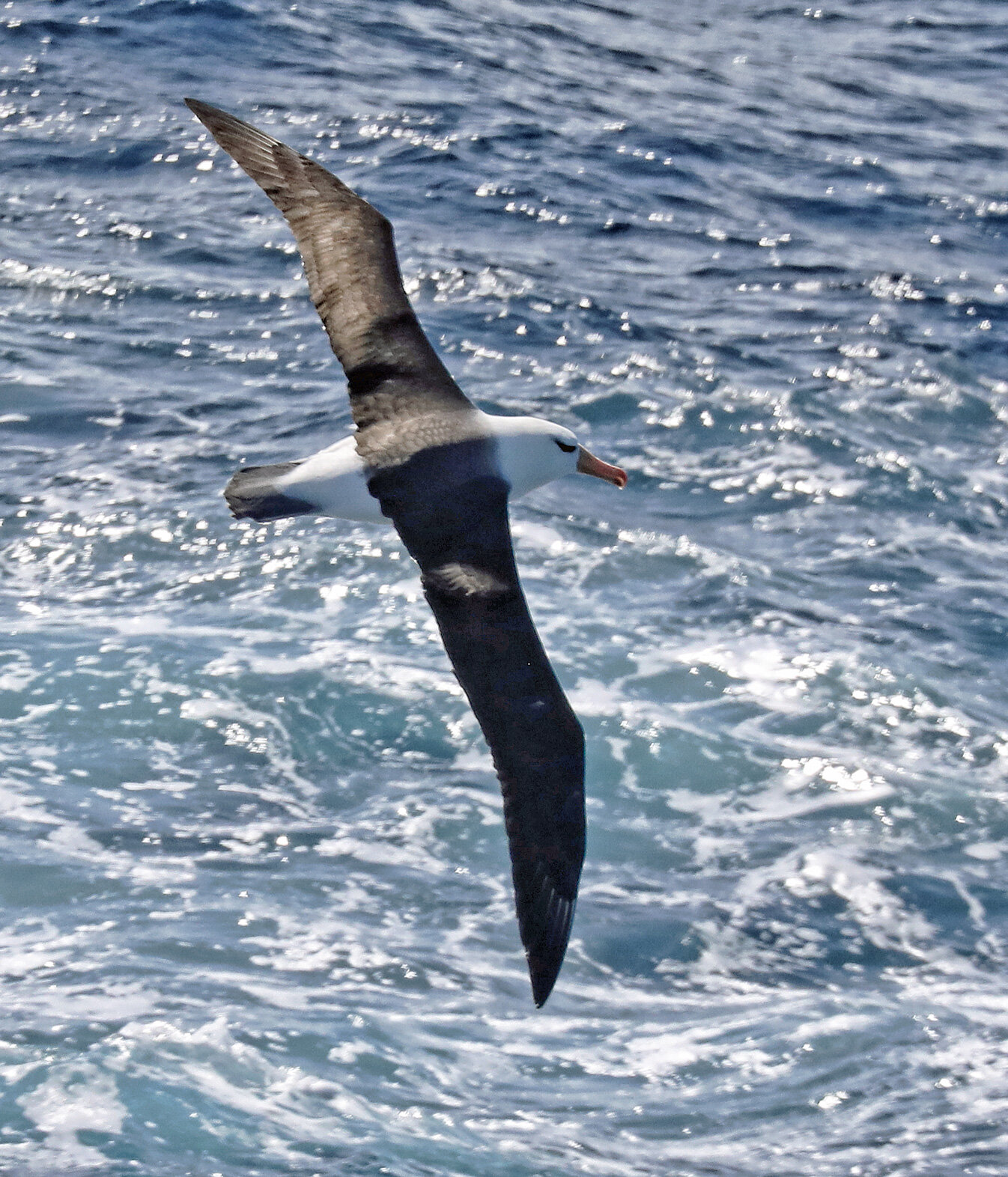
Black-Browed Albatross, wingspan approximately eight (8) feet.
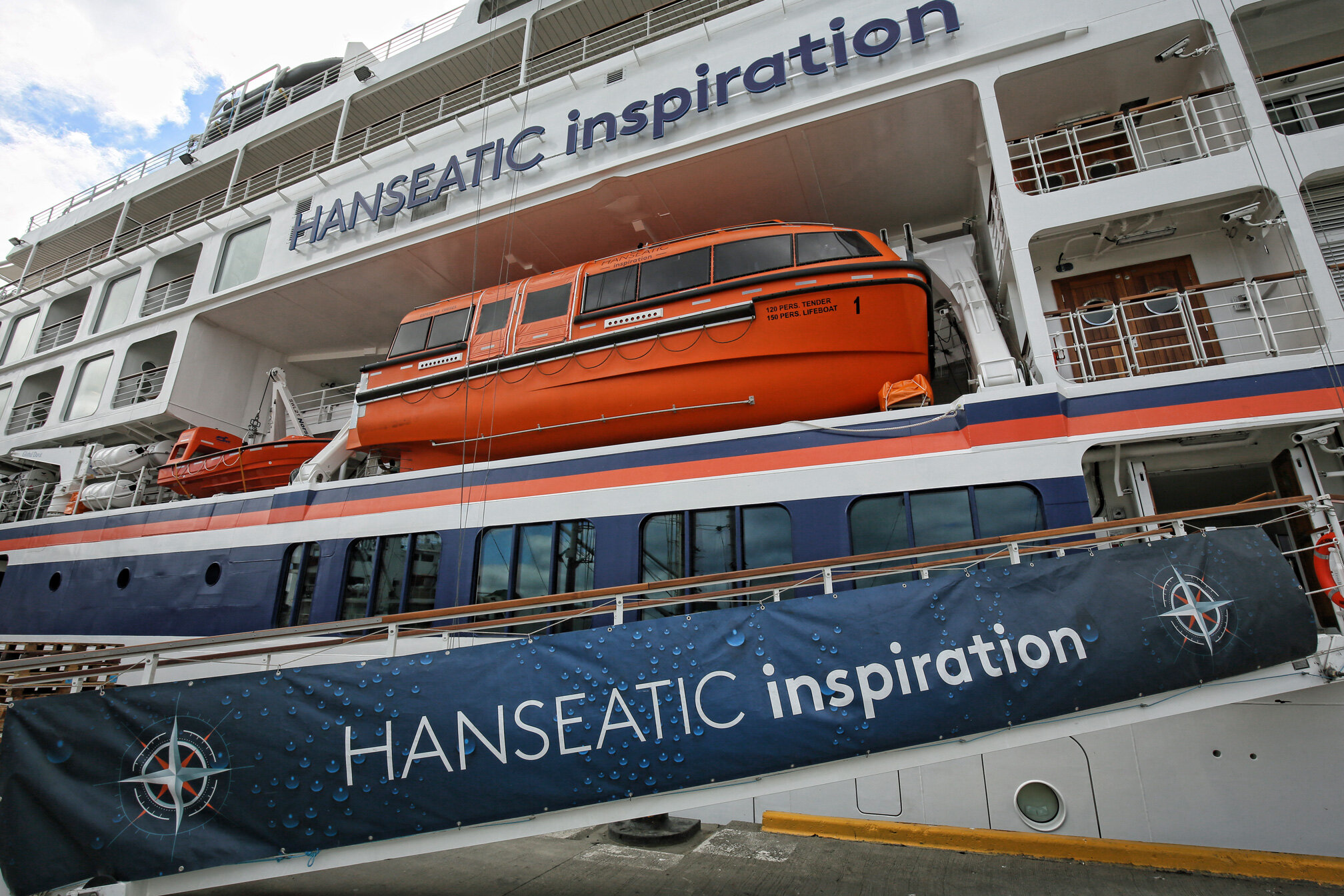
for the next three weeks aboard the brand new expedition ship Hanseatic Inspiration.

The lecture theater with floor-to-ceiling high resolution panels. There’s even a bar, something not found in most university lecture halls!

The “Ocean Academy” where lecturers can engage in hands-on activities.

My home office, with my own balcony!
in the northwestern part of the Falkland Island group is our first expedition landing.
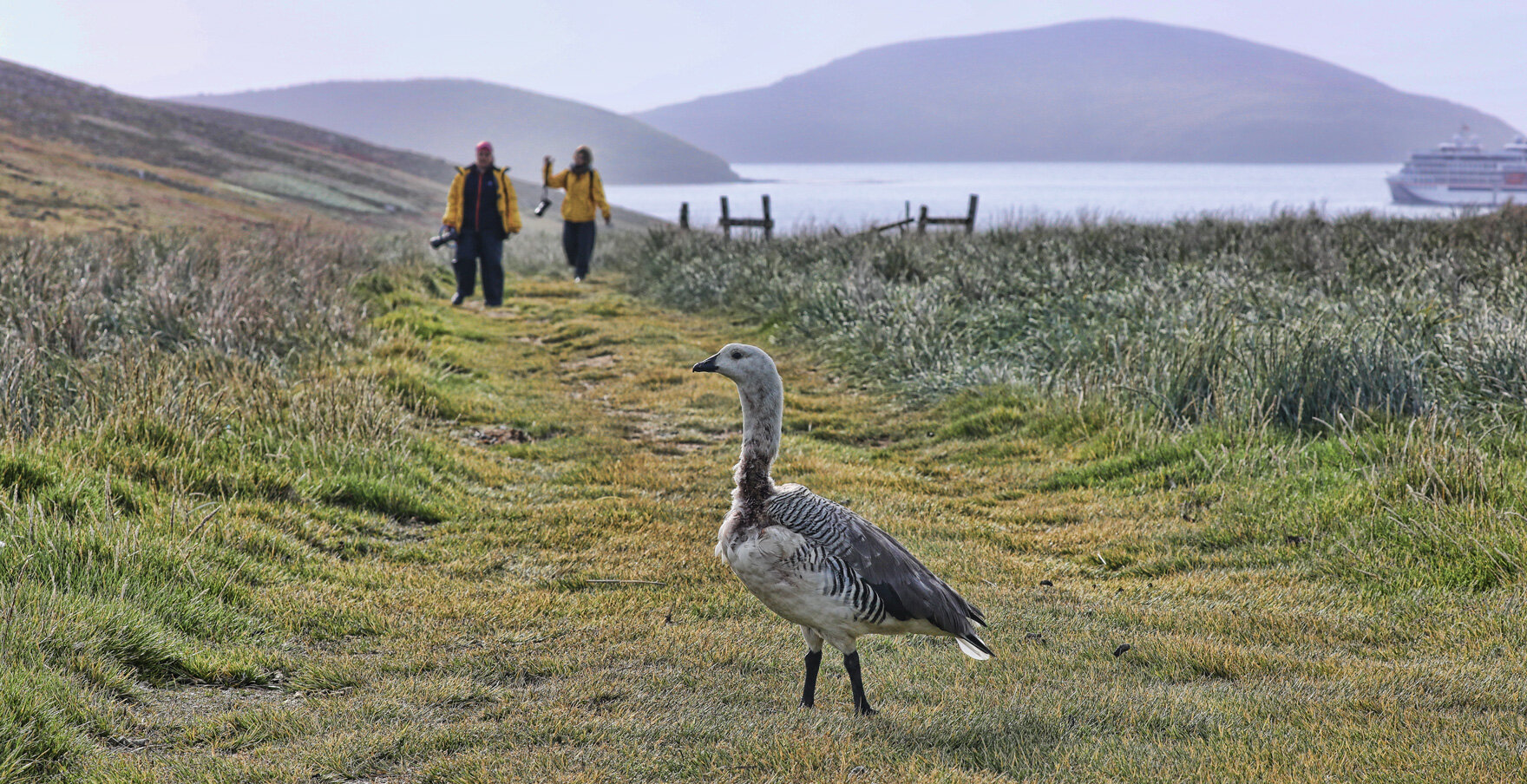
Upland Goose welcoming our first guests ashore.
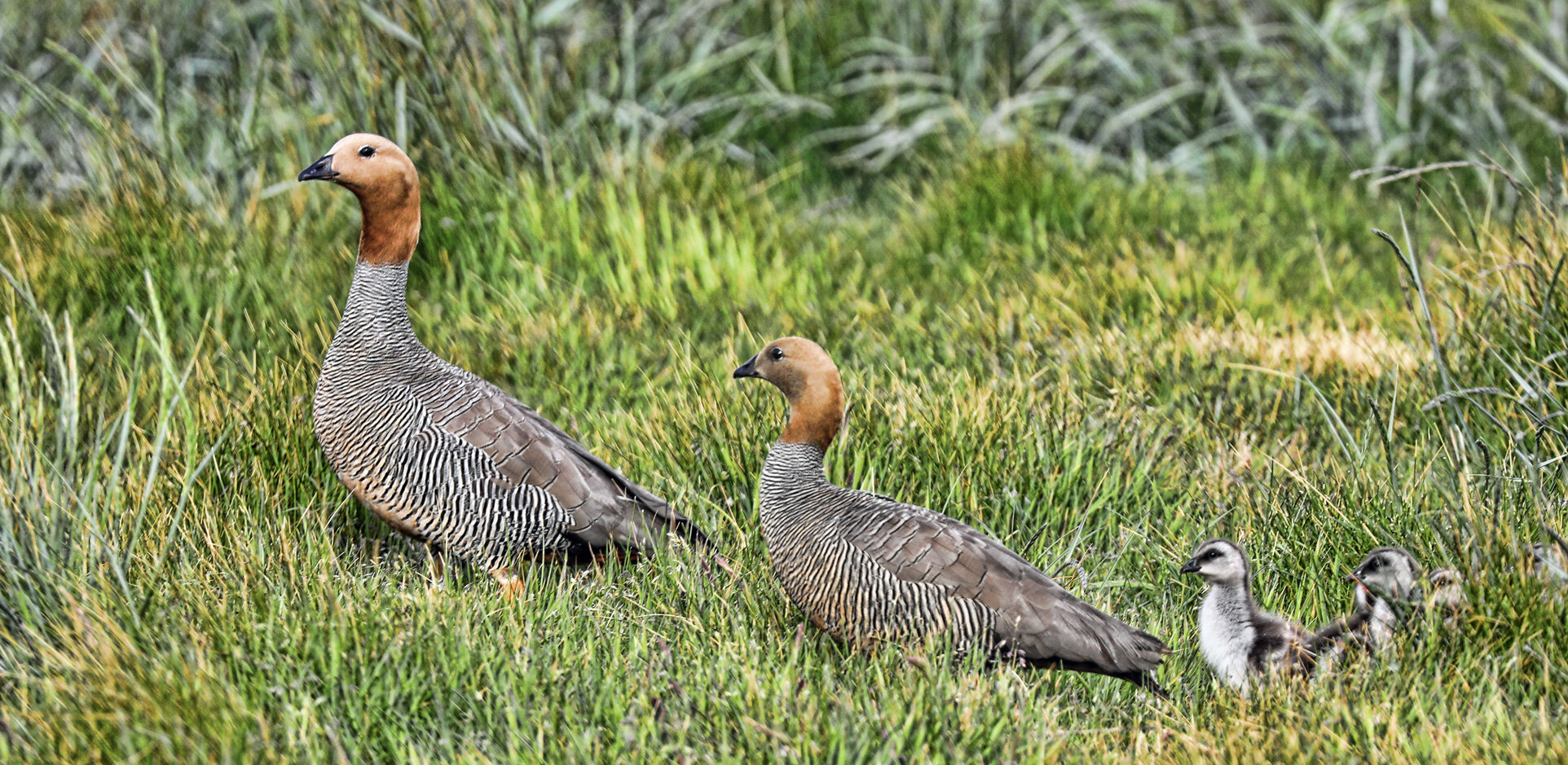
Ruddy-Headed Geese.
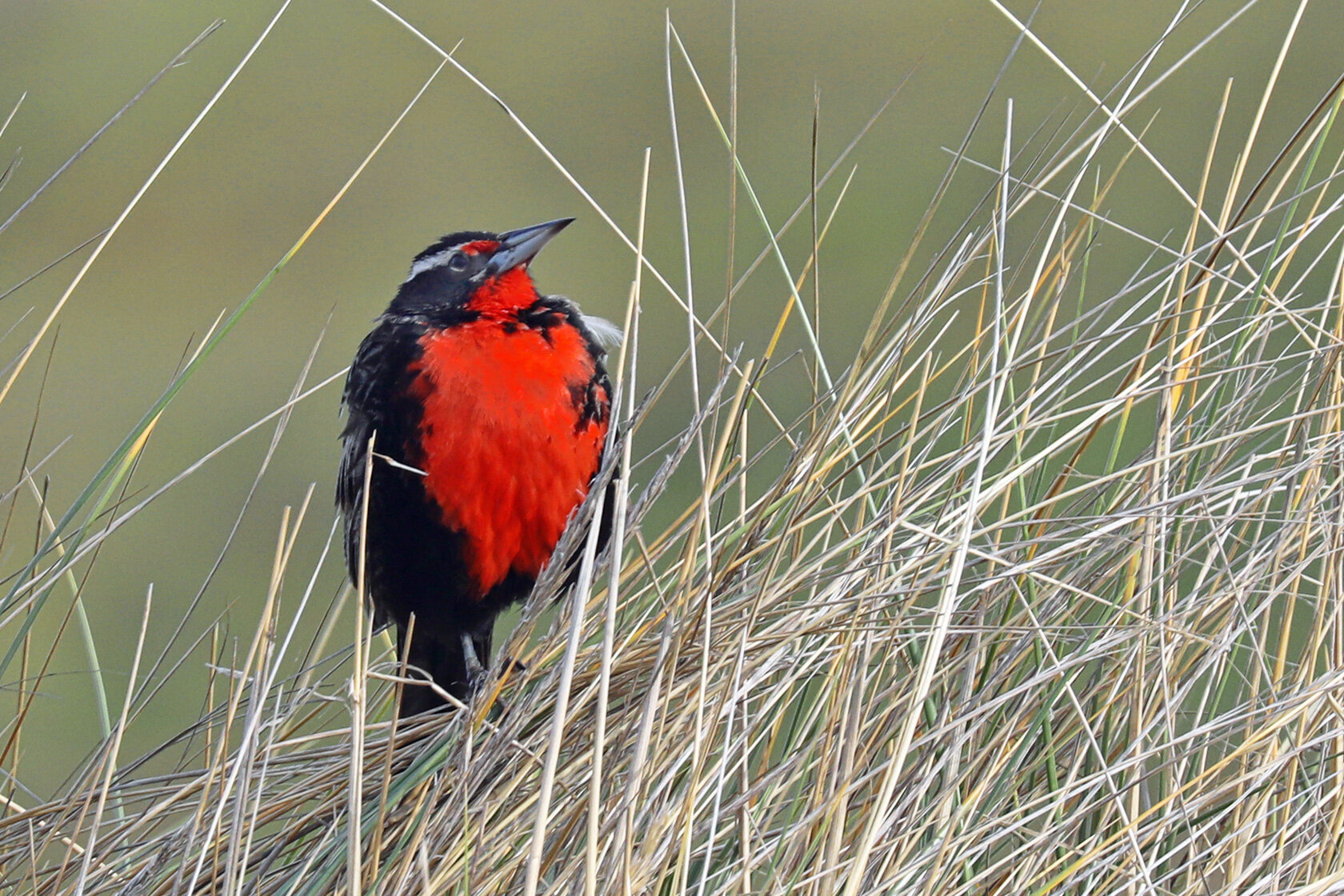
Red-Breasted Meadowlark.

Black-Browed Albatross sitting on nest.

Blue-Eyed Cormorant.

Kelp Goose having breakfast.

Southern Rockhopper Penguin.
and heading to the Falkland Islands.

Leaving the port of Ushuaia, Tierra del Fuego, Argentina.

Southern Giant Petrels commonly follow the ship, playing in the draft.

The SGP bony beak, consisting of nine plates. The upper tube is a saltwater excreting structure.

Sunset at the end of our first day at sea.

On the aircraft, window seat (of course) taxiing at Spokane International Airport. Location is indicated by blue icon with red line indicating the track.
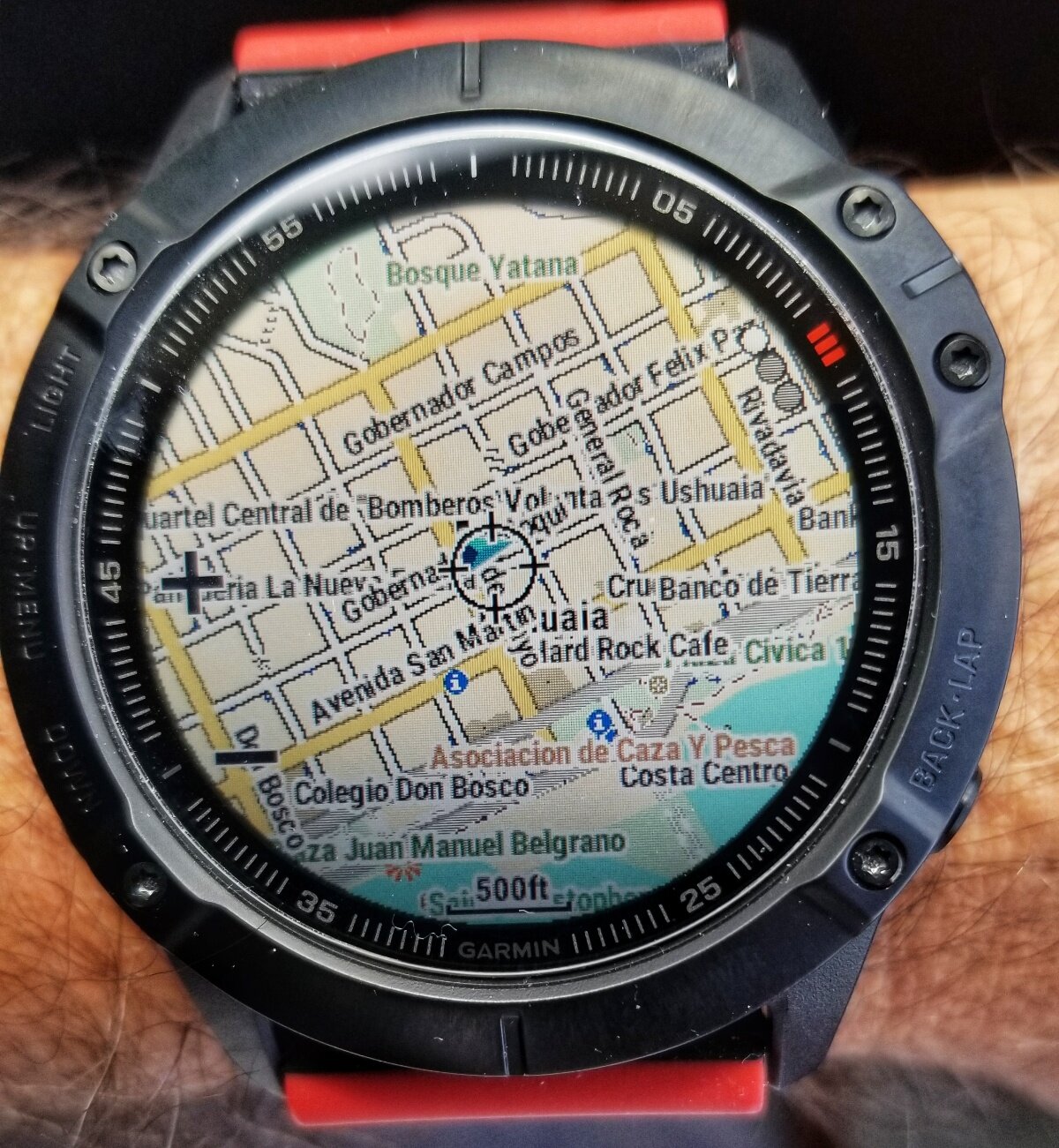
Detailed street map of Ushuaia, zoomed out here for a wide view, location indicated by the blue icon in center of display.
The Garmin FENIX 6X Pro is a very serious bit of technology that I am test driving for REI on this expedition. I have preloaded topographic maps for all of the western states at 1:24,000 scale, as well as nationwide coverage at 100,000 scale! In addition, I installed maps for Ushuaia, Argentina and Stanley, Falkland Islands, and it is capable of accessing Birdseye satellite images too. It links to your smartphone and Internet via Bluetooth and Wifi, but is capable of functioning for up to two weeks without connection or charging to other devices. WOW! And, oh yeah, it also tells the time (among many, many other things).

Dismal, cloudy, gray Spokane.

Northern Arizona - Grand Canyon

Last flight to Ushuaia.
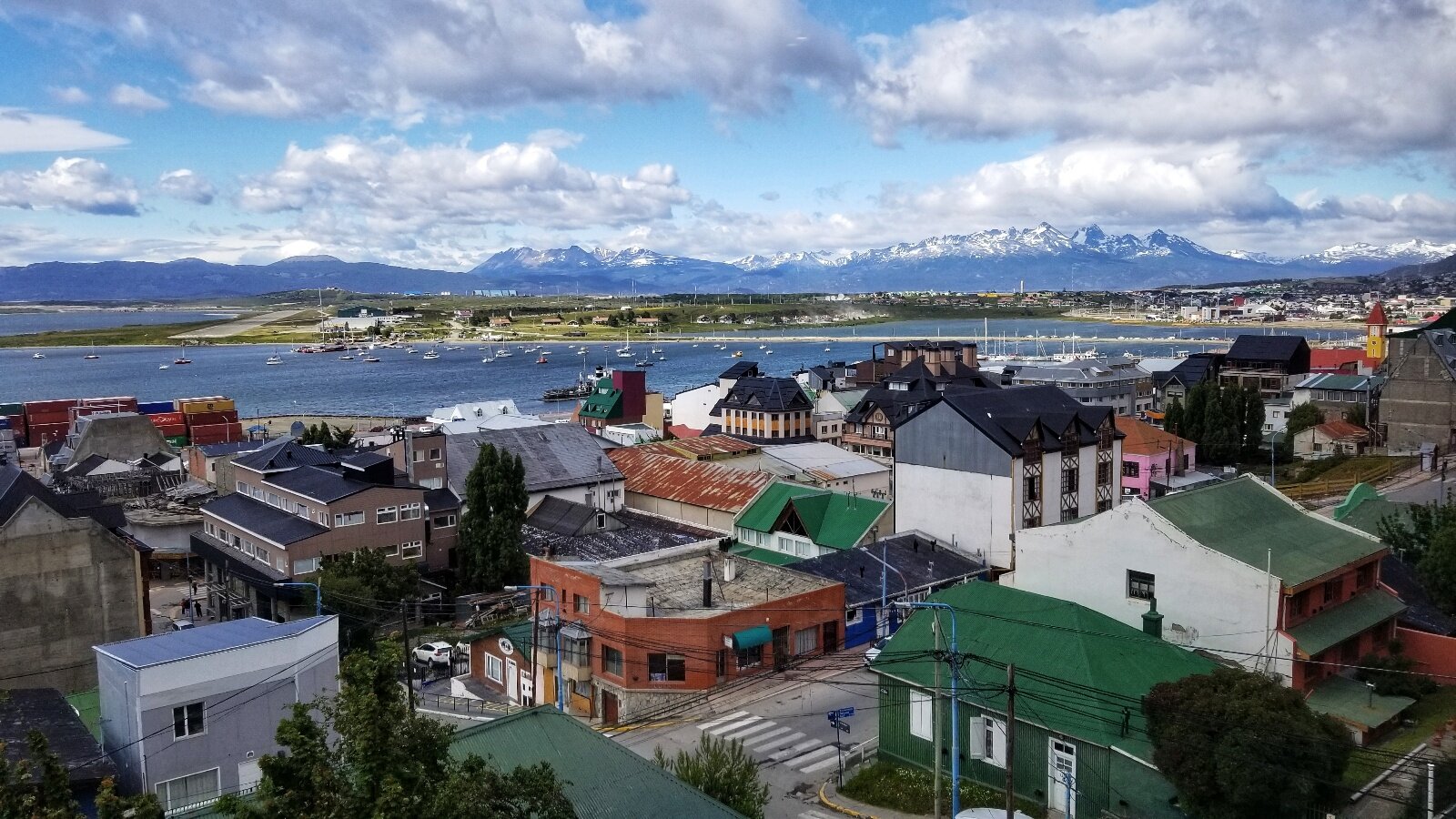
Ushuaia, Argentina, bottom of South America!

My breakfast buddy, a Dolphin Gull.
posted on this silly blog are brought to you by the camera kit assembled below for my upcoming work in Antarctica, consisting of two camera bodies and three lenses, a wide-angle for macro and landscapes, a mid-range lens, and a zoom telephoto for distant wildlife.

I also carry the Nikon camera in my float coat for shooting videos and when the conditions are rough and wet. All the stuff laid out on the dry bag are batteries and chargers, my GoPro, tripod, lens wipes, headlamp, scale card, etc. Yes, it’s a lot to carry in the field, but the results are more than worth the effort.