for the hawk to lift and carry away, this raiding rodent is pigging out daily on bird seed. The cheek pouches appear to be at capacity in the image below.
Well fed rock squirrel (Otospermophilus variegatus). Click on image to embiggen.
for the hawk to lift and carry away, this raiding rodent is pigging out daily on bird seed. The cheek pouches appear to be at capacity in the image below.
Well fed rock squirrel (Otospermophilus variegatus). Click on image to embiggen.
is in the neighborhood, successfully grabbing a bird at the feeding station for brunch, but much too quickly for me to capture the kill. This poor image was taken shortly afterwards, in dim and drizzly conditions.
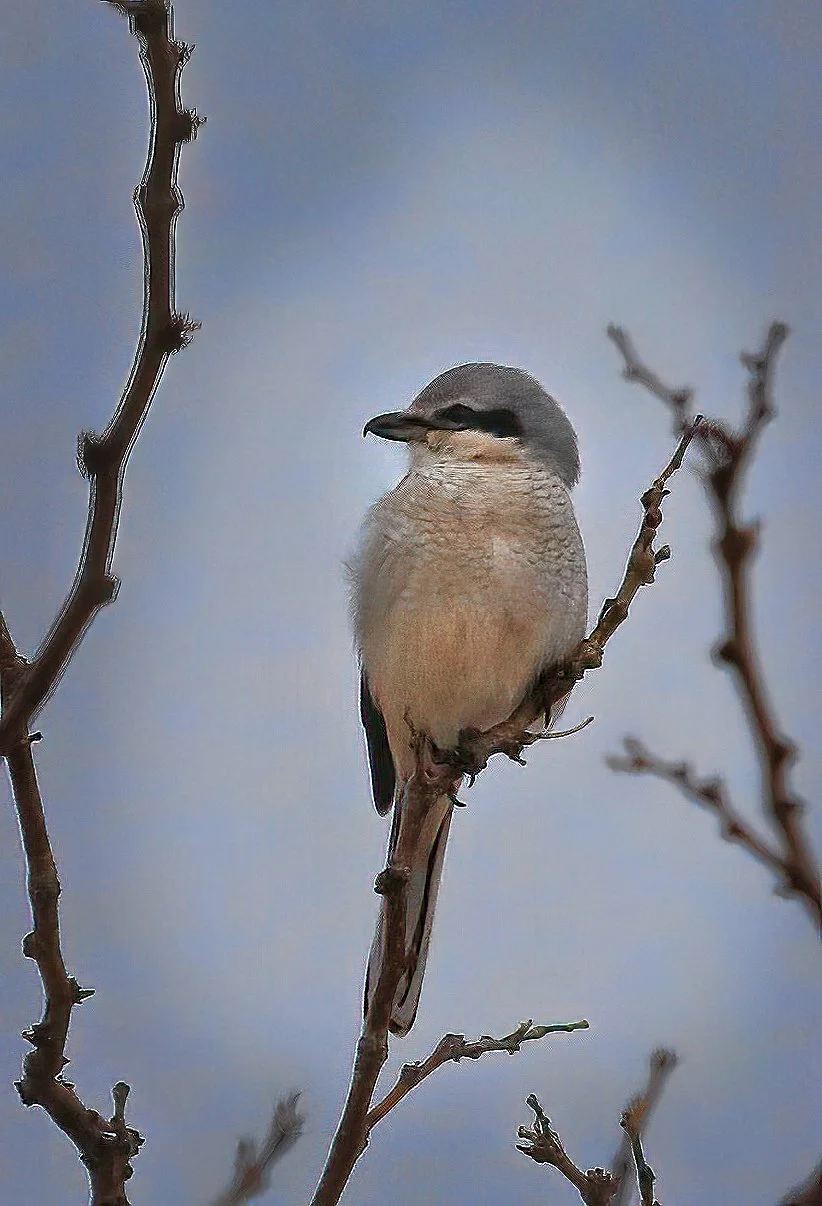
Immature Northern Shrike (Lanius borealis).
of the death of Sir Ernest Shackleton.
On the evening of 4 January 1922, as his ship - the Quest - lay anchored in the Grytviken harbor on South Georgia, he wrote his final thoughts in his diary: "A wonderful evening. In the darkening twilight I saw a lone star hover, gem like above the bay." Sadly, later that night, he succumbed to a heart attack and died in the place he loved most. RIP.
I used an astronomical charting program to determine, for that night in North Cumberland Bay on South Georgia, the star he likely saw was either Sirius or Canopus, the two brightest stars in the evening sky.

on the Colorado River.

is huge hit with my feathered friends. The 120V-50W unit maintains access to water at temperatures well below freezing. Highly recommended!
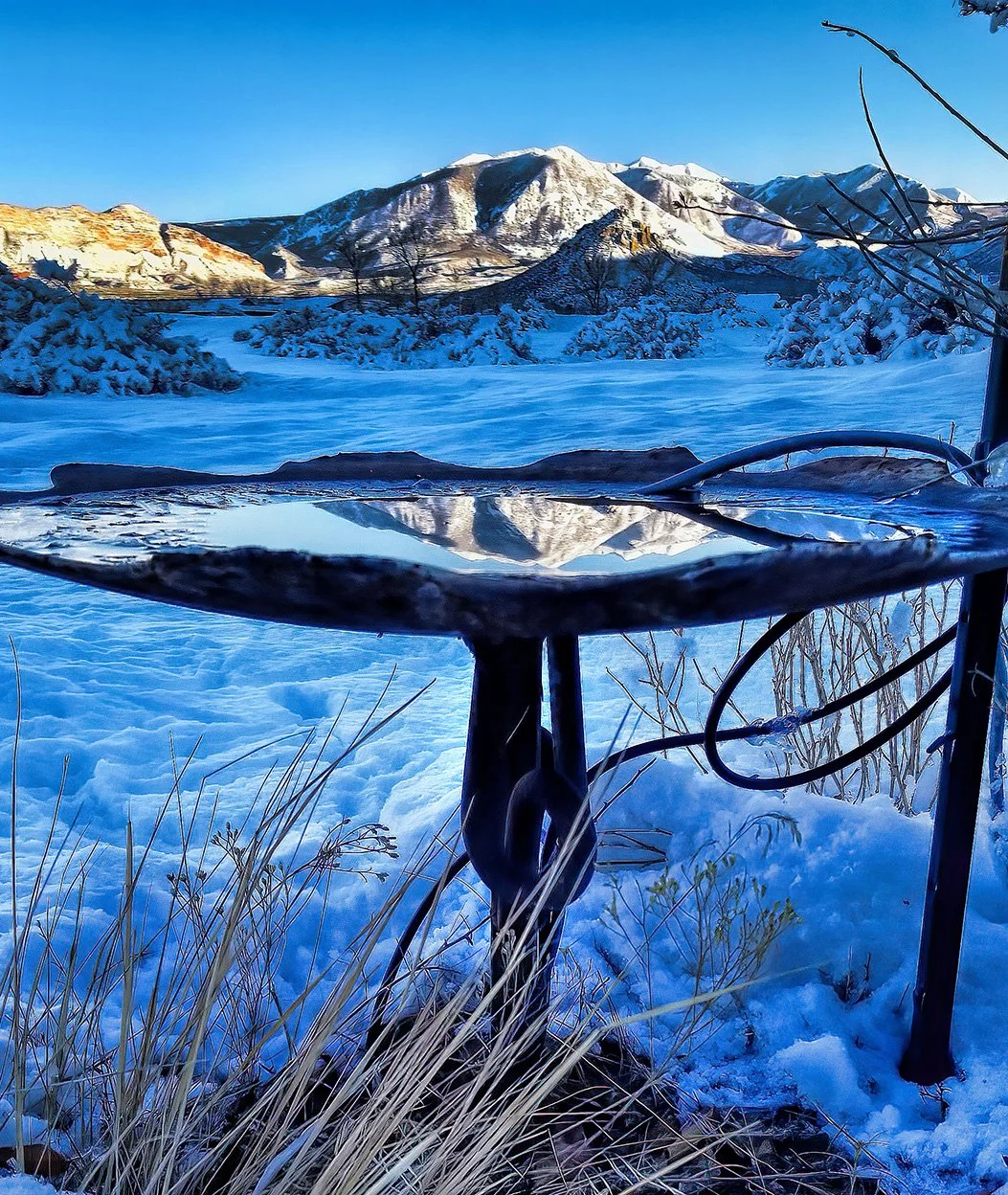
The overnight low last night was 3° F (-16° C) but the water remained open, with a narrow icy shelf around the periphery of the metal basin.
at the window this morning. I hope they stick around.

Western Bluebird (Sialia mexicana).

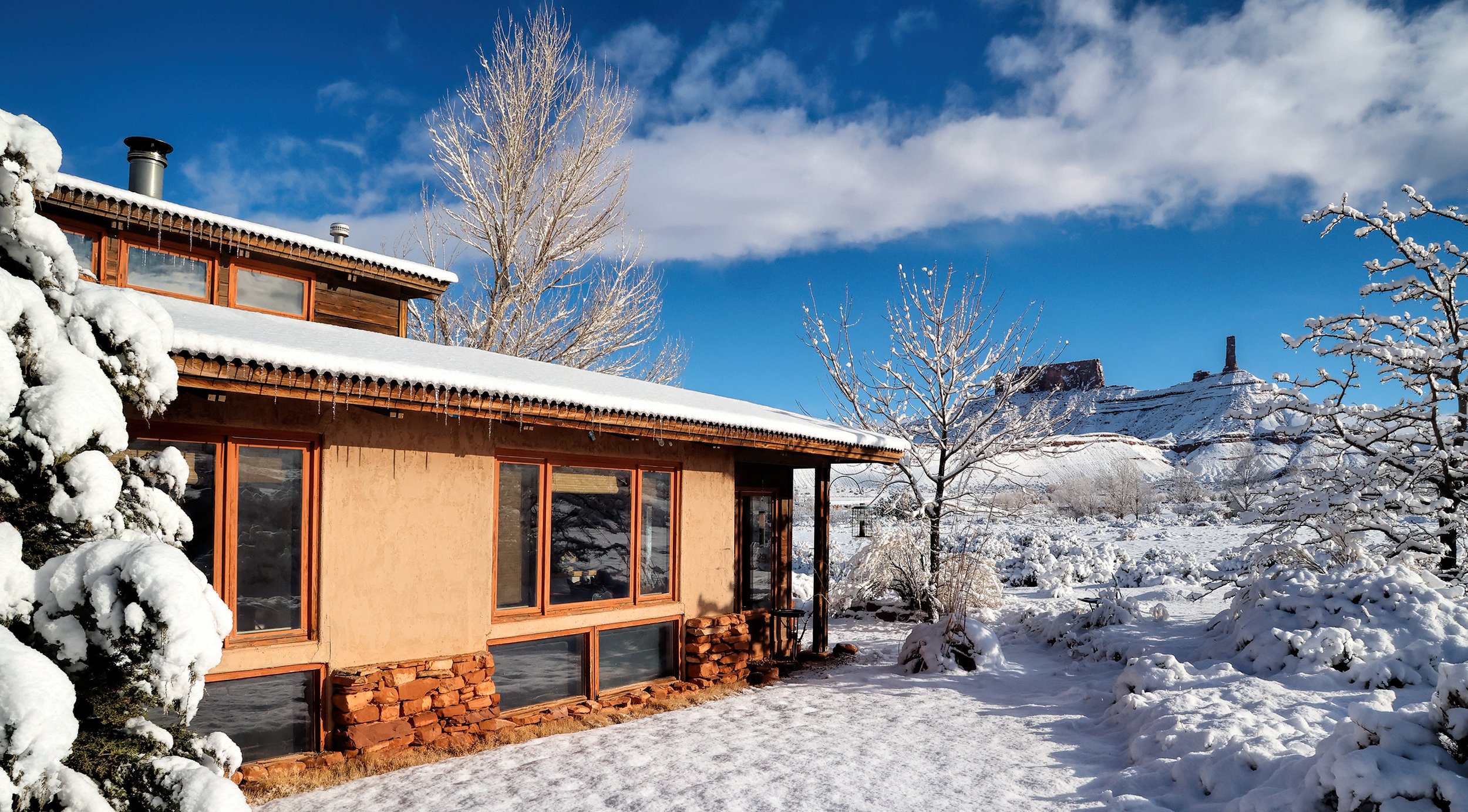
created a lovely and frigid winter scene in Castle Valley, now being slowly revealed the morning after.


Baby it’s cold out here.

and this pooping polar bear pretty much expresses how I feel about the past year. I’m hoping for a return to normality in 2022 but am not very optimistic.

Polar bear (Ursus maritimus) on Storøya, Svalbard archipelago, in 2017, unabashedly going about its business.
as the snow accumulates.

This female White-crowned Sparrow (Zonotrichia leucophrys) does not look happy deep in the rabbitbrush.

Eurasian Collared-Doves (Streptopelia decaocto) huddled together in a tree.
in the Rocky Mountains is great news, especially following the intense dry conditions earlier in the year. The graph shows the upward trajectory of snow water equivalent in the Upper Colorado - Dolores River basin, in which the La Sal Mountains lay, presently at 141% of the median. A winter storm warning is in effect with more snow predicted today. Bring it on.

SWE graph for the Upper Colorado - Dolores river basin. Black line is this water year’s data. Here’s the link at the NCRS site.
arrives in Castle Valley just before year’s end, and my feathered friends seem a little bewildered.

American Goldfinch (Spinus tristis) peering in the window.

Male White-crowned Sparrow (Zonotrichia leucophrys).
the James Webb Space Telescope?
Now three days after its launch, and past the orbit of the Moon, it’s about to deploy the sunshade in order to keep the sensitive IR instruments cool. Follow the critical events over the next 30 days by clicking on the link below the image.

LINK: Where is Webb?
VIDEO: JWST Deployment Sequence
at the feeding stations this winter, and voted most likely to be grabbed by the hawk. I’m waiting.

Male Dark-eyed Junco (Junco hyemalis).

Female Dark-eyed Junco fanning its tail feathers.
captured this morning and annotated with the Apollo landing sites on the illuminated portion.

Apollo 12 — Oceanus Procellarum — November 19, 1969
Apollo 14 — Fra Mauro — February 5, 1971
at the watering hole.
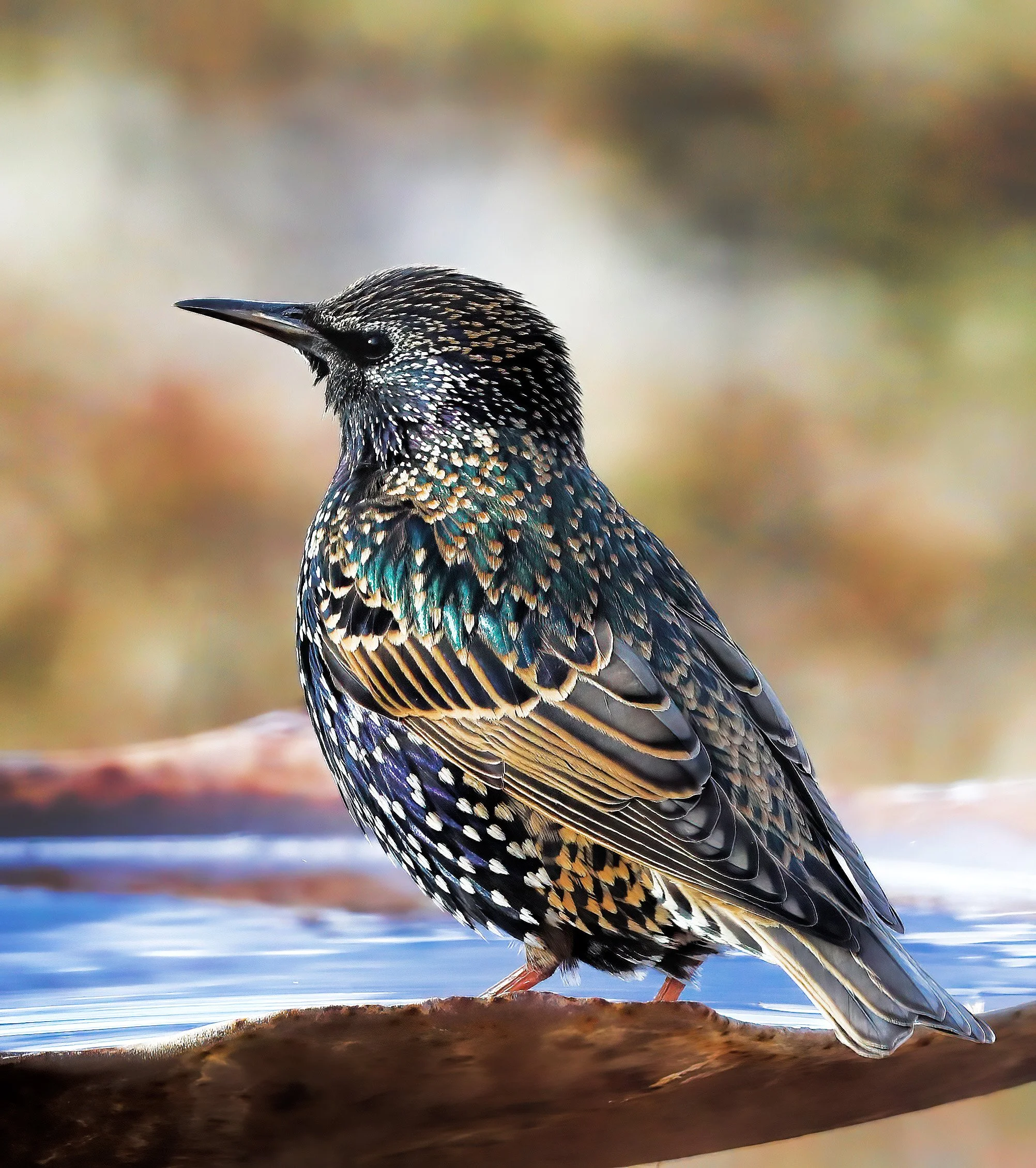
Common Starling (Sturnus vulgaris).

I’ve kept a 50W de-icer in the birdbath once the overnight temperature dropped below freezing and the birds are loving the access to the water.
takes a quick time out after swooping through the feeding station on a breakfast run. Note the feathers in its lifted talons.

Sharp-shinned Hawk (Accipiter striatus).
mark the first full day of winter above the La Sal Mountains. Peachy.

and semi-hidden in a cottonwood tree in hope of grabbing a meal at the bird feeding station. This isn’t a very good photograph, but I do enjoy watching the hunting strategy of this frequently visiting predator. Hey, everybody has to eat!

Sharp-shinned Hawk (Accipiter striatus).
to the valley floor as winter sets in, and about 30 muleys regularly aggregate on my property at dusk. We’re still getting to know one another.

Female mule deer (Odocoileus hemionus).
with Castleton Tower is probably not accidental. Snapped this today while out on a ride, the last full day of autumn. Here comes winter.

Left to right: Priest and Nuns, Castleton Tower and Adobe Mesa.