An enormous diluvial dumping...

from pluvial Lake Bonneville occurred through this gap in southeastern Idaho known as Red Rock Pass. The volume of the great gush is estimated at five thousand cubic kilometers (1,200 cubic miles!) of water, released about 14,000 years ago in a catastrophic megaflood that likely lasted weeks to months and scoured the Snake River Plain in Idaho downstream from this site.
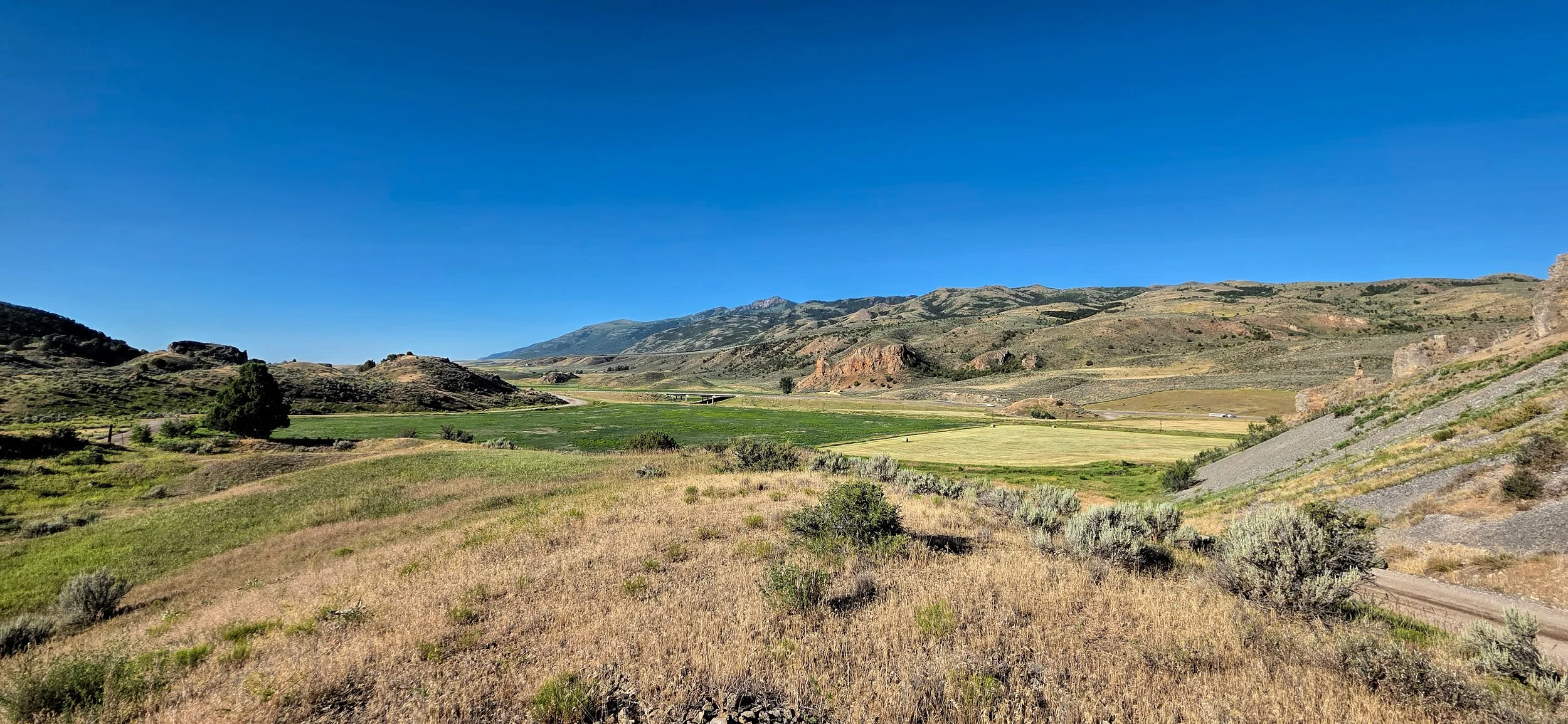
Red Rock Pass, a few miles south of Downey, Idaho on US 91. View is to the south, or upstream during the big spill. The vast expanse of Lake Bonneville would have existed on the far side of the skyline ridge, reaching across a third of Utah. Once the rising lake water began spilling across this low point along its shoreline and into the adjacent valley, a great unraveling was unleashed. The unconsolidated surficial alluvium and the underlying sedimentary rocks forming the bedrock sill rapidly eroded, much as a dam collapses when overtopped.
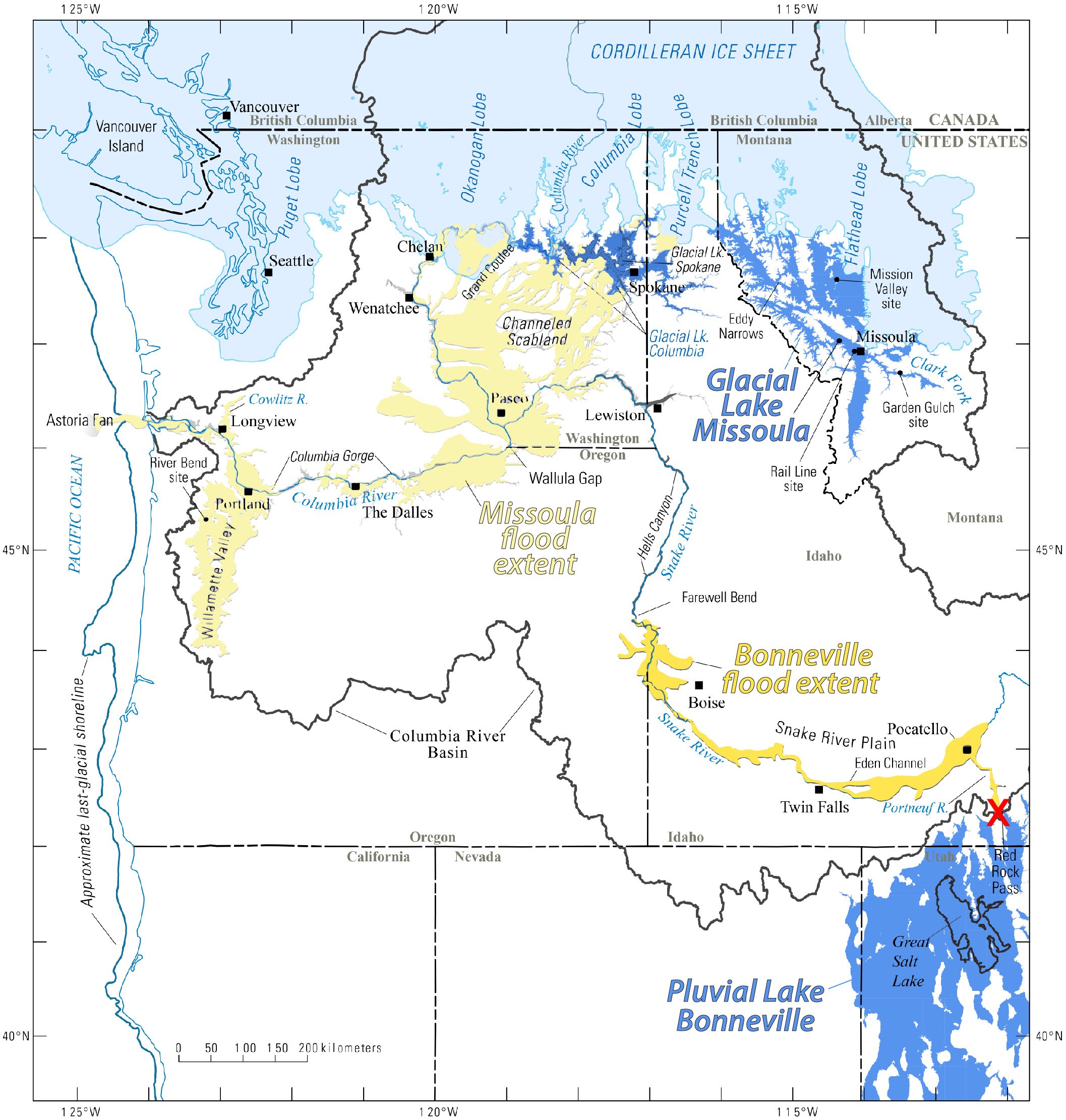
Red X marks the spot (near lower right) of Red Rock Pass, the spillover point for Lake Bonneville. The torrent of floodwater exiting the basin through the gap lowered the overall lake level approximately 105 m (350 feet). Map from Idaho State University.

More here about this tremendous flood from the Idaho State University: Lake Bonneville flood.
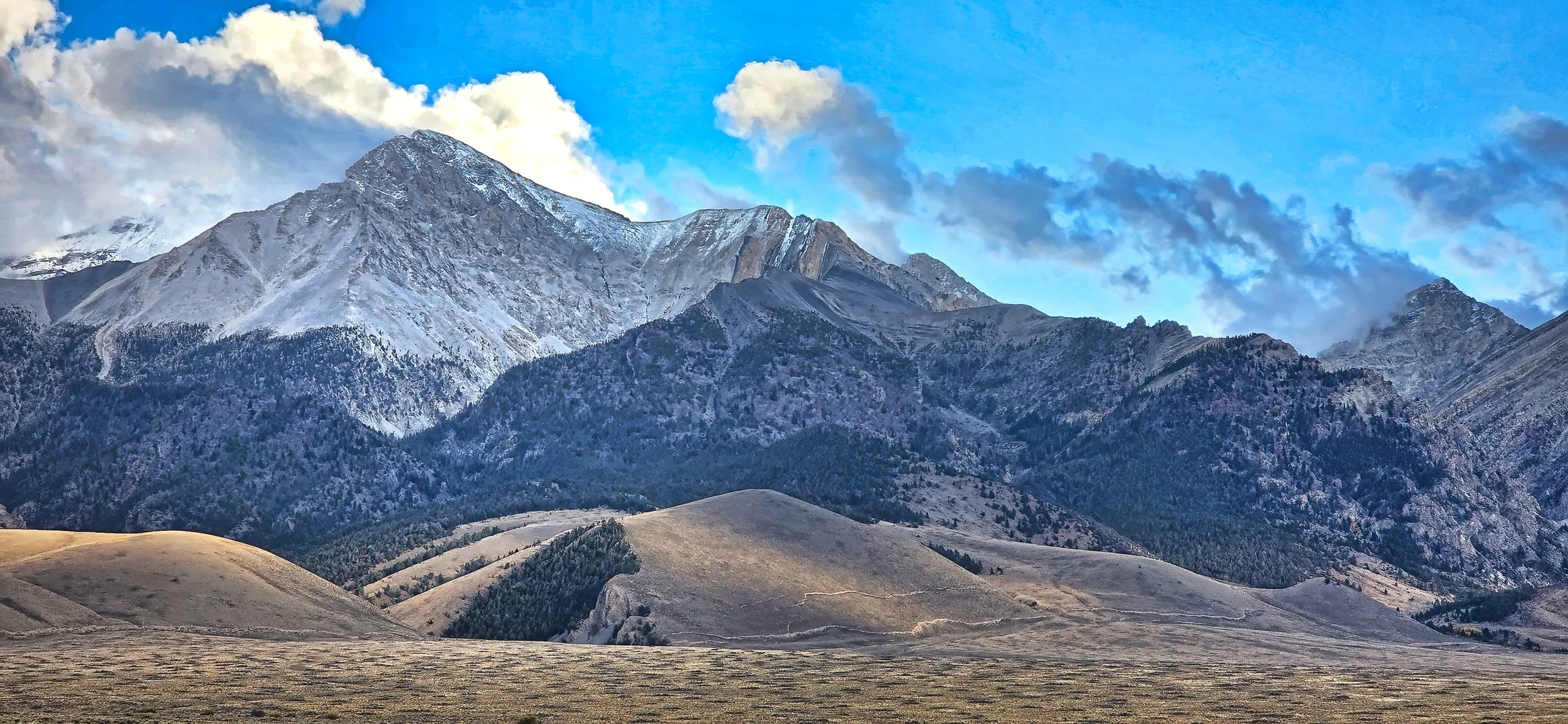
The highest summit in Idaho...

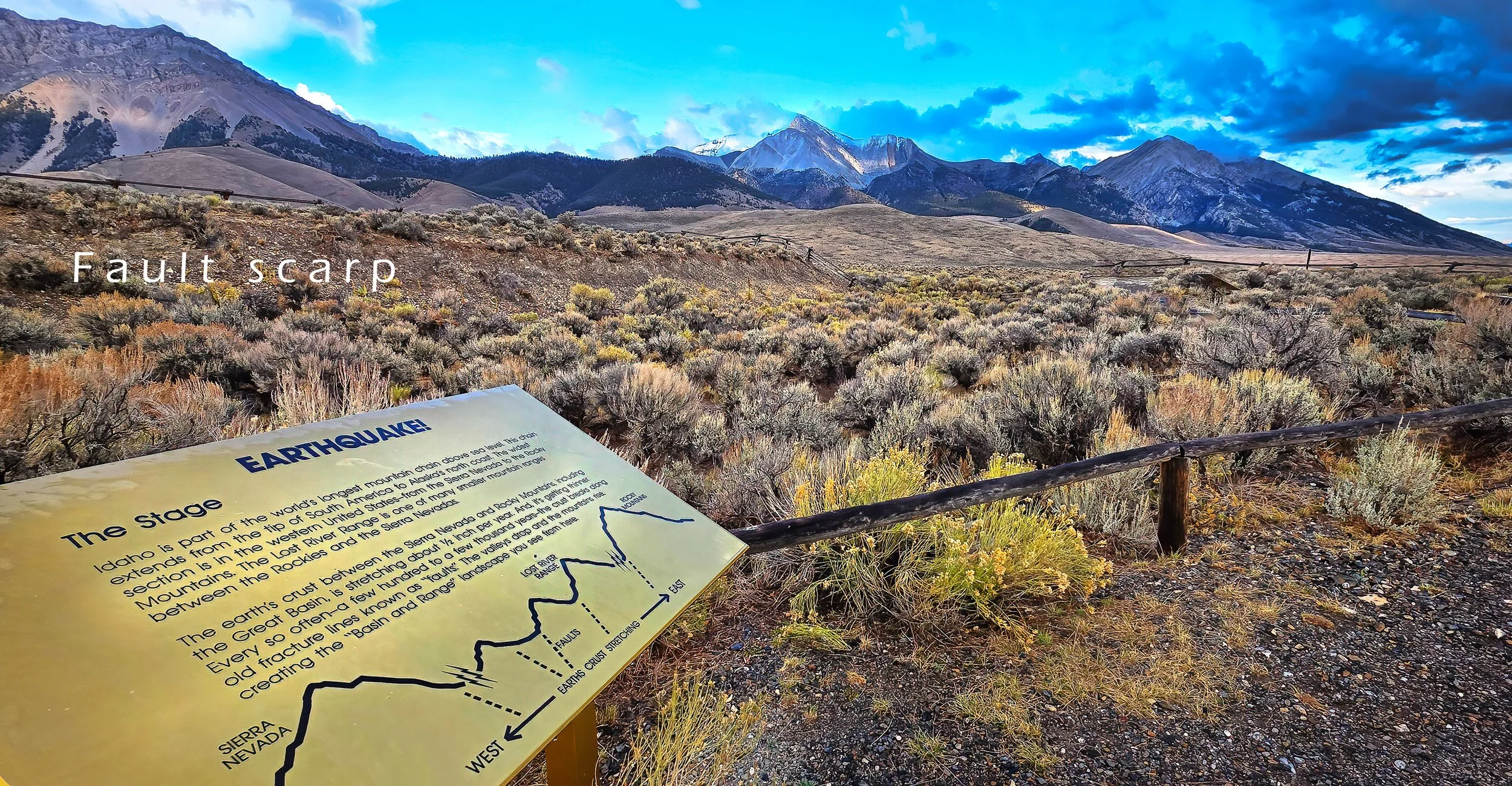
is dusted with the first snow of the season on a stormy afternoon. A violent 6.9 magnitude earthquake occurred in the Lost River Range on 28 October 2983 and created a 21 mile (34 km) long fault scarp at the foot of the mountain front.

Borah Peak (12,662 ft (3,859 m)). Note the prominent fault scarps at the foot of the lowermost slopes created during the 1983 earthquake.

US Forest Service interpretive site along a fault segment created during the 1983 event. Borah Peak is at the center skyline.

An early aerial sunrise...

is captured over central Idaho as my trajectory boomerangs back to canyon country.

Mount Timpanogos looms more than 7,000 feet (2,130 meters) above greater downtown Provo, Utah and Utah Lake.

Dissected pediments extend below the Book Cliffs near Sunnyside, Utah.

An early morning departure...

from GJT to SLC and onward to GEG yielded several interesting views when the weather allowed. Remember, geologists always get window seats.

View northwestward across Grand Junction, Colorado shortly after departure. The sinuous dark area is the confluence of the Gunnison and Colorado Rivers.

View northward, turning into the Salt Lake Valley over Utah Lake with the snow-covered Wasatch Mountain front.

The historic earthen causeway for the Lucin Cutoff railroad line separates the Great Salt Lake into two waterbodies with differing aquatic ecologies.

A peculiar roller cloud, about 40 miles (64 km) in length along its north-south axis, sits atop and defines Hells Canyon in Idaho.