Happy New Year...

from the Drake Passage! The ship’s position is shown by blue symbol, and water depths are indicated in meters. So far it’s been a good crossing with less than three meter swell, and we’re making good speed in advance of an approaching storm system from the west.

Wave conditions in the Drake Passage from windy.com.

Wave conditions in the Drake Passage from windy.com.

My first year of “retirement” has concluded, allowing me to travel 150 days in 2019, first to Antarctica… then the Arctic… tropical Papua New Guinea… and finally, a return to the bottom of the world. Wow! And 2020 should be even more active!

Neko Harbour...

with its actively calving glacier is one of my favorite operating sites on the Antarctic Peninsula. This is, sadly, our last landing on the icy continent, and now we spend two days at sea heading north, across the Drake Passage, returning to Ushuaia.

A commanding view of the glacier and ship (middle left) from a high vantage point.

A commanding view of the glacier and ship (middle left) from a high vantage point.

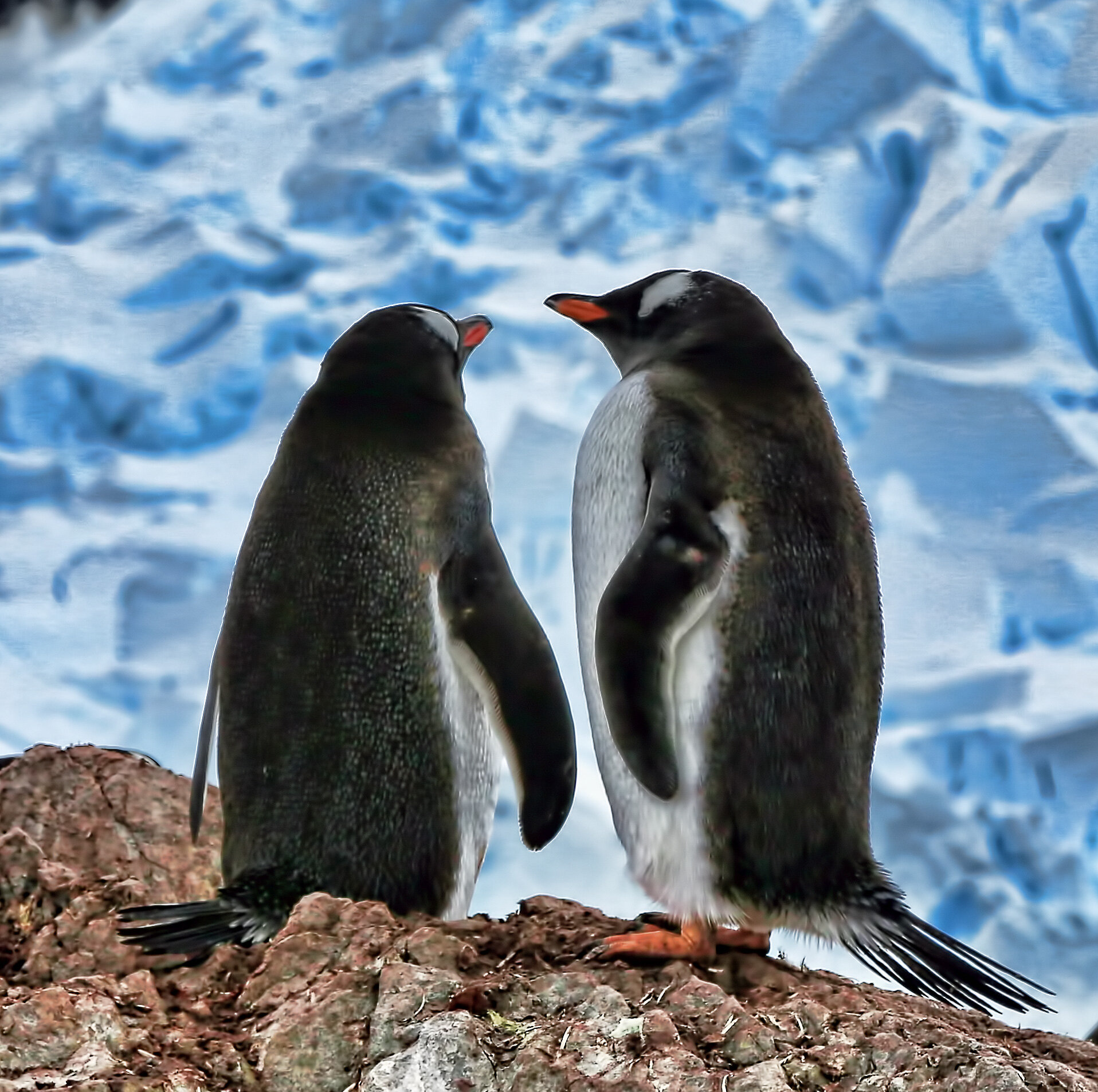
Gentoo Penguins in love.

Gentoo Penguins in love.

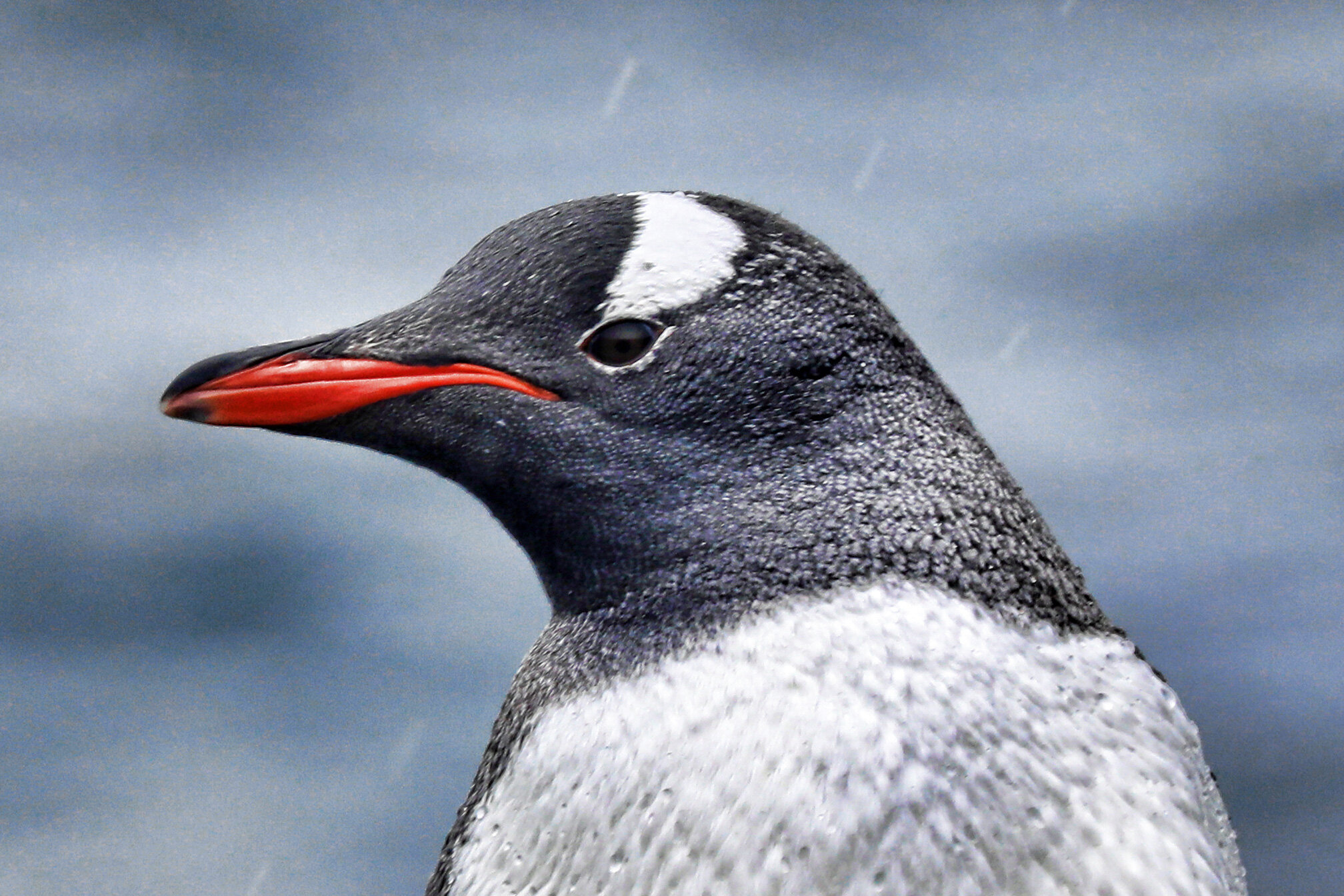
Gentoo adult mugging for camera.

Gentoo adult mugging for camera.

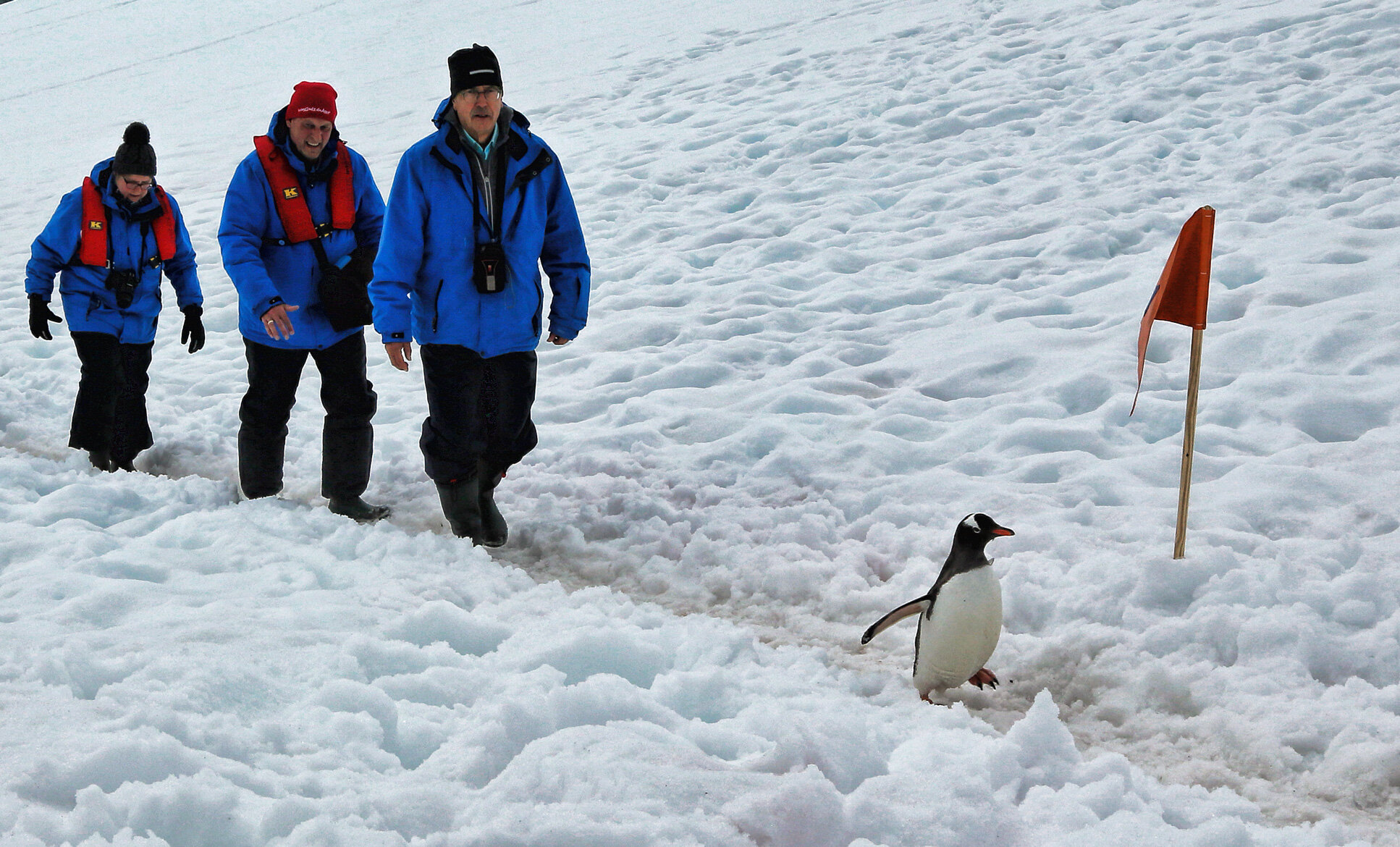
Gentoo leading the humans up the snowy track.  Give that penguin a radio!

Gentoo leading the humans up the snowy track. Give that penguin a radio!

Port Lockroy on Goudier Island...

is the oldest British station in Antarctica, later used as a research station, and now a living museum.

hl-port-lockroy.jpg
A look inside the pantry.

A look inside the pantry.

The sleeping quarters with paintings that make me blush, oh my.

The sleeping quarters with paintings that make me blush, oh my.

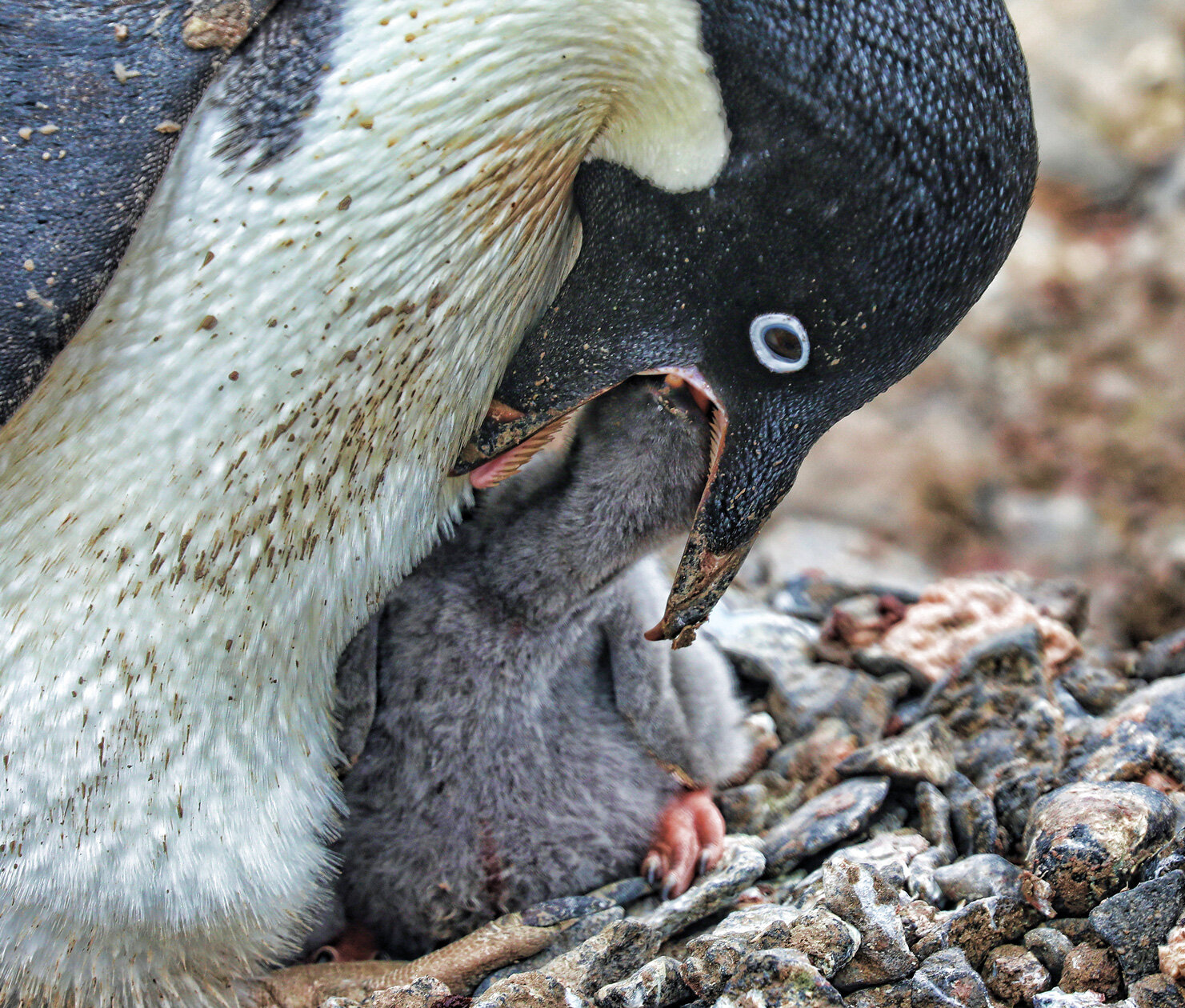
Recently hatched Gentoo Penguin chick.

Recently hatched Gentoo Penguin chick.

Slightly older Gentoo chick.

Slightly older Gentoo chick.

The Snowy Sheathbill, a scavenger, living among the penguins.

The Snowy Sheathbill, a scavenger, living among the penguins.

Petermann Island...

is the furthest point south on this voyage, approximately S 65.2 degrees, still well above the Antarctic Circle.

The Hanseatic Inspiration at anchor.

The Hanseatic Inspiration at anchor.

Looking further south, towards the Pole, in the late day sun.

Looking further south, towards the Pole, in the late day sun.

Hanging glacier in the Lemaire Channel.

Hanging glacier in the Lemaire Channel.

Deception Island caldera...

is an active volcano in the Bransfield Strait, evidenced by rising steam at low tide in Whalers Bay.

The Biscoe House, part of the British Antarctic Survey station, was destroyed by a lahar in 1969.  Ronald Hill stands behind the collapsing structure, the summit of which was the goal of a long hike today.

The Biscoe House, part of the British Antarctic Survey station, was destroyed by a lahar in 1969. Ronald Hill stands behind the collapsing structure, the summit of which was the goal of a long hike today.

The celebratory summit party atop Ronald Hill, in approximately 50 knot winds.

The celebratory summit party atop Ronald Hill, in approximately 50 knot winds.

View of Whalers Bay on the descent from Ronald Hill.

View of Whalers Bay on the descent from Ronald Hill.

Cruising the Weddell Sea...

after passing through the Antarctic Sound last evening, targeting the enormous iceberg A-68 that broke from the Larson Ice Shelf in July 2017.

Guests on the foredeck, awestruck by the immense size of the tabular iceberg A-68.

Guests on the foredeck, awestruck by the immense size of the tabular iceberg A-68.

Annotated satellite image showing iceberg A-68 which is blocking ice from the Weddell Sea gyre from entering the Antarctic Sound. We will attempt a landing at Paulet Island (red circle) later in the day.

Annotated satellite image showing iceberg A-68 which is blocking ice from the Weddell Sea gyre from entering the Antarctic Sound. We will attempt a landing at Paulet Island (red circle) later in the day.

Reflection of the ship’s officers in the radar image of the ice front (green) and ship’s position (center of orange circle).

Reflection of the ship’s officers in the radar image of the ice front (green) and ship’s position (center of orange circle).

Preparing for allowing guests to venture out on a stable piece of sea ice, while the captain repositions the ship. Nearing the end of my first year of “retirement,” I could not be happier and am very grateful for these opportunities to travel and to…

Preparing for allowing guests to venture out on a stable piece of sea ice, while the captain repositions the ship. Nearing the end of my first year of “retirement,” I could not be happier and am very grateful for these opportunities to travel and to continue to lecture about geology!

Zodiac operations are quite sporting...

on the Hanseatic Inspiration as the boats are craned down from the top deck by the bosun and his very capable team, with drivers aboard, from about 80 feet above the water.

Note the port side crane near rear of ship.

Note the port side crane near rear of ship.

The bosun operating the crane, smiling for his picture.  You can see the starboard side crane here.

The bosun operating the crane, smiling for his picture. You can see the starboard side crane here.

My view as the Zodiac is swung over the port side!  Very exciting, especially in windy conditions.  Like I said, sporting.

My view as the Zodiac is swung over the port side! Very exciting, especially in windy conditions. Like I said, sporting.

Christmas in Grytviken...

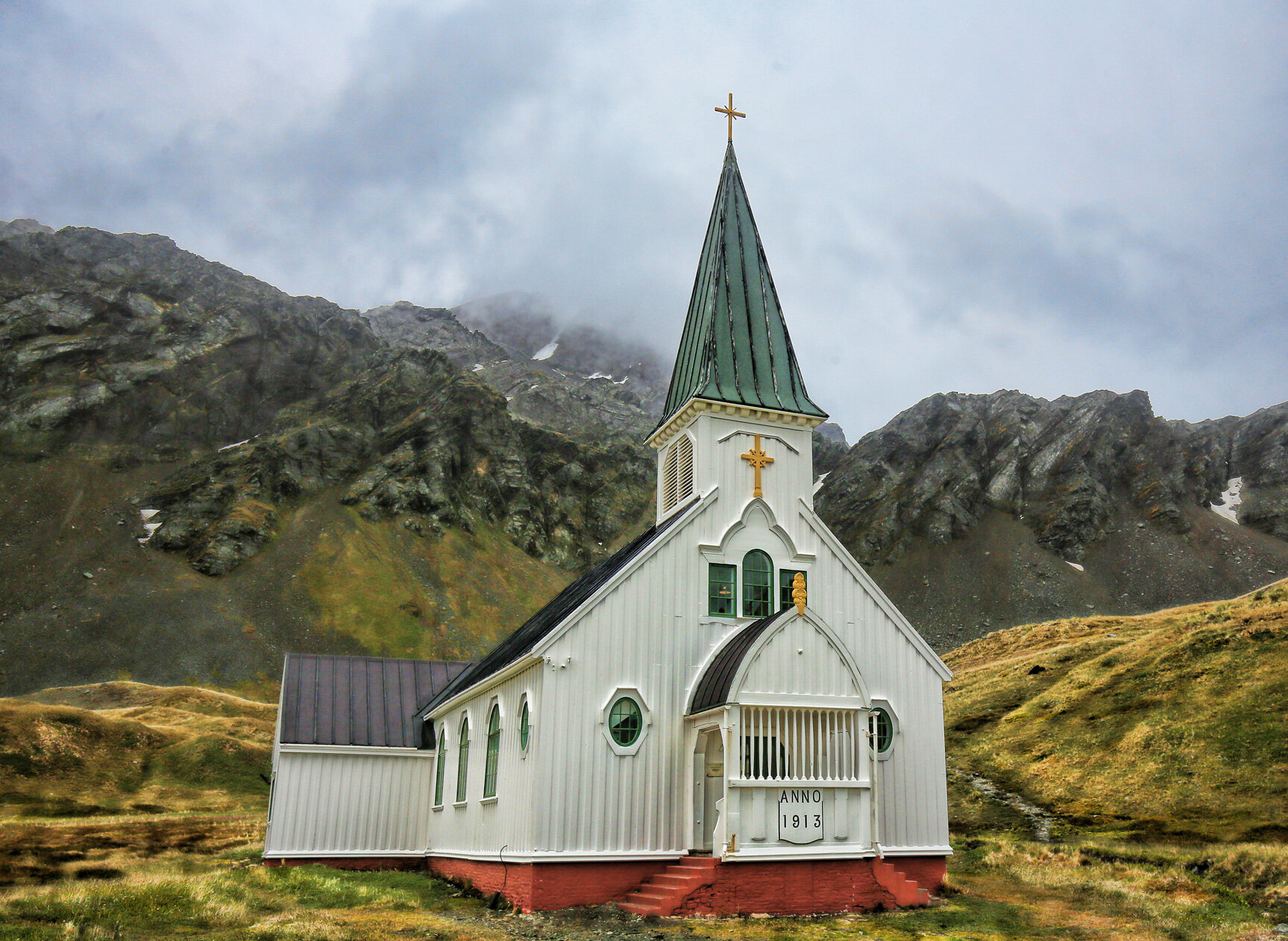
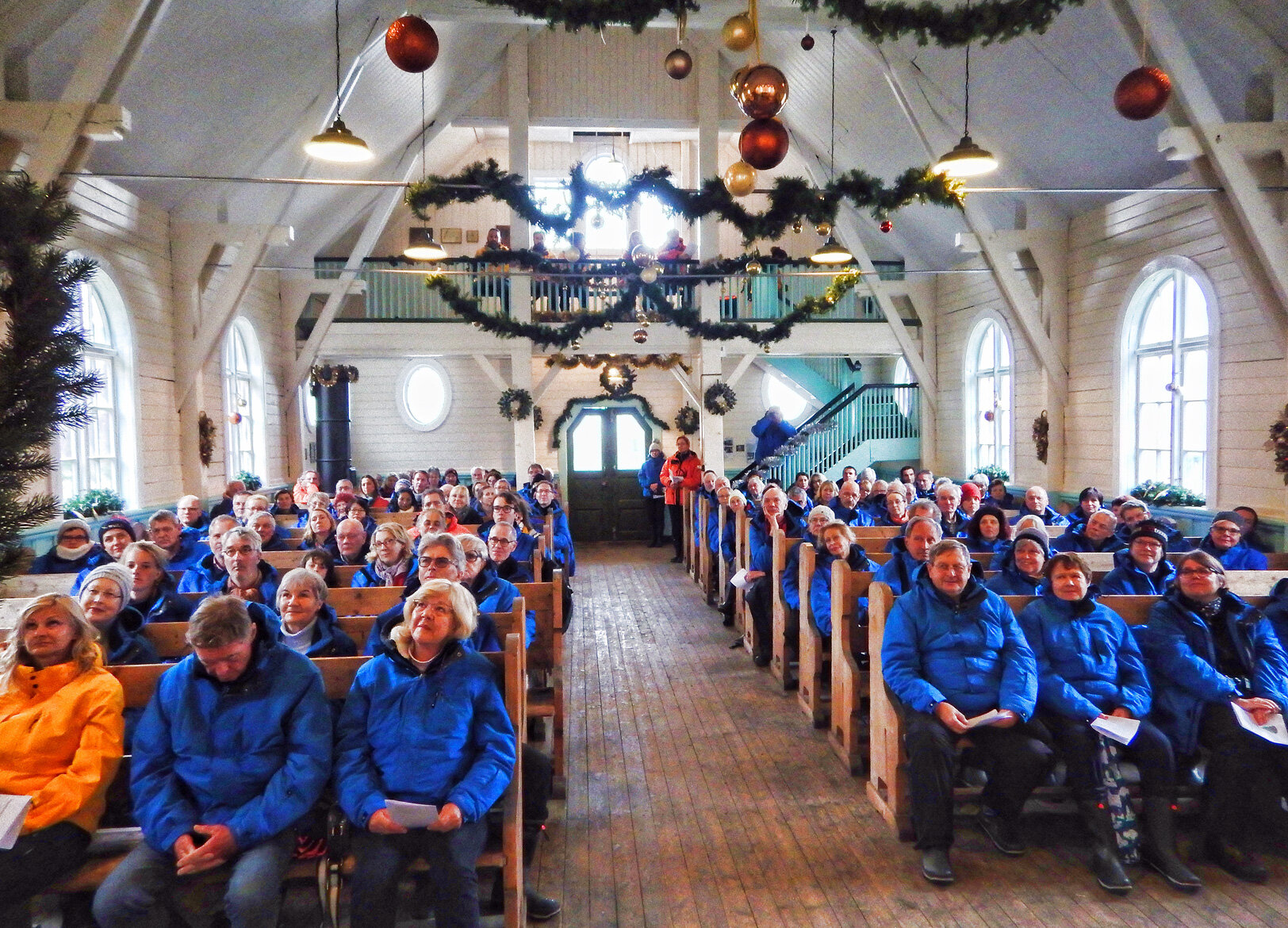
was observed in the historic church at the whaling station, standing beyond the industrial grunge of a thankfully bygone era.

grytviken-church-xmas-exterior.jpg

There were several seasonally appropriate songs, and I presented a short reading from the 1902-03 journals of Scott and Shackleton during their Christmas experience in Antarctica as they attempted to reach the South Pole. At the conclusion, the church bells were rung, reverberating throughout the rocky fjord. All in all, a lovely day in a richly historic location.

The ship’s photographer contributed this image of me addressing the flock from the pulpit.

The ship’s photographer contributed this image of me addressing the flock from the pulpit.

Walking in Shackleton's footsteps...

from Fortuna Bay to Stromness, the last four miles of his historic trek across South Georgia.

Landing site in Fortuna Bay on Worsley Beach, with Antarctic Fur Seals.

Landing site in Fortuna Bay on Worsley Beach, with Antarctic Fur Seals.

Gaining higher elevation, with commanding view of Fortuna Bay.

Gaining higher elevation, with commanding view of Fortuna Bay.

Small alpine lake at high point of crossing.

Small alpine lake at high point of crossing.

View down valley toward Stromness whaling station, at right edge of bay.

View down valley toward Stromness whaling station, at right edge of bay.

The Shackleton Waterfall.

The Shackleton Waterfall.

Stromness whaling station to which Shackleton returned, unrecognizable after years at sea. From here he organized a return to Elephant Island to rescue the rest of his stranded crew. Epic!

Stromness whaling station to which Shackleton returned, unrecognizable after years at sea. From here he organized a return to Elephant Island to rescue the rest of his stranded crew. Epic!

Topographic map of route from IATTO Field Operations Manual.

Topographic map of route from IATTO Field Operations Manual.

This was an absolutely fabulous hike on a terrific day, on Christmas Eve!

Battle of beachmasters...

at Jason Harbour, South Georgia, as captured by the ship’s photographer. For some reason, the expedition leader tasked me with keeping an eye on this particularly excited fellow.

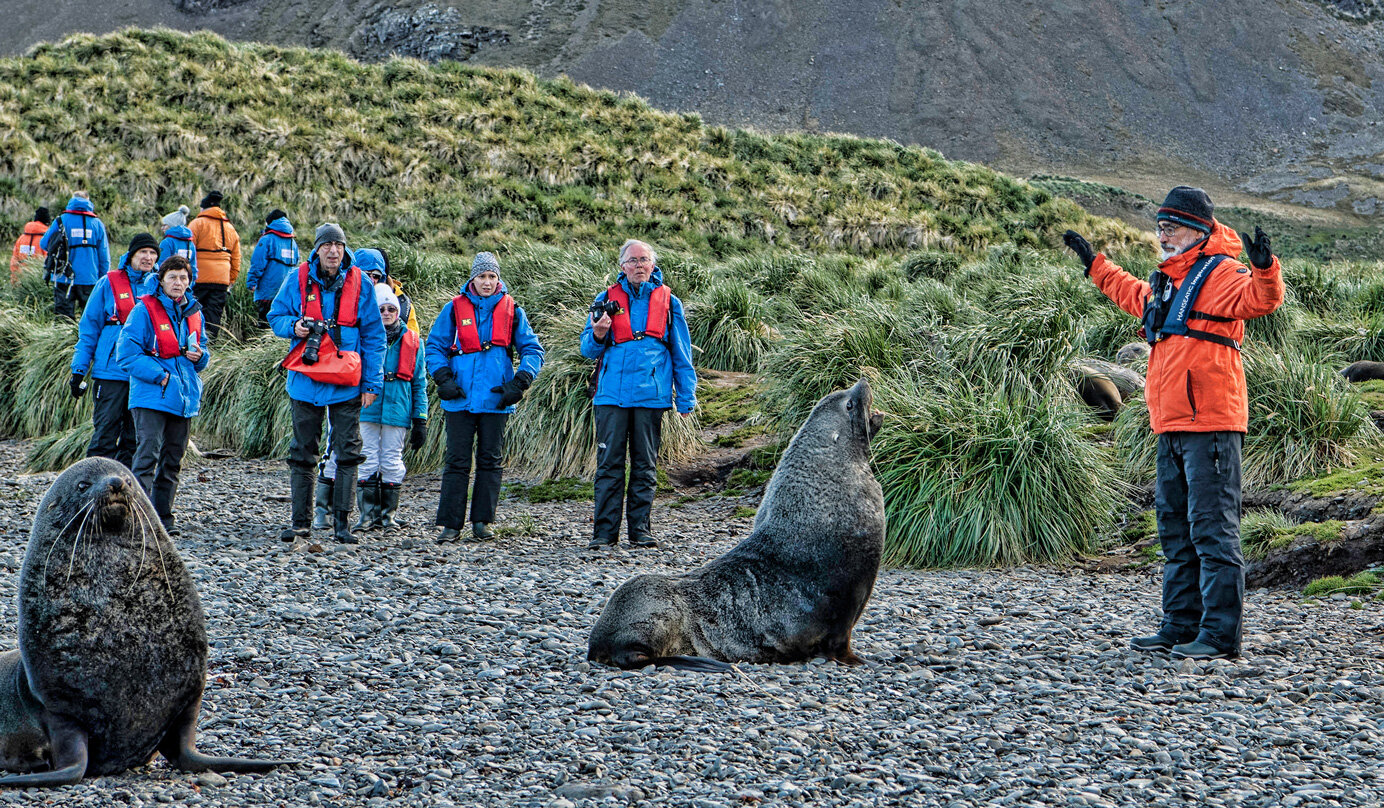
Antarctic Fur Seals can be very aggressive, particularly male beachmasters, defending their territory for their harems of females during mating season.

Antarctic Fur Seals can be very aggressive, particularly male beachmasters, defending their territory for their harems of females during mating season.

You must stand tall against their charges, here so that guests may pass to return to the landing site.

You must stand tall against their charges, here so that guests may pass to return to the landing site.

On the sixth day...

God created the Salisbury Plain on South Georgia, with an estimated 250,000 King Penguins!

Neither words, nor pictures, can describe the magnificence of this remote place.

Neither words, nor pictures, can describe the magnificence of this remote place.

I derive great joy knowing that this goes on every single day, throughout the year.  When I am feeling stressed at home, I visualize this scene.

I derive great joy knowing that this goes on every single day, throughout the year. When I am feeling stressed at home, I visualize this scene.

A brief stop at Grytviken...

in order to bring inspection officers of the South Georgia government aboard the ship.

The restored whaling station at Grytviken.

The restored whaling station at Grytviken.

Captain Roman Obrist on the bridge, maneuvering the ship for this quick stop.

Captain Roman Obrist on the bridge, maneuvering the ship for this quick stop.

British Antarctic Survey station at King Edward Point, staffed year round.

British Antarctic Survey station at King Edward Point, staffed year round.

Prince Olav Harbour...

on South Georgia was first discovered by James Cook in 1775, and shortly thereafter the sealers arrived.

The Brutus, a coal carrier, now a rusty relict.

The Brutus, a coal carrier, now a rusty relict.

The old sealing station, slowly decaying into the landscape.

The old sealing station, slowly decaying into the landscape.

Antarctic Fur Seal.

Antarctic Fur Seal.

Since the cessation of sealing, the population has rebounded.

Since the cessation of sealing, the population has rebounded.